Imagine working for an NBA franchise that hasn't won a title since 1973, opening your work inbox, and seeing an offer for a championship ring. You click it. Then a screen pops up telling you that you just failed a company cybersecurity test.
That actually happened at Madison Square Garden. You might also find this similar article insightful: Why Every El Clasico Preview Gets Barcelona vs Real Madrid Completely Wrong.
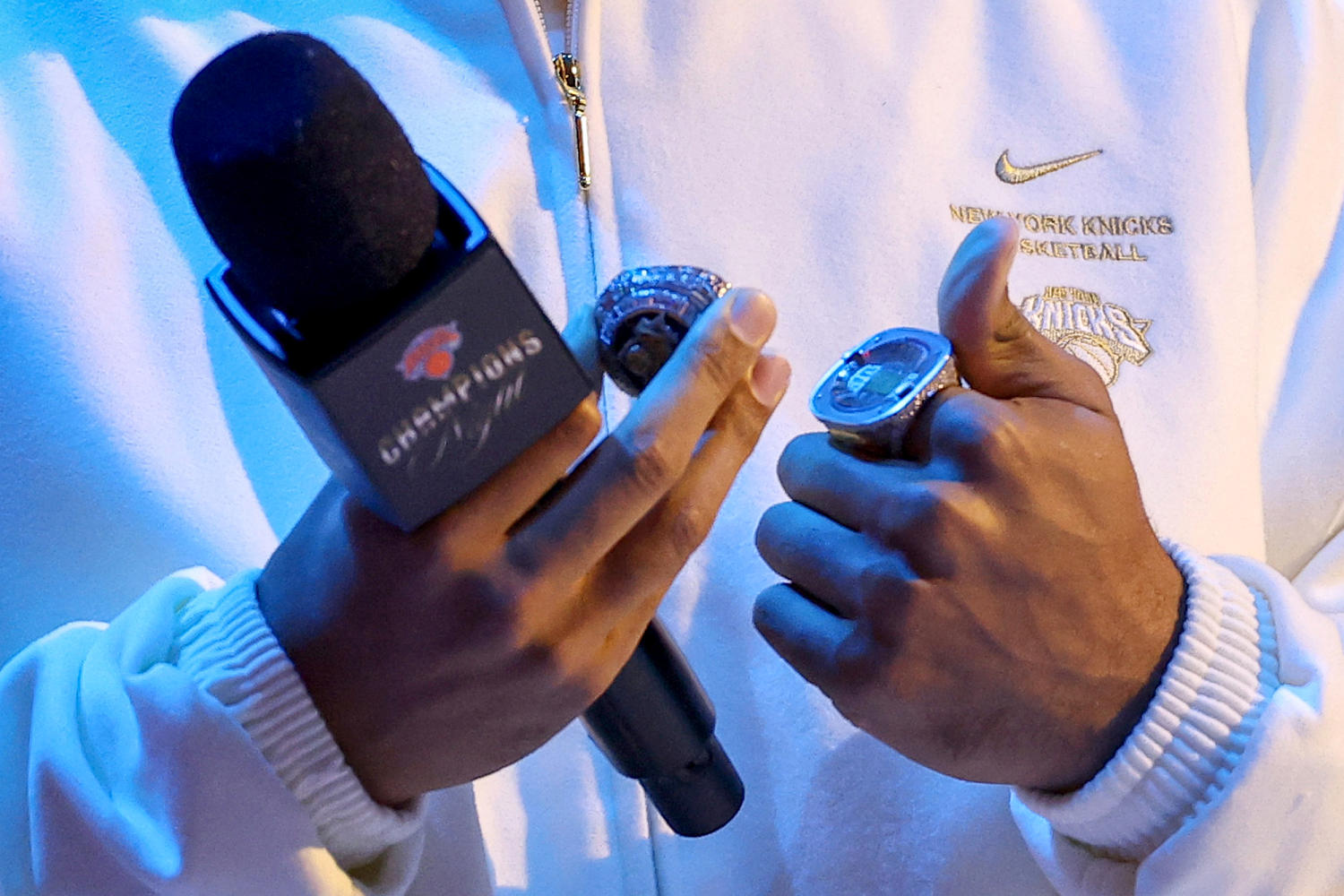
In early 2026, the parent company behind the New York Knicks—Madison Square Garden Entertainment (MSG)—ran an internal phishing simulation that crossed a line most HR departments wouldn't touch with a ten-foot pole. Following the Knicks' win in the NBA Cup (the league's in-season tournament) in December 2025, MSG's IT team sent out a fake email promising employees commemorative championship rings. When staffers clicked the link, they weren't measured for gold and diamonds. They were flagged for falling for social engineering.
The backlash was immediate, loud, and honestly, completely justified. MSG eventually had to issue an apology, calling the move "an unfortunate mistake." As discussed in detailed articles by Yahoo Sports, the effects are significant.
What Actually Happened Inside Madison Square Garden
Let's look at the timeline. In December 2025, the New York Knicks won the NBA Cup. For a fanbase and an organization starved for hardware—having gone over five decades without an NBA Finals trophy—any banner or ring carries massive emotional weight. Even if an in-season tournament ring isn't the Larry O'Brien Trophy, it's still a huge milestone for the people working behind the scenes in ticket sales, arena operations, and marketing.
Shortly after the victory, MSG's cybersecurity team decided to test employee vigilance. Instead of using the standard fake invoice, password reset prompt, or suspicious shipping notification, they weaponized the team's own success. The simulated phishing email dangled the prospect of a championship ring in front of staff members.
Employees clicked. Who wouldn't? When you work for a sports team and they just won a tournament, getting an email about commemorative gear isn't just plausible—it's expected.
Once the story leaked to the sports media and cybersecurity press, the embarrassment hit MSG fast. Representatives for Madison Square Garden Sports and MSG Entertainment publicly walked it back, acknowledging the error in judgment. They admitted that using the championship rings as bait was an "unfortunate mistake" that missed the mark on how to train staff properly.
Why Emotional Bait Ruins Security Training
I've seen dozens of corporate phishing campaigns go sideways over the years, and they almost always fail for the exact same reason. IT teams get too clever. They forget that security awareness isn't a game of "gotcha."
Phishing simulations are supposed to build muscle memory. You want employees to spot weird sender addresses, urgent demands for wire transfers, or sketchy external links. You don't want them to become paranoid that every genuine piece of good news from their own employer is a trap.
When you use high-emotion, deeply personal rewards—like championship rings, holiday bonuses, or layoff notices—you trigger a completely different psychological response. People don't feel educated when they get caught. They feel humiliated and resentful.
Look at the famous 2020 GoDaddy incident for proof. During the height of the pandemic, GoDaddy sent a fake email to roughly 500 employees promising a $650 holiday bonus. Those who clicked were told they failed a security test. The public outrage forced GoDaddy to apologize and actually pay out the bonuses. Or take the 2021 Tribune Publishing blunder, where the company sent out fake emails promising bonuses of $5,000 to $10,000 to journalists who had just endured massive pay cuts and layoffs.
MSG fell into the exact same trap. They took a moment of shared organizational pride and turned it into a compliance failure metric.
The Real Cost of "Gotcha" Cybersecurity
You might think a bruised ego is a small price to pay for tighter network security. It isn't. Bad phishing tests actively damage a company's security posture in three specific ways.
First, it destroys trust between regular employees and the IT department. If your staff views the security team as adversarial tricksters trying to pad their failure statistics, they won't report real threats. When an employee accidentally clicks an actual malicious link from a ransomware gang, fear of embarrassment or punishment will make them hide it instead of calling the help desk immediately. Minutes matter during a real breach. Silence kills networks.
Second, it creates alert fatigue. If legitimate internal communications look identical to IT's trick emails, employees start ignoring all internal emails. Crucial updates from HR, actual benefits enrollment, or real recognition programs get deleted unread because nobody wants to be the person who fell for another fake perk.
Third, it teaches the wrong lessons. Real-world attackers targeting sports franchises—and yes, NBA teams are massive targets for ransomware and data theft—rarely use internal ring giveaways because they don't always know the internal culture well enough to pull it off without typos. Hackers rely on vendor impersonation, fake credential harvesting pages, and compromised third-party accounts. Training staff to distrust ring announcements doesn't prepare them for a spoofed Microsoft 365 login screen.
How Sports Organizations Should Actually Train Staff
Sports franchises are weird hybrids. They operate like mid-sized businesses on the corporate side, but they run on pure passion and high-turnover seasonal labor on the event side. An arena has thousands of ushers, concessions workers, front-office executives, and PR reps, all operating at different levels of tech literacy.
If you're running security for a team, an agency, or any high-profile brand, stop using emotional manipulation in your testing. Here is what actually works instead.
- Test against realistic business workflows. Stick to the lures hackers actually use against your industry. For sports teams, that means fake ticket-partner invoices, bogus media credential requests, or spoofed travel itineraries. Train your finance team on wire fraud and your ticketing staff on credential stuffing.
- Focus on technical guardrails over human perfection. Humans will always click links. That's a fact. Instead of blaming employees when a simulation catches them, invest in phishing-resistant multi-factor authentication (like FIDO2 security keys or passkeys), strict email authentication protocols (DMARC, DKIM, SPF), and endpoint detection that stops malware even if someone does click.
- Make failure constructive, not punitive. If an employee clicks a test link, the landing page should show a quick, 30-second breakdown of the exact red flags they missed—like a mismatched domain name or a suspicious reply-to address. Don't put them on a naughty list or lecture them.
- Keep HR and leadership in the loop. IT should never launch a simulation referencing company milestones, compensation, or major team events without sign-off from executive leadership and human resources. If the PR team says a lure would look terrible on the front page of the local sports section, scrap it immediately.
The Knicks' front office learned a hard lesson about internal culture. Protecting a multi-billion-dollar sports franchise requires serious cybersecurity, not cheap parlor tricks. Drop the emotional bait, fix your technical defenses, and treat your employees like partners rather than marks.