The dashboard clock glows a cold, silent blue. It is 3:14 AM. On a desolate stretch of two-lane highway, the rest of the world does not exist. There is only the hum of the tires, the smell of stale gas-station coffee, and the heavy, routine burden of a badge.
For a sheriff’s deputy, isolation is part of the job description. You learn to trust the dark. You learn to read the shadows. Your eyes become finely tuned instruments, capable of distinguishing between a deer stepping into the brush and a trespasser slipping through a perimeter fence. You know what belongs. More importantly, you know what does not.
Then, the sky breaks.
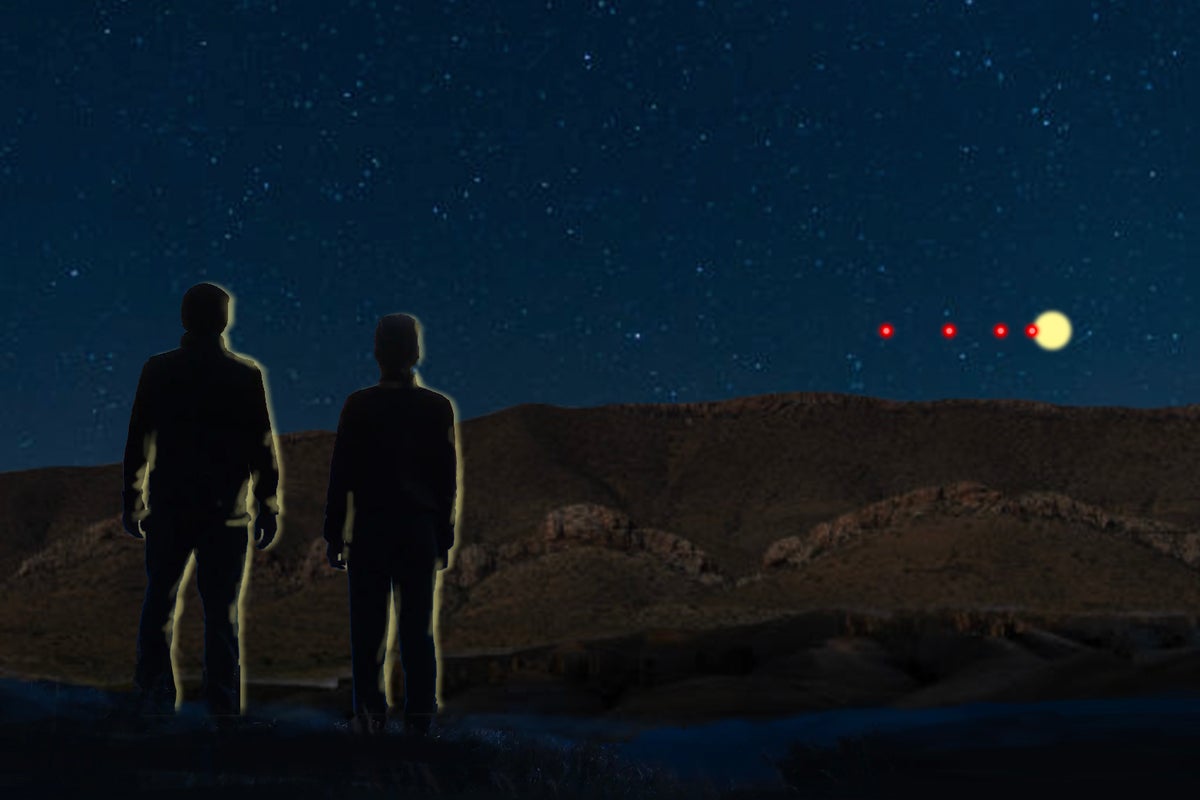
Not with a bang. Not with the cinematic roar of a jet engine or the familiar, chopping thud of a police helicopter. It happens in absolute, terrifying silence. A sphere of compressed, metallic light drops from the clouds, hovers directly above the tree line, and begins to move in ways that defy every law of physics you were taught in school. It accelerates instantly, stops on a dime, and vanishes into the upper atmosphere without pushing a single gust of wind across your windshield.
Your hand hovers over the radio microphone. Your throat is dry.
If you report this, you are no longer just a cop. You become that cop. The one who sees things. The one the guys in the squad room whisper about over shift change. You risk your credibility, your promotion, and the sanity you have fought so hard to maintain in a career defined by harsh reality.
Yet, you press the button anyway. Because ignoring it feels like a betrayal of the oath you took to report the truth.
The Cold Ledger of the Unexplained
For decades, the public conversation around Unidentified Anomalous Phenomena—the modern, clinical term for UFOs—has been relegated to the fringes of late-night talk radio and poorly lit convention centers. It was a world of believers and skeptics, tinfoil and ridicule.
But the landscape shifts when the witnesses wear uniforms.
A recent release of declassified files from the Pentagon’s All-domain Anomaly Resolution Office reveals a startling pattern. Tucked inside the bureaucratic dry prose of the government repository are five distinct, separate accounts from law enforcement officers across the United States. These are not anonymous internet users posting blurry videos captured on a smartphone. These are trained observers, individuals whose daily testimony holds the power to send people to prison, documenting silver and white orbs executing impossible maneuvers in the night sky.
The Pentagon treats these files like data points. Cold numbers on a digital spreadsheet. But if you look behind the redacted lines and the sterile military terminology, you find a collection of deeply shaken human beings.
Consider a hypothetical composite of these encounters, grounded entirely in the structural facts of the reports. A veteran state trooper in a rural county spots a cluster of glowing spheres moving in perfect geometric formation. He watches them for ten minutes. They do not possess wings. They emit no heat signature that aligns with conventional combustion engines. When he contacts air traffic control, the radar screen is blank.
The system designed to protect us insists nothing is there. The trooper’s own eyes insist otherwise.
This creates a profound psychological fracture. Law enforcement officers are paid to be the ultimate arbiters of objective reality. They document the who, the what, the when, and the where. When the "what" becomes entirely unexplainable, the foundation of their professional identity begins to crumble.
When Precision Meets the Impossible
To understand why these five specific accounts matter so much, we have to look at how a police officer is trained to see.
The average person looks at a traffic accident and sees a chaotic mess of shattered glass and twisted metal. A traffic investigator looks at the same scene and reads a story told in skid marks, fluid trails, and point-of-impact deformation. They measure distance. They calculate speed based on drag factors. Their brains are wired to find the logical sequence of cause and effect.
When an object behaves like the orbs described in the Pentagon files, that logical wiring short-circuits.
Imagine a billiard ball on a pool table. You strike it with a cue. It rolls forward, bounces off the cushion at a predictable angle, and eventually slows down due to friction. That is our universe. That is the world of Newtonian physics that keeps our cars on the road and our planes in the air.
Now, imagine that same billiard ball suddenly moving across the felt at two hundred miles per hour, stopping dead in the center of the table without transferring any energy, turning ninety degrees instantly, and then shooting straight up through the ceiling.
That is the visual reality these officers faced. The reports detail objects that do not rely on aerodynamic lift. They show no visible means of propulsion. No exhaust plumes. No intake vents. They exist in a state of technological capability that makes our most advanced stealth aircraft look like Wright brothers prototypes.
The instinct of the skeptic is to point toward drones. It is a comforting thought. We know what drones are. We can buy them at electronics stores. But commercial drones possess batteries that die within forty minutes. They buzz. They struggle against high crosswinds. They do not cross entire states in the blink of an eye, nor do they hover effortlessly at altitudes that require oxygen masks.
Military drones are larger, faster, and more sophisticated, but they still fly. They still require air to pass over control surfaces to generate lift. They cannot violate the conservation of momentum. The objects in these five files do.
The Cost of Speaking Up
The real story here isn't just about the technology in the sky. It is about the silence on the ground.
For every officer who officially submits a report to a federal database, how many more simply turn their heads, blink hard, and drive in the opposite direction? The stigma surrounding this topic acts as a highly effective sensory filter. It creates an environment where silence is the safest career move.
We expect our first responders to be invincible. We want them to be stoic walls of certainty in our moments of crisis. We do not want to hear that the person with the gun and the badge is feeling vulnerable, confused, or spooked by something they watched hovering over a cornfield.
One of the declassified accounts hints at this exact tension. An officer describes the feeling of immense hesitation before keying his mic to alert dispatch. He knew the immediate consequence. He knew his shift sergeant would likely joke about it. He knew the dispatchers might laugh.
But he reported it anyway because the alternative was worse. The alternative meant accepting that something unknown was operating inside his jurisdiction, completely unimpeded, and he was too afraid of social ridicule to do his job.
That is true courage. Not the absence of fear, but the willingness to look foolish in the pursuit of what is real.
The Pentagon’s file drop is a step toward transparency, but it also highlights a massive institutional failure. The government has collected these stories for years, filing them away under layers of classification, treating the witnesses like quirks in the machine rather than valuable assets on the front lines of an unfolding mystery.
The Fragmented Sky
It is tempting to look for an easy answer. We want a neat resolution that ties the narrative up with a bow. We want an official announcement, a smoking gun, or a definitive explanation that puts our minds at ease.
Instead, we are left with fragments. Five distinct voices from five different nights, all screaming into the bureaucratic void that something is happening right above our heads.
The sky is no longer just a backdrop for our daily lives. For those who work the graveyard shift, it has become a source of profound uncertainty. We are forcing the very people we trust to guard our communities to carry a heavy, isolating secret. They watch the horizon change, knowing that the tools they have been given to enforce order are utterly useless against whatever is moving through the dark.
The cruiser drives on. The headlights cut through the fog, illuminating nothing but asphalt and empty trees. The radio remains quiet for now, but the deputy keeps his eyes on the rearview mirror, watching the space where the stars should be, waiting for the dark to break again.


