Walk outside on a clear night, far enough from the city to see the stars, and wait. Within fifteen minutes, you will see a point of light moving across the ink-black sky with steady, mechanical precision. It does not blink like an airplane. It does not streak like a meteor. It is a satellite, one of thousands belonging to Elon Musk’s SpaceX.
For a long time, looking up meant looking at a vast, unconquered frontier. Today, looking up means looking at a corporate balance sheet. Meanwhile, you can read related events here: Selling Sunshine at Midnight Is a Multibillion Dollar Space Mirage.
SpaceX controls roughly two-thirds of all active satellites currently orbiting Earth. Its Falcon 9 rockets launch with the monotony of city buses. To the average onlooker, this monopoly feels like an inevitable law of physics. We assumed that the future of the cosmos had already been written, signed, and delivered by a single billionaire in Texas.
We were wrong. To see the bigger picture, check out the recent article by TechCrunch.
Far from Cape Canaveral, across the Pacific Ocean, a quiet fury has been building. A massive, state-backed engine is roaring to life, determined to tear down that monopoly. The battlefield isn't just the upper atmosphere; it is the global financial market.
The Weight of the Invisible Ceiling
To understand why this matters, you have to look at the people whose lives are shaped by the invisible threads of orbit.
Consider a hypothetical engineer named Chen, working late into the night in a high-tech laboratory in Shanghai. Chen does not think about space as a romantic destination. He thinks about it as a infrastructure problem. Every day, Chen reads the news about SpaceX’s Starlink providing internet to remote corners of the globe, guiding maritime fleets, and anchoring military communications. He knows that whoever controls the low-Earth orbit constellation controls the nervous system of the twenty-first century.
Right now, that nervous system speaks with an American accent.
For Chen and his peers at state-backed enterprises like Shanghai Spacecom Satellite Technology, the situation is intolerable. If a single foreign company dictates the cost of putting a pound of metal into orbit, every other nation is effectively locked out of the future economy. It is an invisible ceiling, thousands of miles above our heads.
But China is not a country accustomed to watching from the sidelines.
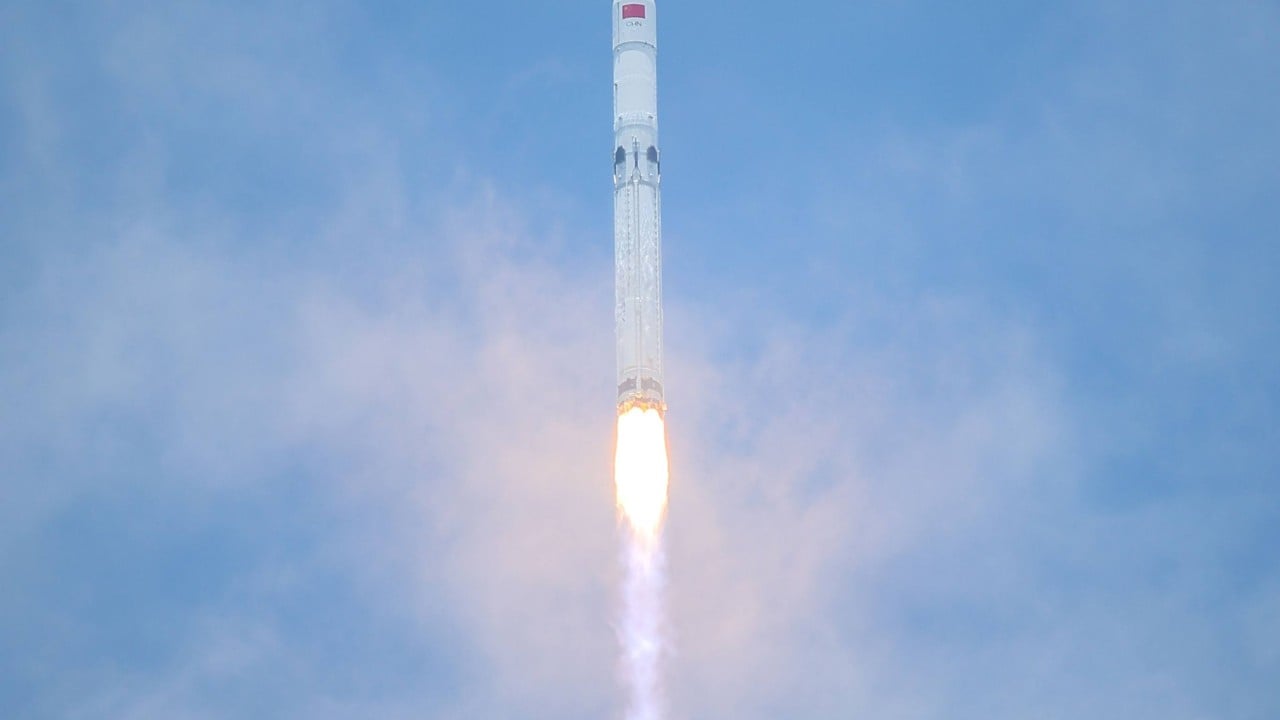
The strategy currently unfolding in Beijing is not a slow, cautious mimicry of Apollo-era space programs. It is a aggressive, multi-pronged commercial assault. The goal is simple: build a rival mega-constellation called "G60 Starlink" consisting of over 12,000 satellites.
But building rockets requires money. Oceans of it.
The Capital Catalyst
How do you fund an empire that stretches into the stars? Historically, the Chinese government simply cut a check. But state funding is slow, bureaucratic, and bound by rigid five-year plans. Space, at its current velocity, moves much faster than that.
To break the American monopoly, China is turning to the most potent weapon in the capitalist arsenal: the public stock market.
A wave of Chinese commercial space startups is currently preparing for initial public offerings. Companies like Space Pioneer, LandSpace, and Galactic Energy—names that sound like science fiction but operate with the cutthroat urgency of Silicon Valley tech firms—are looking to IPO. By opening their doors to private capital, these firms are bypassing the traditional, slow-moving state apparatus.
They are doing something unprecedented. They are injecting the chaotic, hyper-fueled energy of venture capital and public trading into a communist space program.
The mechanism is brilliant. By listing these companies on exchanges like Shanghai’s tech-heavy STAR Market, China allows everyday investors and massive domestic funds to shoulder the financial risk. If a rocket explodes on the pad, the state treasury does not take the full hit. The risk is distributed. The rewards, however, remain entirely aligned with national strategic goals.
The Reality of the Metal and Flame
It is easy to get lost in the financial shorthand of tickers and valuations. The reality is much louder. It smells like rocket propellant and scorched steel.
The technical hurdles China faces are monumental. SpaceX did not achieve dominance through luck; they mastered the art of vertical integration and, crucially, reusability. Landing a skyscraper-sized rocket booster on a drone ship in the middle of a choppy ocean is a feat of engineering that took a decade and dozens of spectacular failures to perfect.
Until recently, China’s space program relied on expendable rockets. Every launch meant throwing away millions of dollars of precision machinery into the ocean after a single use. You cannot win a price war when your competitor reuses their hardware fifteen times and you throw yours in the trash after three minutes.
That is changing.
In industrial parks across Wuhan and Beijing, engineers are tearing apart the physics of vertical landing. LandSpace has successfully tested methane-liquid oxygen rockets, a propellant technology that is cleaner and easier to reuse than traditional kerosene. They are failing forward, recording their crashes, adjusting their code, and launching again.
The speed is dizzying. What took the United States decades to develop is being compressed into months.
The Friction of a Crowded Sky
This race is not happening in an empty vacuum. The low-Earth orbit—the sweet spot where satellites can circle the planet quickly enough to provide lag-free internet—is a finite piece of real estate.
There are only so many orbital slots. There are only so many radio frequencies available before signals begin to bleed into one another, creating a chaotic static that renders billions of dollars of equipment useless.
The international rulebook for space is outdated, written in an era when only two superpowers had the capability to leave the atmosphere. It operates largely on a first-come, first-served basis. Whoever gets their satellites up there first claims the territory.
This is the true urgency behind the Chinese IPO push. It is a land grab. Every month that SpaceX remains unchallenged is a month where more orbital highways are claimed, more frequencies are locked down, and the barrier to entry rises higher.
If China does not flood the sky with its own constellations soon, they may find the doors to orbit permanently closed, or at least heavily tolled by American corporations.
The Human Cost of the New Sky
What happens to the rest of us when the sky becomes a crowded freeway of competing national ambitions?
Astronomers are already crying foul. The reflective surfaces of these mega-constellations are creating streaks across deep-space photographs, effectively blinding the telescopes we use to look for asteroids, distant planets, and the origins of our universe. The pristine dark night, a cultural heritage shared by every human who has ever lived, is being replaced by a grid of commercial assets.
There is also the terrifying mathematical reality of space debris. When thousands of satellites from competing nations are whizzing around the planet at 17,000 miles per hour, a single collision can create a cloud of shrapnel. That shrapnel hits other satellites, creating more debris, triggering a domino effect known as the Kessler syndrome. In the worst-case scenario, the region around Earth becomes so choked with spinning garbage that humanity is effectively grounded, trapped on our own planet for generations.
Yet, the momentum is unstoppable. The financial gears have turned, and the capital is flowing.
The next time you look up at that steady, moving point of light, realize that you are not just looking at a technological marvel. You are looking at the opening salvo of a quiet, multi-billion-dollar war. The monopoly is fracturing. The sky is filling up. And the world below will never be the same.