Two degrees.
That is the entire distance between a life saved on an operating table and a bag of biological waste.
Most of us never think about the refrigerator humming in the basement of a regional hospital. We think of blood donation as a civic ritual—a cookie, a sticker, an hour out of a Tuesday afternoon. We donate, we roll down our sleeves, and we trust an invisible architecture of steel, freon, and silicon to carry that gift from our veins to a stranger’s bedside.
In the quiet hours before dawn on a routine morning in France, someone reached through the internet and tried to break that trust. They didn't ask for a ransom. They didn't steal credit card numbers. They tried to turn up the heat.
The Architecture of Fragility
To understand what happened inside the refrigeration networks of France’s national blood service—the Établissement Français du Sang—you first have to understand how deeply we have wired our survival to the public internet.
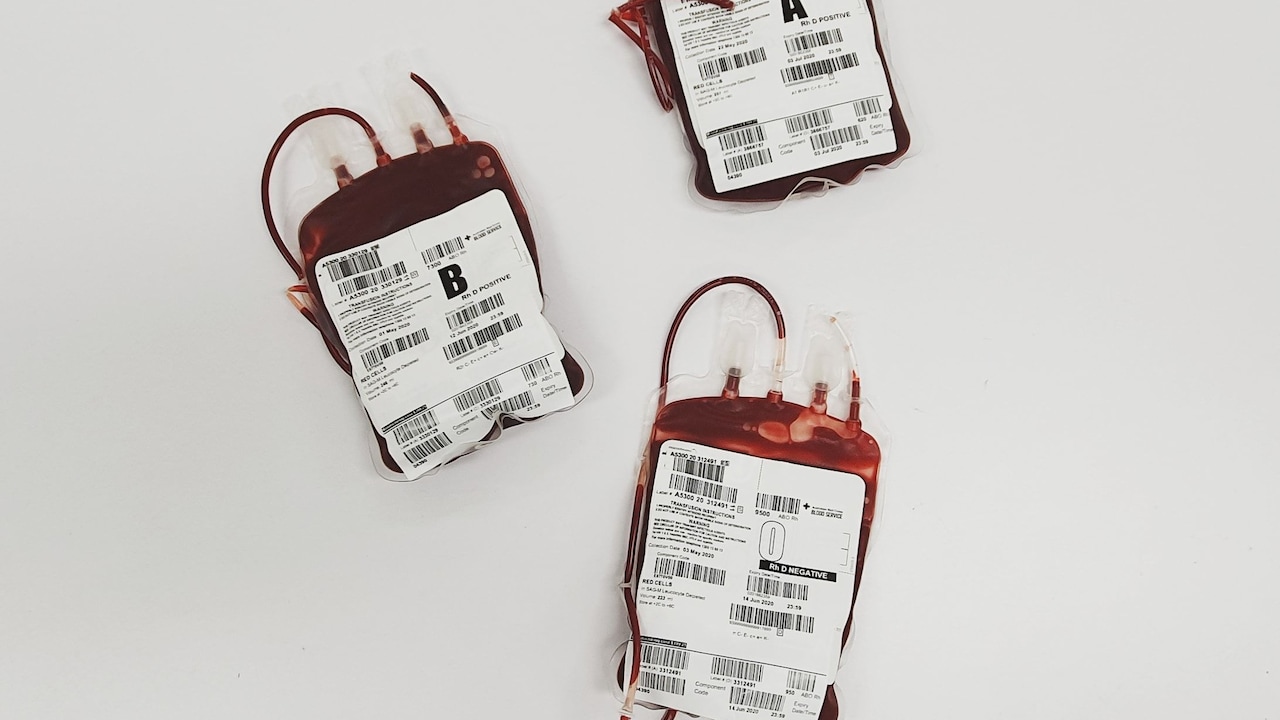
Consider a hypothetical night shift in a trauma center outside Lyon. Call the attending hematologist Dr. Claire Moreau. At 3:14 a.m., an ambulance arrives with a motorcyclist losing blood faster than the junior residents can cross-match his type. Claire needs O-negative packed red blood cells immediately. She doesn't walk down to a cellar with a brass key and a mercury thermometer. She relies on a networked cold-chain system—an automated telemetry grid that monitors thousands of blood bags stored across dozens of facilities, keeping every single unit strictly between 2°C and 6°C.
Why does that narrow four-degree window matter so much? Because human blood is not a chemical compound sitting inert in a jar. It is living tissue.
Let the temperature dip below freezing, and ice crystals form inside the red blood cells, shredding their membranes like tiny glass shards. Transfuse that blood into a patient, and the ruptured cells dump potassium and free hemoglobin into the bloodstream, triggering kidney failure or cardiac arrest. Let the temperature climb above 6°C, and any trace bacteria present in the bag begin to multiply exponentially, turning a life-saving transfusion into an injection of septic shock.
For decades, protecting that narrow thermal corridor meant padlocks, physical clipboards, and local alarms wired to a security desk down the hall. Then came modernization. Hospitals connected their medical refrigerators to building management systems so engineers could monitor compressor health remotely. Vendors added web interfaces so technicians could diagnose faults without driving three hours in the rain.
We built convenience directly into the nervous system of emergency medicine. And we forgot to lock the front door.
A Knob Exposed to the World
When cybersecurity researchers—specifically those tracking exposed industrial control systems through search engines like Shodan—scanned the public internet in late 2023 and early 2024, they weren't looking for a Hollywood cyberweapon. They were looking for human negligence.
What they found was chilling in its simplicity.
Multiple refrigeration control panels belonging to French blood supply facilities were sitting directly on the open internet. No virtual private network. No multi-factor authentication. In several instances, the web interfaces didn't even require a password to view live temperature readouts—or worse, to alter the target setpoints.
Think of it like leaving the thermostat of an intensive care unit taped to a lamppost on a busy street, with a sticky note telling passersby how to turn the dial.
Someone found those exposed interfaces. According to French authorities and security disclosures surrounding the incidents, unauthorized actors accessed the remote management portals of blood storage refrigeration units and attempted to manually raise the temperature settings. They weren't trying to encrypt a hard drive for Bitcoin. They were trying to spoil the inventory. They were trying to cook France’s emergency blood reserves from afar.
Why Physical Sabotage Is the New Frontier
I still remember the first time I walked into the server room of a mid-sized municipal utility during a security audit years ago. The air smelled of ozone and dust. The IT director proudly showed me their firewall—a gleaming rack of enterprise hardware blinking green in the dark. Then I asked about the air conditioning unit keeping those servers from melting. He pointed to a beige plastic controller mounted on the drywall. It had an Ethernet cable plugged straight into an unmonitored port on the guest network, running firmware from 2011 with the default factory password still printed on a sticker underneath.
That beige box taught me a lesson I have never shaken: hackers no longer need to break through the front gate when we have left the plumbing exposed to the street.
In cybersecurity, we talk endlessly about data breaches. We are numb to them. When a retailer loses forty million email addresses, we sigh, change a password, and move on with our day. Data is abstract. You cannot hold a leaked Social Security number in your hand.
Operational technology—the computers that spin turbines, open floodgates, dose chlorine into drinking water, and chill blood banks—is entirely different. When you hack operational technology, bits turn into atoms. Code becomes heat, pressure, and kinetic force.
The attempt on France’s blood supply sits squarely inside a disturbing global pattern:
- Oldsmar, Florida (2021): An intruder accessed the remote desktop software of a water treatment plant and tried to boost sodium hydroxide (lye) levels by more than a hundredfold, nearly poisoning a city’s tap water before an operator noticed the mouse cursor moving across his screen on its own.
- European Hospital Ransomware Attacks (2020–2024): Criminal syndicates locked clinicians out of electronic health records, forcing ambulances to divert miles away while stroke and trauma patients lost precious minutes.
- The French Cold-Chain Intrusion: An attacker skipped the ransom note altogether and went straight for the physical spoilage of critical medical stock.
What makes the French incident so unsettling is the absence of an obvious profit motive. You cannot extort a hospital easily once the blood is already ruined; by the time anyone notices the temperature spike, the inventory is unusable. Destruction was the point. Whether the culprit was a state-backed reconnaissance unit testing Western civil defense thresholds, an ideological extremist, or a bored vandal poking at open ports with a browser, the intent was pure disruption of human survival.
The Human Cost of a Ruined Shelf
Let’s return to our hypothetical hematologist, Dr. Claire Moreau, standing in that trauma bay outside Lyon.
Imagine the attackers had succeeded. Imagine the automated alarms had been silenced or misconfigured—a trivial step once an intruder holds administrative control over a building management controller. By morning, hundreds of units of whole blood, platelets, and plasma sit warm in their stainless-steel racks.
What happens next isn't just an accounting write-off.
Platelets—the tiny cell fragments that stop bleeding in cancer patients undergoing chemotherapy and victims of severe hemorrhage—have a shelf life of only five to seven days even under ideal conditions. Blood banks operate on razor-thin margins. There is no giant warehouse of spare human blood sitting in reserve; every single unit comes from a volunteer donor who walked into a clinic days earlier.
If a regional blood bank loses its cold-chain integrity overnight, surgeries across the district halt by breakfast. Organ transplants are postponed because surgeons cannot safely open a chest cavity without matched units standing by. Women experiencing postpartum hemorrhage suddenly depend on emergency courier convoys racing down highways from neighboring provinces.
You cannot manufacture human blood in a factory. When an attacker destroys a batch, the only way to replace it is to ask thousands of citizens to roll up their sleeves and bleed again—and wait days for the testing, screening, and separation to finish.
How the Disaster Was Averted—And Why We Got Lucky
France avoided a catastrophic shortage not because its digital perimeter was impenetrable, but because layered physical safeguards and alert human technicians caught the anomalies before irreversible thermal damage occurred.
Medical-grade refrigerators are heavily insulated boxes. Unlike a glass kitchen door, a commercial blood bank unit holds its internal cold for hours even after a compressor shuts off or a setpoint is altered, provided the door stays closed. Furthermore, independent secondary data loggers—tiny battery-powered thermometers sealed inside the storage compartments—often operate separately from the primary networked controller, triggering local audible sirens when temperatures drift out of bounds.
On-site staff noticed the irregular readings. The French national cybersecurity agency (ANSSI) stepped in, facility operators severed the exposed remote connections, and the blood supply remained intact.
We got lucky. Luck, however, is a terrible engineering strategy.
When we examine why those controllers were reachable from the internet in the first place, we uncover a systemic blind spot shared by hospitals, factories, and municipal utilities from Paris to Pittsburgh.
- The Vendor Trap: Third-party refrigeration and HVAC contractors frequently install cellular modems or port-forwarding rules so they can service equipment remotely under maintenance contracts. Hospital IT departments often don't even know these shadow connections exist until an incident occurs.
- Legacy Lifespans: A hospital MRI machine or industrial chiller is built to last twenty years. The embedded computer chip controlling it was designed when cybersecurity meant keeping people out of the basement, not defending against automated bots scanning every IP address on Earth every four minutes.
- The Illusion of Obscurity: Facility managers routinely assume nobody would ever look for—let alone target—an obscure refrigeration controller tucked away on a random IP address. Automated scanning tools erased obscurity fifteen years ago. If a device is connected to the internet, someone has already found it.
Rebuilding the Digital Cold Chain
Securing the infrastructure that keeps us alive does not require sci-fi artificial intelligence or billion-dollar defense budgets. It requires humility—and a return to basic engineering discipline.
If you run a clinic, a municipal water plant, or a manufacturing floor, the path forward starts with an uncomfortable admission: you cannot protect what you haven't mapped. Every networked thermostat, pump, and refrigeration panel must be inventoried and stripped off the public internet immediately. Remote maintenance must travel exclusively through encrypted, authenticated gateways with strict hardware-level access controls, never through open web portals exposed to raw traffic.
Even more importantly, critical life-support infrastructure must retain analog fail-safes—physical high-limit cutoffs and hardwired local alarms that software cannot override. A remote technician should be able to read the temperature of a blood bank from fifty miles away, perhaps, but no command traveling over the internet should ever be permitted to heat a blood refrigerator past 6°C. Physics and hardware limits should veto bad code every single time.
The next time you walk past a blood drive bus parked outside a library or a grocery store, pause for a second and look at the humming generators and cooling chests inside. We like to believe that modern medicine is held together by brilliant surgeons and miracle drugs. Most days, it is held together by quiet machines keeping fragile things cold in the dark—and by the vigilance of the people making sure nobody turns up the dial.