A Sudden Shift in the Dark
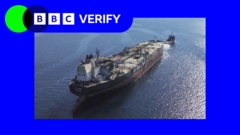
The ocean at night is an absolute, heavy blackness. On the bridge of a 1000-foot crude oil tanker, the only illumination comes from the dim green glow of radar screens and the faint flicker of instrument panels.
Picture a ship captain—let us call him Captain Vance, a composite of the mariners who found themselves in the Red Sea during the late autumn of 2023. Vance is standing with a lukewarm cup of coffee, looking out into the void of the Bab-el-Mandeb Strait. The name translates from Arabic as the "Gate of Tears." For thousands of years, sailors have respected this narrow choke point connecting the Indian Ocean to the Suez Canal. You might also find this connected article interesting: The Real Reason the Atlantic Migration Corridor Remains a Graveyard.
Then, the radio crackles. Or an satellite alert flashes on the console. A warning from naval authorities: anti-ship ballistic missiles and armed drones have been launched into the transit corridor. A sister vessel just miles ahead has been hit.
In that moment, Vance is not thinking about global crude futures, index funds, or retail supply chains. He is thinking about the twenty-three crew members sleeping below deck. He is thinking about the volatile cargo beneath his feet. As extensively documented in recent articles by NBC News, the effects are notable.
He turns to his helm officer.
"Hard astarboard."
The massive vessel, carrying hundreds of thousands of tons of cargo, slowly begins to lean. Its wake carves a massive white arc into the dark sea. A sharp, deliberate U-turn.
That single turn, multiplied across dozens of commercial vessels in a matter of days, quietly broke the global economy's most critical shortcut.
The Illusion of a Frictionless World
We live under the comfortable illusion that the modern world is boundless and seamless. We order a item online, and it arrives two days later. We pull up to a gas station, pump fuel, and drive away without wondering how that refined oil traveled halfway around the globe.
The reality is far more fragile. Global commerce relies on tiny, vulnerable needles through which massive threads of trade must pass.
The Red Sea route, leading directly into the Suez Canal, handles roughly 12% of total global trade. That includes nearly 30% of all container traffic and millions of barrels of crude oil every single day. It is the marine highway connecting Asia and the Middle East to Europe and the East Coast of the Americas.
When Houthi militants in Yemen began targeting commercial shipping with cheap, highly effective drones and missiles, they did not just attack ships. They exposed the raw, nervous system of international trade.
When a captain executes a U-turn in the Red Sea, the ship does not simply go back to where it started. It is forced into a multi-thousand-mile detour around the southern tip of Africa, past the Cape of Good Hope.
Consider the math of that detour.
Adding the journey around Africa adds roughly 3,500 to 4,000 nautical miles to a voyage. In human terms, that means an extra ten to fourteen days at sea. It means burning hundreds of additional tons of heavy fuel oil. It means millions of dollars in added costs per transit for insurance, fuel, and crew pay.
Panic does not always look like screaming crowds. Sometimes, panic is a silent line on a tracking screen changing direction in the middle of an ocean.
The Invisible Domino Effect
What happens on the water never stays on the water.
When those tankers turned around, they set off a slow-motion cascade through the global economy.
First came the immediate panic in the shipping market. Insurance underwriters took one look at the threat profile and canceled coverage for Red Sea routes or raised war-risk premiums by thousands of percent overnight. For many fleet owners, moving forward was no longer just dangerous; it was financially ruinous.
Then came the logistical nightmare at the ports.
Shipping is an intricate dance of scheduling. Ships are scheduled to arrive, unload, reload, and depart on precise windows. When dozens of ships suddenly delay their arrival by two weeks, port terminals go from waiting empty to being overwhelmed all at once. Containers stack up. Gantry cranes sit idle, then face crushing backlogs.
Think about a car manufacturing plant in Germany or a clothing retailer in the United Kingdom. They operate on "just-in-time" inventory models. They do not hold months of extra parts in warehouses; they rely on the ocean being a reliable conveyer belt.
When the conveyer belt stutters, factories pause production lines. Store shelves sit empty. The cost of shipping a single standard container jumps from $1,500 to over $4,000 in weeks.
And who pays for that extra fuel, those high insurance premiums, and those container surcharges?
You do. At the register. At the pump. Months after a captain made a quiet decision in the dark.
Steel, Salt, and Human Fear
It is easy to analyze this as a strategic or economic problem. Analysts draft charts showing freight rate spikes and altered trade routes.
But stripped of maritime jargon and economic theory, this is a human story about fear and responsibility.
The men and women manning commercial ships are not soldiers. They are merchant mariners. They are folks sending money back home to families in the Philippines, India, Ukraine, and China. They signed up to navigate heavy weather and manage cargo, not to dodge anti-ship missiles or watch the sky for incoming suicide drones.
Imagine sitting in a steel mess hall three floors below the waterline, knowing that a guided weapon could strike the hull at any second. The tension on those bridge decks during the height of the crisis was palpable. Every radar blip was a potential threat. Every small fishing boat on the horizon was a source of dread.
When those captains decided to turn their ships around, it was not merely a tactical re-routing. It was a refusal to treat human lives as acceptable collateral in a distant conflict.
A World Built on Vulnerable Threads
The Red Sea crisis forced a grim realization upon the world: our modern, hyper-connected lifestyle is anchored to geography we cannot control.
We like to think our digital age has decoupled us from the physical world. We talk about the cloud, AI, and digital infrastructure. Yet, everything physical we touch—our phones, our clothes, the fuel in our cars, the coffee in our cups—still travels on heavy steel hulls moving at fifteen knots across salt water.
When a handful of remote, low-cost drones can force the world's largest shipping conglomerates to reroute billions of dollars of goods around an entire continent, the balance of global power shifts in ways we are only beginning to comprehend.
The U-turns in the Red Sea were not a temporary detour. They were a wake-up call, exposing how thin the line is between seamless global abundance and total logistical gridlock.
Somewhere out on the South Atlantic right now, a tanker is pitching against massive, grey ocean swells off the African coast. Its crew is tired. Its fuel tanks are depleting. It is thousands of miles away from its original path, moving slowly around a continent it was never supposed to see.
The sea remains vast, indifferent, and expensive. And the world waits on the shore, hoping the ships keep coming.