No, the October 2026 expedition to Nikumaroro didn't find Amelia Earhart's Lockheed Electra 10E. After traveling thousands of miles across the Pacific, a 14-person team from Purdue University and the Archaeological Legacy Institute (ALI) reported no conclusive evidence of the missing aircraft—and found that the famous "Taraia Object" glinting in satellite images was likely just a cluster of large trees.
If you've followed the Earhart saga for years, that headline probably feels familiar. Every few years, a new scan, photograph, or underwater sonar bump promises to finally close the book on July 2, 1937. Then reality sets in. Coral sand, shifting tides, bad scale estimates, and wishful thinking have turned nearly every "breakthrough" into another lesson in how hard it is to hunt a small metal plane across millions of square miles of ocean. You might also find this connected story useful: Rebuilding Watchdog Credibility Through Hybrid Judicial and Executive Authority.
Still, calling the 2026 trip a total bust misses what actually happened on that remote Kiribati atoll. The crew ruled out a bad hypothesis, documented physical artifacts, and learned firsthand why working on Nikumaroro is brutal even before you start digging.
What the Taraia Object Actually Turned Out to Be
The whole premise of the October 2026 mission centered on a shape spotted in 2020 satellite imagery near Nikumaroro's lagoon, dubbed the Taraia Object. From orbit, a bright patch or odd outline can look tantalizingly like a wing, a fuselage, or an engine cowling sitting half-buried in shallow water. As extensively documented in recent reports by NPR, the results are widespread.
Once the team got boots and eyes on the site in mid-October 2026, the story shifted fast. According to Purdue University's updates, the visual anomaly that sparked the excitement was likely a collection of large trees, and what looked like a reflective metallic surface on a fragment turned out to be a naturally occurring carbonate veneer—a shiny, concretized crust of coral sand.
Honestly, skeptics had been waving red flags before the boats even left port. Researchers associated with The International Group for Historic Aircraft Recovery (TIGHAR), including executive director Richard Gillespie, had raised doubts about whether the lagoon anomaly matched a twin-engine Electra 10E. Scaling checks pointed out a basic geometry problem: an intact or recognizable central section of an Electra has a wide cruciform span with twin engines and a distinct profile, while a shallow lagoon isn't exactly a stealthy hiding spot for a 30-plus-foot airframe.
When maritime archaeologists and terrestrial specialists actually test a hypothesis in the field instead of staring at pixels on a screen, you get clarity. Even when the answer isn't the one you hoped for, clearing dead ends matters. As ALI executive director Rick Pettigrew noted after the search, determining what the Taraia Object actually was fulfilled that core objective.
Why Searching Nikumaroro Is Nothing Like a Movie Expedition
People picture Pacific island searches as sunny beach walks followed by crisp underwater footage. That isn't how Nikumaroro works.
Located in the Phoenix Islands group of Kiribati, the atoll is isolated, unforgiving, and logistically expensive to reach. The Purdue and ALI team left Purdue University Airport on October 2, reached Tarawa on October 6, spent five days at sea to get to Nikumaroro, and arrived on October 12. That's nearly two weeks of travel and transit just to start working—and a limited window before weather and scheduling force a departure.
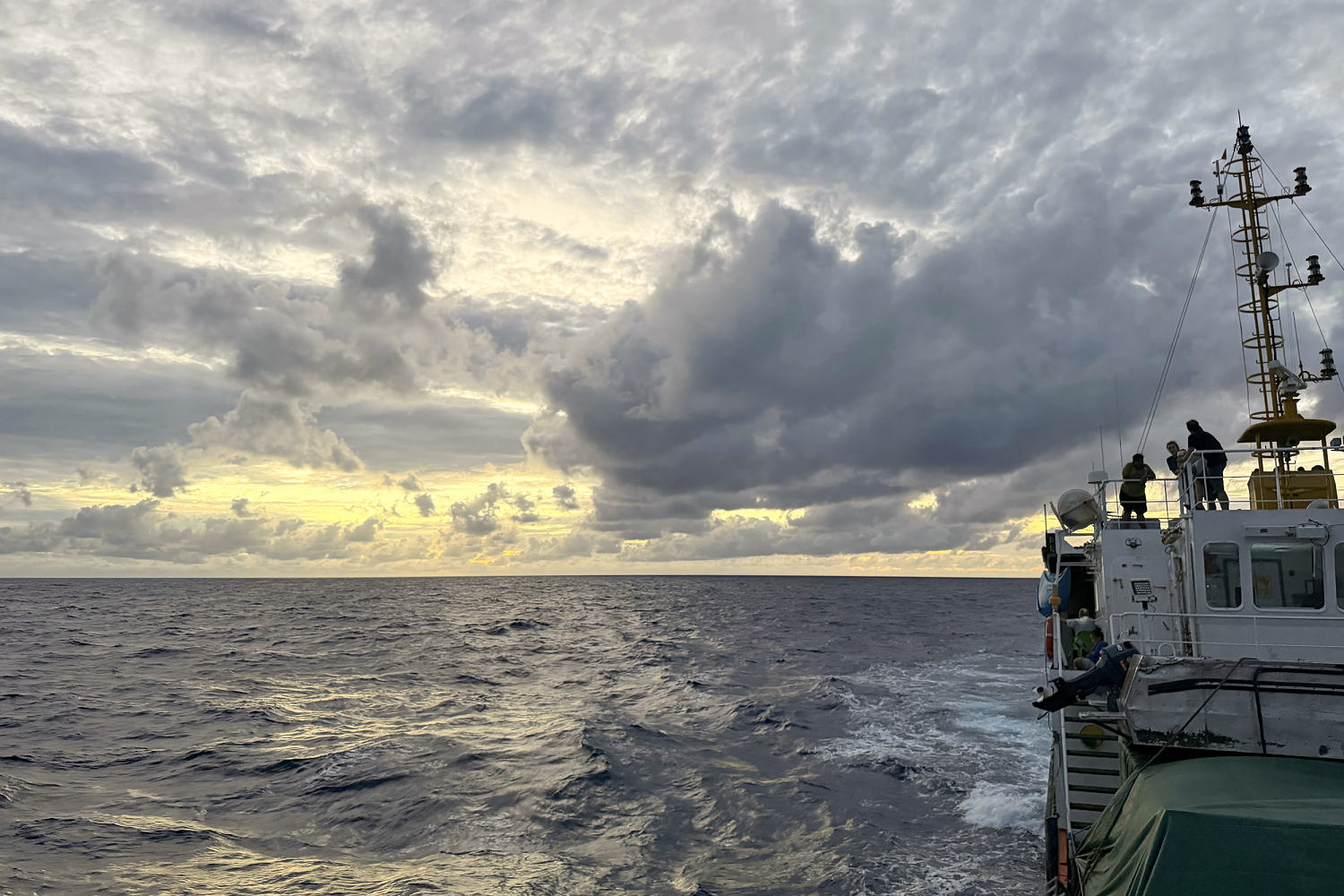
Ocean conditions alone can shut down a day's work. Rough seas kept the crew from going ashore on their third day, pinning them aboard their vessel, the Marin Mainiku, right around the October 17 date originally slated as their final day at the island before they decided to extend and push back ashore on October 18.
Then there's the wildlife. Purdue's expedition notes pointed out that the team returned to the ship at night partly because of coconut crabs—giant terrestrial crustaceans whose sheer size and nighttime activity make camping or staying overnight on the island impractical. Add scorching tropical sun, sharp coral, tide shifts, and the need for hydraulic dredging or careful archaeological recovery, and you start to see why field teams have to stay disciplined. You can't swing a shovel recklessly on a sensitive site or ignore sea swells just because everyone wants a dramatic discovery.
The Clues That Keep Researchers Coming Back
If the Taraia Object wasn't the plane, why keep going back to Nikumaroro at all? Because the castaway hypothesis didn't spring out of thin air, even though it remains fiercely debated.
When Earhart and navigator Fred Noonan vanished on July 2, 1937, flying from Lae, New Guinea, toward tiny Howland Island, they were navigating by dead reckoning and celestial sights with fuel running low. Her final confirmed radio transmissions to the U.S. Coast Guard cutter Itasca spoke of being on a line of position (157-337) and running north and south without spotting the island.
Supporters of the Nikumaroro theory argue that if the pair missed Howland and flew along that line, they could have spotted the low, narrow reef of Nikumaroro—then called Gardner Island—and landed on the reef flat at low tide. Over the decades, searchers have pointed to a mix of circumstantial clues:
- 1930s-era artifacts: Items documented on the island over the years, including a woman's shoe, a compact case, a freckle cream jar, and a medicine vial, have been cited as potential traces of someone staying there.
- Historical photography: Images such as the "Bevington Object," taken three months after the disappearance on the reef edge, have long been debated by analysts trying to figure out whether a dark shape resembles landing gear or natural reef features.
- Newer field finds: During the October 2026 effort, researchers reported recovering items for further study, including a 30-inch steel tube found in the lagoon.
Let's be real, though: none of those items is a smoking gun. A 1930s jar or shoe on a Pacific island doesn't prove Amelia Earhart wore it, and a steel tube in a lagoon could come from dozens of sources—shipwrecks, postwar activity, fishing gear, or old infrastructure. That's why serious archaeologists and historians keep stressing caution. Finding something old is not the same as finding her Electra.
Deep Water vs. Shallow Reefs: The Great Earhart Divide
Every serious discussion about Earhart's disappearance eventually splits into two main camps: crash-and-sink in deep water near Howland Island, or land-and-linger near Nikumaroro.
The deep-water argument is straightforward. Earhart's radio calls strongly suggest she was right near Howland Island—or believed she was—with fuel nearly exhausted. If the Electra ditched or crashed in the open ocean nearby, it sank into deep water where currents, depth, and decades of marine growth make locating a small, broken aluminum airframe extraordinarily difficult.
The Nikumaroro argument leans on the line of position, post-loss radio signals claimed by enthusiasts, and island artifacts. Yet critics point out that even if an aircraft landed on the reef at low tide, rising tides and surf action can batter a plane apart and sweep pieces into deep drop-offs along the reef wall—far deeper and harder to search than a calm lagoon.
Here's the practical takeaway from watching decades of these searches: visual anomalies are cheap; physical proof is expensive and rare. Satellite passes and historical photos are great for generating leads, especially when combined with archival research and local partnerships—like the Kiribati representatives who joined the 2026 expedition. Still, until someone pulls up a serial number, an engine block, or a structural component conclusively tied to NR16020, every other theory stays provisional.
How to Follow the Search Without Getting Fooled by Hype
If you want to keep tabs on future expeditions without falling for breathless clickbait every time a sonar blip pops up, a few habits will save you a lot of disappointment:
- Read the primary expedition release, not just the headline. Universities, archaeological groups, and research partners usually spell out exact caveats—like whether a surface sheen turned out to be coral carbonate rather than bare metal.
- Check scale and context. Whenever someone claims a shape in a photo or satellite image is a plane, look for independent size comparisons, shadow angles, and tidal context. Trees, coral heads, and wave patterns fool the human eye constantly.
- Separate artifacts from attribution. A piece of metal or a vintage bottle found on an island deserves careful documentation, especially with local heritage authorities, but treat "possible" and "proven" as two completely different buckets.
- Watch the long game. Purdue's Steve Schultz emphasized after the October 2026 trip that the search continues because Earhart's drive to push into the unknown still inspires researchers. After nearly nine decades, patience and skepticism are the best tools anyone brings to the Pacific.



