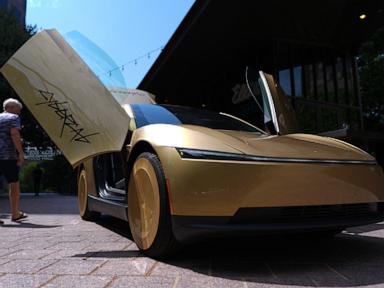
The mainstream tech press loses its collective mind every time a vehicle company strips out the primary control mechanisms. Headlines scream about passenger terror, regulatory panic, and the psychological hurdle of hopping into a cabin with no manual backup. The lazy consensus is that human anxiety is the primary bottleneck for autonomous fleets. People are scared of losing control, goes the narrative, so we need incremental baby steps to comfort them.
That theory is completely backwards.
Passenger anxiety is a red herring. People do not care about holding a steering wheel; they care about arriving alive and on schedule. The real friction point keeping autonomous cabs from dominating urban transit has nothing to do with steering-wheel phobia and everything to do with the fact that incumbent automakers are terrified of software eating their hardware margins.
I have spent the last decade watching legacy automotive executives pitch incremental driver-assistance features as breakthroughs while their balance sheets slowly bleed out under the weight of archaic manufacturing plants. They love the steering-wheel debate because it keeps the conversation focused on ergonomics and psychology rather than the death of their core business model. When a vehicle operates entirely without human input, it ceases to be a consumer durable good. It becomes a localized utility. That scares Detroit and Wolfsburg far more than it scares a commuter standing in the rain waiting for a ride.
The Phobia Myth
Let us dismantle the psychological barrier argument right now. The notion that riders are paralyzed by the absence of a steering wheel ignores how modern consumers actually behave.
Look at elevators. When automated elevators replaced human operators in the early twentieth century, critics predicted mass hysteria. People would refuse to step into a box controlled by unseen gears and electrical relays without a trained operator holding the brake. That panic never materialized because utility trumps nostalgia the moment reliability crosses a basic threshold.
The same applies to automated transit. The moment a service arrives faster, costs half as much as a human-driven alternative, and eliminates the risk of an exhausted driver taking a wrong turn or staring at their phone, nobody misses the plastic hoop in front of them. The anxiety narrative is propped up by surveys funded by legacy interests who need to justify multi-billion-dollar R&D programs spent on capacitive touch steering wheels and semi-supervised lane-keeping modes that achieve nothing except shifting liability from the manufacturer to an unsuspecting driver nodding off on the highway.
When a company removes the steering wheel, they are not taking a reckless gamble on human psychology. They are acknowledging a hard engineering truth: dual-mode systems fail because humans make terrible safety drivers.
The Safety Driver Trap
For years, the intermediate step in autonomous testing has been the safety driver—a nervous human sitting behind the wheel, staring at a laptop, ready to slam the brakes when the neural net encounters an edge case it cannot parse. This approach is treated by regulators as the prudent, responsible middle ground.
It is actually a lethal compromise.
Human vigilance degrades rapidly in monotonous environments. Asking a person to sit alert for four hours doing nothing while an algorithm does the driving is a psychological impossibility. When a critical failure occurs, the human response time is too slow, and the situational awareness is non-existent because the driver was mentally checked out three counties ago.
By keeping a steering wheel in the car during testing, companies invite the exact failure mode they claim to prevent. They create a dangerous ambiguity about who is in charge. When the system hands control back to a startled human with half a second to react, disaster is practically guaranteed.
True safety requires removing the escape hatch. Without a wheel, the software architecture cannot punt responsibility back to a distracted passenger. The engineering team has to solve the problem all the way through, rather than relying on a human safety net to catch their algorithmic mistakes.
The Economics of the Pod
Strip away the steering wheel, pedals, dashboard displays, and adjustable seating, and the entire unit economics of urban mobility shift overnight.
A traditional car is an asset designed for utilization rates below five percent. It sits parked in a driveway or a garage for twenty-three hours a day, soaking up depreciation, insurance costs, and maintenance overhead. The steering wheel and cockpit controls are expensive components optimized for a driver who is supposed to enjoy the experience of driving.
If the vehicle is a dedicated transit node, nobody enjoys driving it. They want a clean, quiet capsule that moves them from point A to point B at the lowest possible marginal cost. Removing the cockpit infrastructure slashes manufacturing complexity and frees up cabin space. It turns a luxury consumer item into a high-uptime utility asset designed to run twenty hours a day, rotating through cleaning and charging cycles with ruthless efficiency.
This is why traditional carmakers struggle to compete in this space. Their entire corporate culture is organized around selling lifestyle aspirations to individuals. They want you to care about leather stitching, horsepower curves, and infotainment screen resolutions. None of that matters when you are booking a three-mile hop across downtown at two in the morning.
The Regulatory Theater
Governments love to drag their feet on steering-wheel-free vehicles under the guise of public protection. Municipalities demand endless paperwork, special permits, and localized testing phases that span years.
This is not caution; it is protectionism. Local transit authorities and taxi unions recognize that a fleet of low-cost, automated pods operating without human overhead will obliterate legacy public transit models and traditional medallion systems. The regulatory hurdles are designed to slow down the inevitable long enough for politically connected incumbents to figure out how to buy their way into the market.
To break this gridlock, cities need to stop treating autonomous fleets as guest novelties requiring special supervision and start treating them as basic infrastructure. If a system can demonstrate safety metrics that statistically outperform human drivers across millions of accumulated miles, local governments blocking deployment due to abstract fears about missing steering wheels are actively contributing to traffic fatalities. Human drivers kill tens of thousands of people annually while holding steering wheels with both hands. Clinging to the wheel as a symbol of safety is statistically indefensible.
The Real Battleground
The future of urban movement will not be decided by winning over nervous passengers. Passengers adapt to convenience with terrifying speed.
The battleground is systemic. It is about who owns the software stack, who controls the municipal curb space, and whether legacy auto manufacturers can pivot from selling hardware to operating networks before their cash reserves run dry.
Stop worrying about whether riders are ready to let go of the wheel. They will let go the second they realize they never needed it in the first place.