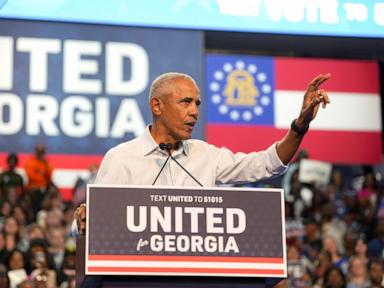
Winning a midterm election feels like crossing a finish line, right? Wrong. When Barack Obama sat down with newly elected Democrats following their major midterm gains—specifically after the 2018 blue wave that flipped the House of Representatives and again during subsequent post-election orientation sessions—he didn't hand out victory trophies. He delivered a sobering reality check.
If you look closely at what Obama said to newly elected Democrats after midterm gains, a clear pattern emerges. He consistently warns freshmen lawmakers against three fatal traps: mistaking a midterm wave for a permanent mandate, getting sucked into the Washington media echo chamber, and forgetting the kitchen-table issues that actually got them elected. Having watched political operatives and newly minted representatives fumble their first hundred days over the past decade, I can tell you his advice wasn't just polite mentorship. It was survival training.
The Core Message Behind Obama's Post-Midterm Warnings
Most political coverage focuses on the celebratory soundbites. Reporters love a good victory lap. Yet the actual substance of Obama's closed-door remarks and public orientation speeches revolves around political gravity.
In November 2018, Democrats picked up 41 House seats, reclaiming the majority for the first time in eight years. The energy in the room was electric. Newly elected members like Alexandria Ocasio-Cortez, Abigail Spanberger, and Sharice Davids arrived in Washington with wildly different mandates from wildly different districts. Obama stepped into that environment with a very specific warning. He reminded them that the coalition that wins a midterm is fragile, temporary, and notoriously impatient.
He told them to focus relentlessly on governing rather than cable news hits. Think about that for a second. When you suddenly have a congressional pin on your lapel, every producer in New York wants you on air at 7:00 PM. Obama knew from his own presidency—especially after his party suffered massive losses in the 2010 and 2014 midterms—how quickly public goodwill evaporates when voters think Washington is focused on drama instead of their paychecks.
Why the 2010 and 2014 Losses Shaped His Advice
You can't understand Obama's advice to incoming Democrats without looking at his own scars. In 2010, Democrats lost 63 House seats in what Obama famously called a "shellacking." Four years later, in 2014, they lost control of the Senate.
Those losses weren't just numbers on a spreadsheet to him. They stalled his legislative agenda for six years. So when he speaks to incoming classes of Democrats—whether during the 2018 orientation, the 2022 post-midterm debriefs, or state-level legislative retreats—he speaks as someone who learned the hard way what happens when messaging gets disconnected from suburban and rural realities.
He specifically emphasized that voters in swing districts didn't cast ballots for ideological purity tests. They voted for lower healthcare costs, better infrastructure, and basic competence. If a representative from a purple district starts talking like they represent Brooklyn or San Francisco, they're toast two years later.
Three Specific Rules Obama Pushed on Incoming Lawmakers
When you strip away the rhetorical polish, Obama's playbook for newly elected Democrats after midterm gains comes down to three concrete operational rules. Campaigns talk about these things in theory, but almost nobody executes them well once they get to Capitol Hill.
1. Don't Confuse Twitter With Real Life
Obama has spent years warning Democrats about the distortion field of social media. During his post-midterm sessions, he bluntly pointed out that the loudest voices online rarely represent the median voter in a competitive congressional district.
Honestly, this is where most modern politicians trip up. A freshman member posts a fiery clip, gets 50,000 likes, and assumes they're winning the argument. Meanwhile, a retired teacher in Ohio or a small business owner in Virginia watches that same clip and feels alienated. Obama urged new members to spend less time crafting viral comebacks and more time holding unglamorous town halls in grocery store parking lots and community centers.
2. Protect Your Frontline Colleagues
One of the sharpest insights Obama shared involved caucus discipline—not in the authoritarian sense, but in terms of basic political empathy. In any big midterm gain, the party wins because candidates managed to flip tough, historically conservative or moderate seats.
Obama told safe-seat Democrats that their primary job wasn't to push messaging bills designed purely to score partisan points. Why? Because every symbolic vote forced onto the House floor becomes ammunition for opposition attack ads in swing districts. He stressed that keeping the majority requires giving moderate and frontline members the breathing room to vote their districts without getting attacked by their own party's activist base.
3. Deliver Tangible Results Before the Next Cycle Starts
Voters have short memories. A midterm victory in November buys a politician roughly six months of grace before constituents start asking what has actually changed in their neighborhood.
Obama hammered home the need to pass legislation that voters can physically see and feel. Whether it's lowering prescription drug prices, fixing a crumbling local bridge, or expanding broadband access, concrete wins are the only reliable shield against the natural pendulum swing of American politics. Pure opposition to the other party works great when you're campaigning from the outside. Once you hold power, voters expect you to build something.
What Most Political Pundits Get Wrong About Obama's Speech
If you read partisan commentary right after Obama speaks to new lawmakers, you usually see two completely opposite takes. Progressive commentators often claim he's telling new members to water down their ideals and play it safe. Conservative commentators argue he's secretly orchestrating a radical takeover from behind the scenes.
Both takes miss the point entirely.
Obama isn't arguing against bold policy. He passed the Affordable Care Act during a massive recession, after all. What he's arguing against is bad politics—specifically, the habit of prioritizing performative outrage over actual legislative math. He understands that you cannot pass bold policies if you lose your majority every two years.
Consider the numbers from the 2018 freshmen class. The Democrats who survived the 2020 and 2022 cycles in tough districts—people like Elissa Slotkin in Michigan, Lauren Underwood in Illinois, and Sharice Davids in Kansas—were the exact ones who followed this blueprint. They avoided national cable news traps, kept their focus hyper-local, and built reputations as problem solvers rather than partisan warriors. Those who leaned too heavily into nationalized culture-war rhetoric often found themselves looking for new jobs after a single term.
How This Playbook Applies to Modern Campaign Strategy
Even as we move further through the 2026 political cycle, the mechanics of midterm gains haven't changed much. In fact, with media fragmentation getting worse every year, Obama's warnings carry even more weight today than they did in 2018.
If you're working on a campaign, managing communications for an elected official, or just trying to figure out why certain politicians survive wave elections while others wash out, look at how they handle their first 90 days in office. The pattern is remarkably consistent.
- Audit your media diet immediately. Stop measuring success by social media engagement metrics or national cable bookings. Track local newspaper coverage, constituent casework volume, and direct feedback from local civic groups instead.
- Prioritize constituent services over press releases. One of the least sexy parts of holding office is helping a veteran get their benefits or fixing a Social Security delay. Yet Obama frequently reminds new officials that constituent casework builds unbreakable local loyalty that no negative TV ad can erase.
- Keep your language grounded. Drop the academic jargon and activist buzzwords. Talk about rent, groceries, gas prices, and local schools the exact same way people talk about them at a Little League game.
- Build coalitions before you need them. Don't wait until a tough vote arrives to talk to colleagues from different factions of your party. Establish trust early so disagreements stay private rather than playing out in the press.
Political momentum is an illusion if you don't convert it into durable trust. Obama's message to newly elected Democrats wasn't meant to dampen their enthusiasm—it was meant to keep them in office long enough to actually accomplish what they promised on the campaign trail. Take a hard look at any newly elected official's calendar during their first three months in power; if it's filled with TV appearances instead of local listening sessions, they ignored the warning.


