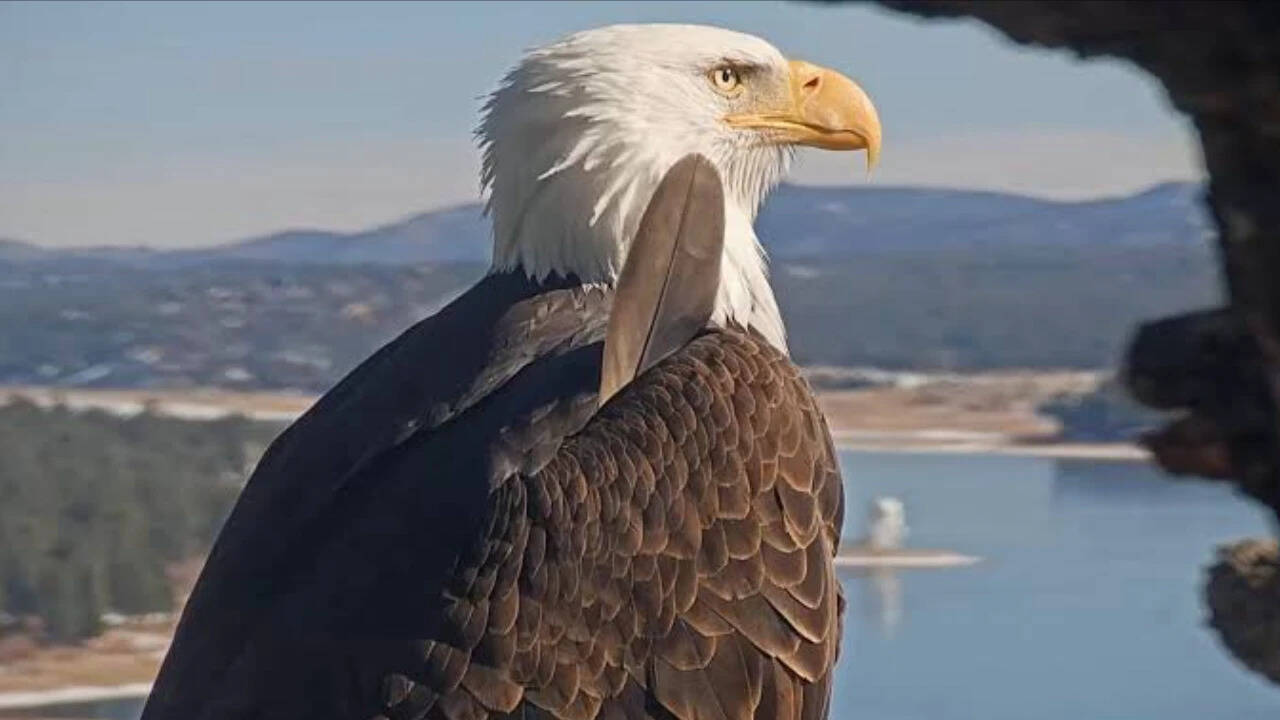
Millions of live-stream viewers are holding their breath over Jackie, the famous Big Bear Bald Eagle currently clinging to life in a specialized veterinary facility. Mainstream coverage treats her illness like an episode of a daytime soap opera. They marvel at donor blood transfusions, celebrate that lead poisoning was ruled out, and obsess over whether her mate Shadow will stay faithful in her absence.
This sentimental lens completely misses the point.
The medical intervention surrounding Jackie is not a triumph of conservation. It is an exercise in human psychological projection. By turning wild raptors into reality TV characters, the public has replaced genuine ecological understanding with sanitized, anthropomorphic drama. When a territorial fight leaves an apex predator bleeding out on a mountain ridge, human panic kicks in. We demand CT scans, cross-matched blood transfusions from captive eagles, and around-the-clock intensive care.
Nature does not care about your livestream subscription.
The Myth of the Romanticized Eagle Partnership
The prevailing media narrative paints Jackie and Shadow as a devoted couple torn apart by tragedy. News outlets wax poetic about Shadow waiting loyally near the nest while Jackie fights for survival in an Ojai facility.
This is pure fiction.
Avian monogamy is not human romance; it is territorial utility. Bald eagles pair bond because territory defense and chick rearing demand enormous resource efficiency. They do not share an emotional fidelity. They share a high-value real estate asset.
In fact, while human fans were weeping over Jackie’s veterinary updates, a sub-adult eagle was already observed perching with Shadow in the Big Bear nest. That is not betrayal. That is biology. If an alpha female goes missing or suffers severe trauma, the territory opens up immediately. Other eagles move in to claim the site, the food sources, and the breeding rights.
When falconers and wildlife biologists look at Jackie’s injuries, they do not see a tragedy; they see standard territorial turnover. Intraspecific aggression—eagles fighting other eagles to the death over prime hunting ground—is one of the leading causes of mortality in healthy adult raptors. By framing her fight with intruding eagles as an unexpected tragedy, coverage ignores basic population dynamics.
ICU Medicine Versus Ecosystem Reality
Wildlife rehabilitators are currently performing miraculous feats of veterinary medicine on Jackie. They cross-matched blood from a captive eagle named Spirit, administered blood transfusions, ran CT scans, and subjected her to battery after battery of toxicological panels.
It makes for inspiring headlines. But from a strict ecological perspective, high-tech intensive care for individual wild raptors is an emotional placebo for humans, not a meaningful strategy for wildlife conservation.
Consider the resource allocation:
- Cost of heroic intervention: Tens of thousands of dollars spent on single-patient veterinary ICUs, diagnostic imaging, and specialized transport.
- Ecological impact: Zero. Bald eagles are a fully recovered species in North America, sitting firmly at "Least Concern" status.
- Return-to-wild reality: Even if an apex predator survives severe anemia, kidney inflammation, and systemic physical trauma, the chances of successful re-integration into an aggressive territorial ecosystem drop significantly with every week spent in a sterile rehabilitation stall.
I have seen well-meaning organizations funnel immense resources into high-profile animal cases simply because the public demands a happy ending. Meanwhile, critical habitat preservation, wetlands restoration, and systemic toxicant mitigation receive fractions of that public focus. We pour thousands of dollars into saving the bird with a name, while ignoring the thousands of nameless birds losing their habitat to suburban sprawl.
The Uncomfortable Truth About Anemia and Contaminants
Media reports proudly trumpeted that blood tests ruled out lead toxicosis in Jackie's system. The internet cheered, declaring her clear of human-caused harm.
Not so fast.
Ruling out acute lead poisoning does not mean an apex predator living in proximity to human infrastructure is safe from toxic overload. The diagnostic focus on a single culprit obscures a far more complex biological threat: multi-contaminant stress.
Severe anemia in wild raptors rarely stems from a single isolated cause. While tests ruled out foreign metallic bodies like fishing hooks or lead shot, the ongoing investigation into secondary factors—like zinc toxicity or sub-lethal anticoagulant rodenticides—exposes the toxic burden apex predators carry in urban-adjacent wildernesses.
Anticoagulant rodenticides do not always kill an eagle outright with mass internal hemorrhage. Instead, sub-lethal doses destroy clotting factors, impair immune response, and leave the bird profoundly anemic, weak, and unable to defend its nest against aggressive conspecific rivals.
When we fixate solely on "did lead do this?", we ignore the reality: human encroachment poisons apex predators through cumulative, low-dose exposure to dozens of legal household products.
The Distorting Effect of the 24-Hour Nest Cam
The Big Bear nest camera was installed to educate the public on wildlife behavior. Instead, it created an ecosystem of parasocial dependence.
When thousands of viewers tune into a livestream every day, they form an unearned sense of ownership over wild creatures. They name the birds, assign them human moral codes, and demand human solutions when nature takes its course.
This observer effect alters wildlife management policies:
- Public Pressure Overrides Natural Selection: In a truly wild setting, an injured or sick eagle succumbs to its injuries or is displaced by a stronger individual, strengthening the genetic pool of the local population. Nest cams force rehabilitators to intervene because letting "Jackie" die on camera would cause a public relations disaster.
- Sanitizing the Wild: Viewers demand that rehabilitators intervene when eggs fail, when chicks starve, or when intruding eagles attack. They want the aesthetic of nature without its brutal mechanics.
- Misdirected Conservation Dollars: Donations surge for individual charismatic patients while fundamental conservation work—land acquisition, policy lobbying, water rights fight—goes underfunded.
If we want to respect wild animals, we have to respect their right to be wild. That includes their right to lose territorial disputes, suffer from disease, and die outside the reach of a human blood transfusion.
Stop Treating Wildlife Like a Reality Show
Jackie may recover. She may regain her strength, get released back into the San Bernardino National Forest, and attempt to reclaim her old territory. Or she may fail, get driven off by younger rivals, or remain permanently un-releasable in a sanctuary.
Either outcome is natural.
The obsession with forcing a fairy-tale ending onto a wild predator does not make us animal lovers; it makes us selfish observers who refuse to accept nature on its own terms. If you care about bald eagles, close the livestream, turn off the updates, and support habitat conservation over medical anthropomorphism.
Nature was thriving long before we started putting cameras in trees, and it will keep turning whether your favorite eagle survives or not.
Specialists work to uncover Big Bear eagle Jackie's illness
This short clip provides direct insight into the intense veterinary efforts and territorial realities surrounding Jackie's condition.