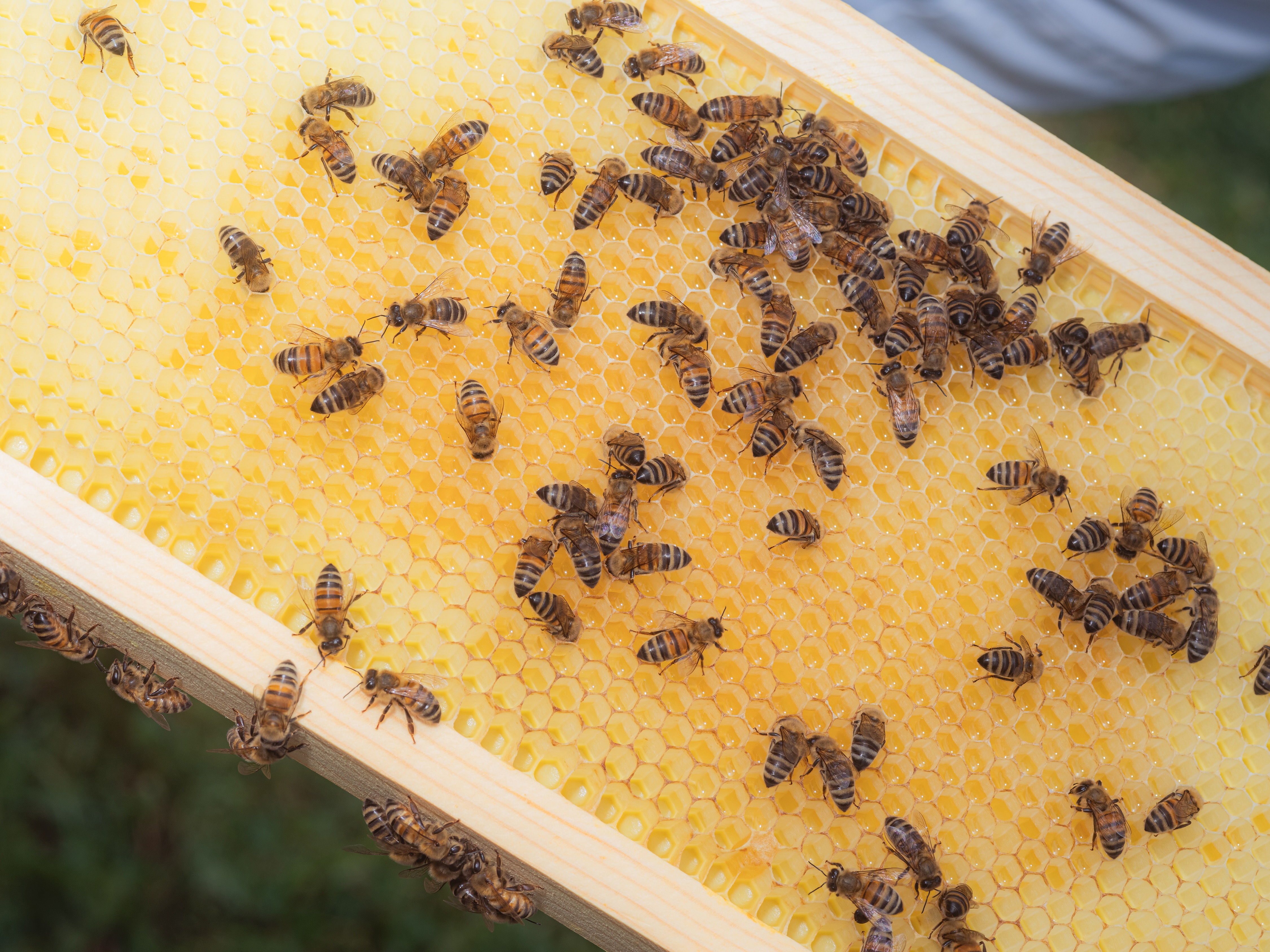
We love to romanticize what we do not bother to research. A competitor recently published a piece lamenting how bees have coexisted with humans for over a millennium, yet their very name "remains a mystery." It is the kind of soft-focused, mystical prose designed to make readers sigh about the ancient secrets of Mother Nature.
It is also completely wrong.
The etymology of the word "bee" is not a locked vault. It is not an esoteric riddle wrapped in an enigma. It is a well-mapped, thoroughly documented linguistic evolution that Indo-European scholars settled decades ago. Calling it a mystery is not just inaccurate; it is historical laziness masquerading as profound wonder.
We do this constantly. When a subject feels old, we substitute rigorous etymology with myth-making. Let us stop treating basic historical linguistics like an episode of an unsolved mysteries podcast. The true story of how the bee got its name is far more fascinating than a fake mystery because it reveals how our ancestors actually interacted with the physical world. They did not speak in poetic riddles. They spoke in brutal, functional descriptions.
The Myth of the Linguistic Dead End
The lazy consensus relies on a single, flawed premise: if a word does not look like its modern equivalents in Romance languages, it must have dropped from the sky.
Mainstream romanticizers point out that the French use abeille, the Italians use ape, and the Spanish use abeja—all deriving beautifully from the Latin apis. Then they look at the Germanic branch—the English bee, the Dutch bij, the German Biene—shrug their shoulders, and declare it an unsolvable anomaly.
This is the linguistic equivalent of looking at a pug and a Siberian husky, throwing your hands up, and declaring that the origin of the pug is a permanent biological secret.
The word "bee" tracks cleanly back to the Proto-Indo-European root *bhei-, which specifically meant "to buzz," "to hum," or "to drone." It is an echoic root. A sound effect. Our ancestors did not sit around a fire inventing an abstract, mystical title for the insect. They called it a "buzzer."
The Indo-European Family Tree
To understand how straightforward this is, look at how the root *bhei- spread across different linguistic branches without losing its mind:
| Language Family | Ancient/Modern Word | Meaning |
|---|---|---|
| Proto-Indo-European | *bhei- | To buzz / hum |
| Proto-Germanic | *bījō | Honeybee |
| Old English | bēo | Honeybee |
| Old Irish | bech | Bee |
| Old Lithuanian | bitis | Bee |
| Russian | pčelá | Bee (via Slavic variants) |
When you lay the data out, the "mystery" evaporates. The Germanic, Celtic, and Baltic branches all kept the original physical description of the insect's sound. The Latin branch simply chose a different descriptive root. One group focused on the sound; the other focused on something else. This is not a cosmic puzzle; it is just dialectal drift.
Stop Asking if the Name is a Secret (Ask Why We Forgot the Real History Instead)
The public frequently falls into the trap of asking the wrong questions about language. People search forums for "Where does the word bee come from?" hoping for a story about an ancient god or a forgotten civilization. When they find out it just means "the insect that makes a buzzing noise," they feel cheated. So, popular writers manufacture mystery to satisfy that craving for drama.
Let us dismantle the flawed premise of the "mysterious name" query once and for all.
Why do we think ancient words are riddles?
Because modern English has become highly abstract. We use words like aviation (from Latin avis for bird) or hippopotamus (from Greek for river horse) without thinking about their literal meanings. But ancient languages were aggressively, almost comically literal.
If you look at Old English names for animals, they lack all pretense:
- A squid was a wæter-bucca (water-goat).
- A parrot was a popinjay (babbling bird).
- A bee was a bēo (buzzer).
To demand that the word bee contain some deep, hidden philosophical truth is to project 21st-century existential dread onto Early Medieval farmers who were just trying not to get stung while stealing honey.
What about the "millennium of coexistence" claim?
The competitor article notes with great reverence that we have lived alongside bees for "over a millennium." Try nine millennia.
Rock paintings in Valencia, Spain, dating back at least 8,000 years, depict humans harvesting honey from wild nests. We have residues of beeswax on pottery from the Neolithic period in Anatolia. The relationship is not a mere thousand years old. By the time the Anglo-Saxons were writing down the word bēo in the 8th century, humanity had already been exploiting, managing, and worshipping bees for longer than recorded history itself.
To contract that epic timeline down to a single millennium shows a profound lack of historical scale. It minimizes the deep, structural impact apiculture had on human development.
The Danger of Romanticizing the Natural World
This trend extends far beyond etymology. We see it across the entire environmental and lifestyle commentary space. Writers consistently substitute rigorous science with vague, quasi-spiritual awe because awe is easier to write than mechanics.
I have spent years analyzing how corporate marketing copy and popular science articles hijack environmental themes. They convert hard biological realities into soft, palatable narratives. When you turn a bee into a "mysterious entity with a secret name," you remove it from the realm of ecology and drop it into the realm of fantasy.
Fantasy does not need protecting. Ecosystems do.
When we obscure the practical, historical realities of nature, we lose our grip on how to manage them. The Anglo-Saxons did not view bees with distant, poetic reverence; they viewed them as livestock.
The Anglo-Saxon Bee Charms
Consider the Geraednes beon (Bee Ordinance) or the famous Forbeah charm from the Anglo-Saxon metrical charms. When a swarm of bees escaped, the bee-keeper did not recite poetry about the mysterious cosmos. They threw earth on the swarm and yelled:
"Sitte ge, sigewif, sigan to eorðan!"
(Sit down, victory-women, sink to the earth!)
They called them "victory-women" because they understood the hierarchy of the hive—a female-dominated, highly organized military unit that produced liquid wealth. They understood the mechanics. They did not need a mystery to find them valuable.
The Actual Linguistic Anomaly Nobody Talks About
If you want a real linguistic puzzle in the insect world, stop looking at bees. Look at the butterfly.
The word bee tracks perfectly across northern Europe. The word butterfly, however, is a chaotic mess of regional folklore and superstition that defies clean tracking.
- English: Butterfly (literally, a fly that looks like butter, or excrement-derived folklore).
- German: Schmetterling (from a Slavic root meaning "cream").
- French: Papillon (from Latin papilio).
- Russian: Babochka (literally, "little grandmother" or "soul of an ancestor").
[Proto-Indo-European Root]
       │
       ├─► Latin "Papilio" ──► French "Papillon"
       │
       ├─► Germanic "Butter-flege" ──► English "Butterfly"
       │
       └─► Slavic "Babochka" (Grandmother/Soul) ──► Russian "Pčelá" connection
Why does the butterfly have radically different names rooted in witchcraft, dairy theft, and ancestral souls across a single continent, while the bee remains a steady, consistent descriptor of sound? Because bees were an economic commodity. They were standardized by trade, honey production, and tax laws. Butterflies were just erratic bugs associated with folklore.
The stability of the word bee is proof of its industrial importance. It was too important an economic asset to be lost to shifting linguistic trends.
The Downside of Clarity
Admitting that the word bee is just a functional description of a sound carries a distinct risk. It strips away the comforting veneer of magic. It forces us to confront the fact that our ancestors were pragmatic pragmatists, not romantic poets whispering to the wind.
When you strip the false mystery away from history, you are left with something starker: raw utility. Humans tracked the buzzer because the buzzer had the sugar. We named it for what it did to our ears, and we guarded it for what it gave to our palates.
Stop reading articles that try to turn basic, verifiable linguistics into an episode of the twilight zone. The lexicon of the natural world is not a collection of secrets meant to baffle us. It is a mirror reflecting exactly how our ancestors worked, traded, and survived. They did not live in a world of mysteries. They lived in a world of noises, and they named those noises directly.