Static. That is the first thing you notice when you stand at the back of the James S. Brady Press Briefing Room before the cameras go live. It is a low, electric hum radiating from a wall of tripods, mingled with the sharp scent of burnt coffee and the rustle of forty-nine journalists shifting in tight blue velvet seats.
For decades, that room operated on an unwritten choreography. A spokesperson walked out in a tailored suit, gripped the edges of a heavy wooden lectern bearing the presidential seal, and performed a delicate verbal ballet. Questions were parried with carefully calibrated non-answers. Tension was managed through bureaucratic cadence. Even when the room grew hostile, the hostility wore a necktie.
Now, picture the double doors swinging open, and instead of a seasoned Washington communications operative, Dana White steps up to the microphone.
The veins in his neck are visible beneath a fitted black t-shirt or an unbuttoned dress shirt. His posture is wide, grounded, like a man expecting a left hook. When a reporter from a legacy network asks a multi-part question about the latest legislative stalemate, White does not reach for a binder of talking points. He leans forward, squints, and tells the room that the premise of the question is garbage.
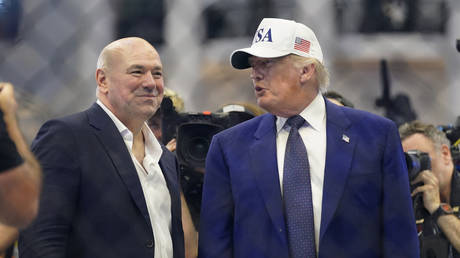
This is not merely a clever piece of political theater. When President Donald Trump floated the idea of tapping the longtime UFC president and CEO to serve as White House press secretary—a moment that sparked immediate shockwaves across both Capitol Hill and the sports world—it exposed a profound shift in how American power speaks to the public. To understand why that single proposition sent tremors through Washington, you have to look past the spectacle and examine the architecture of modern persuasion.
The Anatomy of a Modern Brawl
To grasp what a Dana White press briefing would actually mean, we have to leave Pennsylvania Avenue for a moment and step inside an arena in Las Vegas at midnight.
I have spent enough nights on press row at mixed martial arts events to know the exact vibration of the floorboards when the main event walks out. The air smells like sweat, cheap beer, and high-end cologne. Above the cage, thirty-foot screens flash sponsor logos, while inside it, two human beings prepare to test the limits of their anatomy for fifteen or twenty-five minutes.
When the fights end, the real business begins. Dana White walks into the post-fight press conference.
There are no teleprompters. There are no handlers whispering in his ear. If a fighter missed weight, White calls him unprofessional in front of millions of viewers. If a judge botched a scorecard, White calls the athletic commission incompetent. If a journalist asks a question White considers lazy, he dismantles the reporter’s credibility in thirty seconds flat, often turning the rest of the room into laughing accomplices.
Contrast that with the traditional Washington press corps. For nearly a century, the relationship between the White House podium and the fourth estate functioned like a high-stakes chess match played under strict tournament rules. Both sides needed each other. The administration needed a megaphone; the press needed access. Even during the fiercest battles of the Nixon or Clinton eras, the vocabulary remained institutional.
Consider a hypothetical scenario to see where those two worlds collide. Imagine a Tuesday afternoon in mid-October. Inflation numbers have just come in slightly hotter than expected, and a major trade partner is threatening retaliatory tariffs. Under a conventional press secretary, the briefing would be an exercise in linguistic containment—phrases like "monitoring the trajectory," "targeted adjustments," and "constructive dialogue" would fill the air like fog, dulling the edges of the crisis until the news cycle moved on.
Now run that exact same Tuesday through the Dana White filter.
White wouldn't try to lower the temperature in the room; he would weaponize it. In his world, attention is the only currency that holds value, and conflict is the mint that prints it. He would frame the tariff dispute not as a macroeconomic adjustment, but as a title fight where America is finally refusing to let another heavyweight walk over it. The reporters challenging the numbers wouldn't be treated as neutral observers; they would be cast as rival promoters trying to tank the pay-per-view buy rate.
Why the Offer Happened at All
Trump’s suggestion that White take the podium did not materialize out of thin air. Their bond stretches back more than two decades, to a time when mixed martial arts was banned in most states, dismissed by Senator John McCain as "human cockfighting," and exiled to tribal casinos and backwater arenas.
In 2001, when respectable venues wouldn't touch the fledgling Ultimate Fighting Championship, Donald Trump opened the doors of the Trump Taj Mahal in Atlantic City for UFC 30 and UFC 31. White has never forgotten it. Loyalty, in both men’s moral universes, is not an abstract virtue; it is a transactional ledger kept in permanent ink.
Over the ensuing twenty-five years, White took a $2 million distressed asset and engineered its rise into a global juggernaut that eventually sold for $4 billion in 2016 before merging with WWE under the TKO Group Holdings banner in a deal valuing the combined entity at over $21 billion. He did it by ignoring every rule in the traditional sports-marketing handbook. He bypassed gatekeepers, spoke directly to fans through raw video blogs, and turned every internal dispute into public drama.
Trump watched that playbook work in real time. Both men share a visceral distrust of legacy institutions—whether it is the boxing establishment, the mainstream media, or the federal bureaucracy. Both understand that in an attention economy fractured by algorithms, polish reads as dishonesty, while bluntness reads as authenticity.
Yet, when the rumors swirled around White potentially taking the White House job, White himself quickly poured cold water on the idea, making it clear he had no desire to trade his empire for a government salary and a daily grilling in D.C. That refusal is telling. Why would the king of a multi-billion-dollar combat sports empire step down to become a staffer?
He wouldn't. The significance of the offer wasn't whether White would actually pack his bags for Georgetown. The significance was that a sitting—and returning—American president looked at the highest communication post in the free world and decided that the ideal candidate was not a policy wonk, a former journalist, or a legal scholar, but a fight promoter.
The Invisible Stakes Behind the Podium
It is easy to laugh off the image of a UFC boss behind the presidential seal. The late-night monologues write themselves. Yet beneath the humor lies a profound transformation in democratic accountability—one that leaves many citizens feeling simultaneously entertained and deeply unsettled.
Think about what a press briefing is supposed to accomplish. At its best, it is the one place where the immense, opaque machinery of the executive branch is forced to answer, on the record, to ordinary citizens via the proxies sitting in those blue velvet chairs. When a veteran reporter presses an administration on why veteran healthcare wait times are rising, or why a military operation went sideways, the friction in that room serves a vital civic function. It forces precision. It creates a public record that historians and voters can measure against reality.
When you replace traditional political communication with promotional combat, the rules of evidence change.
In the fight business, truth is secondary to momentum. If a promoter says a bout is the greatest stylistic matchup in history, nobody fact-checks him against historical punch-stat metrics; they either buy the fight or they don't. The objective isn't clarity; it is conversion.
If that ethos becomes the permanent standard at the White House podium, the citizen watching at home faces a subtle trap. The briefing stops being a source of verifiable information and becomes another arena spectacle. You pick your corner, cheer when your side lands a verbal haymaker on a hated network correspondent, and boo when the opposition tries to clinch. Meanwhile, the actual mechanics of governance—the tax codes, the regulatory rollbacks, the foreign policy treaties—slip quietly past in the dark while everyone is watching the heavyweight slugfest under the bright lights.
I remember sitting in a crowded diner in Ohio during the 2024 campaign cycle, watching a cable news clip of a heated exchange between a political surrogate and a host. Three tables over, a retired machinist in a faded Carhartt jacket shook his head and muttered to his friend, "Nobody answers anything anymore. They just try to score points."
That exhaustion is real. People are starved for someone who talks like a human being instead of a focus-grouped robot. That hunger is precisely what makes someone like Dana White so magnetic to millions of voters. When White speaks, you never wonder what a focus group told him to say. His rough edges are the whole point.
The Illusion of Straight Talk
Here is the paradox, though—and it is one anyone who has followed combat sports closely knows well. The "straight-shooting promoter" is itself one of the most carefully constructed personas in modern entertainment.
White is genuinely unfiltered in his delivery, yes. He curses, he turns red, he admits when a fight stinks. Yet every seasoned MMA journalist knows that behind that blunt exterior lies a ruthless disciplinarian of narrative. Reporters who ask questions that threaten the UFC’s business model—questions about fighter pay, antitrust lawsuits, or unionization—have historically found their credentials revoked or their outlets frozen out of interviews.
The straight talk flows in one direction. It is used to disarm critics, rally the base, and frame the promoter as the sole truth-teller in a room full of liars.
Transfer that dynamic to the James S. Brady Press Briefing Room, and the illusion becomes dangerous. A press secretary who acts like a fight promoter doesn't eliminate spin; he simply replaces polite spin with aggressive spin. Instead of dodging a question with bureaucratic jargon, he dodges it by attacking the questioner’s motives, intelligence, or ratings. To the casual viewer scrolling through clips on their phone, the dodge looks like dominance. The substance of the question—whether it’s about healthcare costs or national security—vanishes into thin air, buried beneath the viral clip of a reporter getting "destroyed."
What Happens to the Room
Even without Dana White physically standing at the lectern, the gravitational pull of his style has already reshaped Washington. Look at the evolution of White House communications over the last decade. Press secretaries are no longer hired primarily to manage relationships with the Washington bureau chiefs of major newspapers; they are hired to create viral moments for social media feeds and cable news chyrons.
The physical architecture of the briefing room hasn't changed since Richard Nixon paved over the White House indoor swimming pool to build it in 1969. The cramped aisles, the hot television lights, the iconic blue backdrop—all of it remains intact.
Yet the spirit inside those walls has undergone an irreversible mutation. The polite fiction that government and press are engaged in a shared civic enterprise has given way to open warfare, broadcast live in high definition. Trump’s flirtation with putting the UFC’s chief architect at the center of that room wasn't a bizarre detour from the norm; it was the logical conclusion of a twenty-year trajectory merging politics with reality television and professional combat sports.
Late at night, long after the cameras have powered down and the tripods have been packed into rolling cases, the briefing room goes quiet again. The fluorescent lights hum softly over empty rows of blue velvet chairs. The wooden lectern stands alone at the front of the room, bearing an eagle clutching olive branches in one talon and arrows in the other—waiting to see whether the next person who grips its edges came to explain the nation’s business, or to sell the next fight.