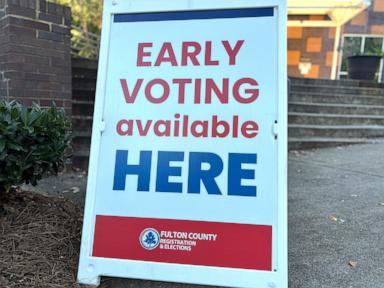
Election administration suffers from a structural information asymmetry: the systems designed to guarantee ballot integrity are invisible to the average voter, while isolated administrative errors or bad-faith narratives are hyper-visible. Standard media coverage frames this deficit as a public relations problem solved by reassuring rhetoric and vague appeals to civic duty. In practice, county election directors and secretaries of state treat institutional distrust as an operational vulnerability that requires mechanical redundancies, radical physical transparency, and pre-bunking protocols to neutralize before ballots are cast.
The Structural Drivers of Electoral Skepticism
To understand how administrators counter distrust, one must first isolate the mechanisms that generate it. Voter skepticism rarely stems from a single catastrophic failure. Instead, it emerges from the friction between complex logistical realities and the public's expectation of instantaneous certainty. For another perspective, consider: this related article.
1. The Temporal Gap and the Mirage Effect
In modern American elections, the period between the close of polls and the certification of results is the primary breeding ground for suspicion. Different jurisdictions process mail-in, early in-person, and Election Day ballots under varying statutory timelines. When states prohibit the pre-processing of mail ballots prior to Election Day, tabulation creates a predictable statistical shift—often termed the "red mirage" or "blue shift"—as distinct voter cohorts are counted in sequence. To an uninitiated observer, a late surge in votes for one candidate mimics manipulation rather than the sequential processing of legally cast ballots.
2. The Black Box of Tabulation Hardware
Optical scanners, ballot-marking devices, and central tabulators operate behind secure perimeters to prevent tampering. While physical isolation protects hardware from unauthorized access, it simultaneously creates a "black box" perception. When voters cannot observe the chain of custody from the drop box to the final canvass, the absence of visual proof is easily filled by conjecture regarding algorithmic manipulation or external network interference. Related reporting on this trend has been published by NPR.
3. The Diffusion of Local Rumors
Misinformation in midterm cycles rarely relies on sweeping, national-level fabrications alone. Instead, it operates through the amplification of localized, mundane friction. A printer jam in a single precinct, a miscalibrated scanner rejecting a folded mail ballot, or a temporary poll-book sync delay are routine operational hiccups that occur in every election cycle. When captured on a smartphone and stripped of operational context, these localized anomalies are broadcast as evidence of systemic disenfranchisement.
The Four Pillars of Administrative Trust-Building
Election officials do not rely on persuasion to close the trust gap; they rely on exposure and procedural redundancy. Across battleground jurisdictions—from county boards in Georgia to state-level offices nationwide—administrators deploy four distinct operational interventions to convert skeptics into verifiers.
Pillar 1: Radical Radicalization of the Observer Pipeline
The most effective countermeasure against the "black box" narrative is internalizing the skeptic. Rather than keeping critics outside the glass partitions of tabulation centers, county directors actively recruit vocal skeptics to serve as paid poll workers and bipartisan audit board members.
This strategy leverages a fundamental principle of behavioral psychology: procedural immersion. When an individual is required to execute the mundane, hyper-regulated steps of election administration—verifying signatures against registration rolls, balancing poll-book check-ins against physical ballot stubs, and sealing transfer cases with serialized, tamper-evident tags—abstract conspiracy theories collide with physical reality. A critic who spends fourteen hours reconciling a precinct's ballot count learns firsthand that altering a tally requires a coordinated conspiracy across dozens of ideologically opposed neighbors, each holding a separate key or signature log.
Pillar 2: Multi-Layered Verification and Triple-Counting Mechanics
Public statements asserting that "machines are accurate" fail because they ask for blind faith. Effective election officials replace assurances with verifiable math. In states utilizing paper-ballot systems, officials emphasize—and publicly demonstrate—the multi-stage verification architecture that governs every cast ballot.
- The Initial Optical Scan: High-speed tabulators read the voter's physical marks, generating a digital cast vote record while preserving the original paper artifact.
- Logic and Accuracy (L&A) Testing: Prior to early voting, technicians run pre-marked test decks through every machine in public view to prove that the hardware tabulates predetermined outcomes without deviation.
- Risk-Limiting Audits (RLAs) and Recounts: Following the initial tabulation, officials conduct manual hand-counts of statistically significant ballot samples—or full hand recounts in tight margins—to confirm that the machine tallies match human inspection. By structuring the system so that ballots are effectively verified three separate times through independent mechanisms, administrators shift the burden of proof from software code to physical paper.
Pillar 3: Pre-Bunking Operational Friction
Borrowing from inoculation theory, election offices have shifted their communications posture from reactive fact-checking to proactive "pre-bunking." Reactive debunking fails because a correction rarely reaches the same audience as the initial viral claim, and repeating a falsehood often reinforces its familiarity.
To bypass this trap, officials publish detailed operational timelines weeks before voting begins. They explicitly brief local media and community leaders on the exact mechanics of ballot curing, signature verification, and statutory tabulation windows. When officials publicly announce in advance that mail-in ballots will not be tallied until after polls close—and explain that this statutory rule will cause vote totals to shift late at night—they strip future shifts of their shock value. The anomaly is reframed as a scheduled milestone before it ever occurs.
Pillar 4: Inter-Agency Perimeter Defense
Trust erodes rapidly when voters perceive physical intimidation at polling sites or legal chaos surrounding the canvass. Ahead of midterms, state secretaries of state and attorneys general establish formal coordination protocols to separate administrative execution from legal enforcement.
By clarifying jurisdictional boundaries early—such as defining the exact distances permitted for partisan poll watchers, establishing rapid-response legal teams to quash baseless injunctions, and setting strict chain-of-custody rules for ballot transfers—officials prevent administrative disputes from spilling onto the polling floor. This structural separation ensures that local poll workers focus exclusively on processing voters while state legal officers absorb external political pressure.
The Limits of Transparency: Why No Silver Bullet Exists
While operational transparency and bipartisan immersion significantly reduce skepticism among good-faith doubters, these interventions face hard structural limits. Practitioners managing election infrastructure must account for three distinct failure points where transparency alone cannot restore confidence.
1. The Epistemic Closure of Bad-Faith Actors
Live-streaming tabulation rooms 24 hours a day and opening L&A testing to the public only persuades observers who operate within an evidence-based framework. For actors whose political or financial incentives depend on delegitimizing outcomes, transparent footage is routinely weaponized. A standard operational procedure—such as an adjudicator duplicating a damaged ballot that a scanner cannot read—looks suspicious on a low-resolution livestream when stripped of its statutory context. Transparency provides raw material that bad-faith commentators can selectively edit to manufacture doubt.
2. The Complexity Ceiling of Statutory Law
Election codes are dense, multi-hundred-page legal frameworks shaped by decades of legislative compromise and court rulings. Explaining why a provisional ballot takes ten days to verify, or why federal law prohibits systematic voter-roll purges within 90 days of a federal election, requires sustained attention that exceeds the capacity of soundbite-driven media ecosystems. When an explanation requires ten minutes of statutory history and the accusation takes five seconds, the accusation retains a structural advantage in public discourse.
3. Institutional Burnout and Personnel Attrition
The human cost of absorbing continuous hostility creates a secondary operational risk. Every experienced county clerk or precinct captain who resigns due to harassment or burnout takes years of institutional muscle memory with them. Replacing seasoned administrators with novices increases the probability of genuine, unforced clerical errors—such as misprinted precinct ballots or delayed reporting uploads—which in turn feed the exact narrative of incompetence or malice that the office is working to dispel.
The Strategic Play for Election Administrators
To stabilize public confidence across future election cycles, election officials must stop treating public trust as a communications objective and start engineering it as an auditing protocol. The definitive move for state and local administrators is the mandatory decentralization of verification.
Rather than asking voters to trust central authorities, every jurisdiction should institutionalize three non-negotiable standards before the next filing deadline:
- Enforce Mandatory Bipartisan Chain-of-Custody Pairs: Eliminate any solo handling of ballots, memory cards, or tabulation equipment. Require dual-party sign-offs at every physical handoff, and publish those scanned logs online in real time alongside precinct-level results.
- Standardize Pre-Election Statutory Stress-Tests: Conduct public, livestreamed simulations of worst-case Election Day scenarios—such as scanner failures, weather delays, and ballot-curing bottlenecks—with local journalists and party chairs physically present in the room to document the contingency protocols before a single real vote is cast.
- Transition from Sample Audits to Universal Ballot Imaging: Adopt high-speed tabulation systems that capture and publish anonymized, timestamped digital images of every cast ballot alongside the cast vote record. Allowing independent mathematicians, political parties, and skeptical citizens to download and tabulate the raw ballot images themselves eliminates the "black box" entirely, turning election verification into an open-source mathematical certainty.