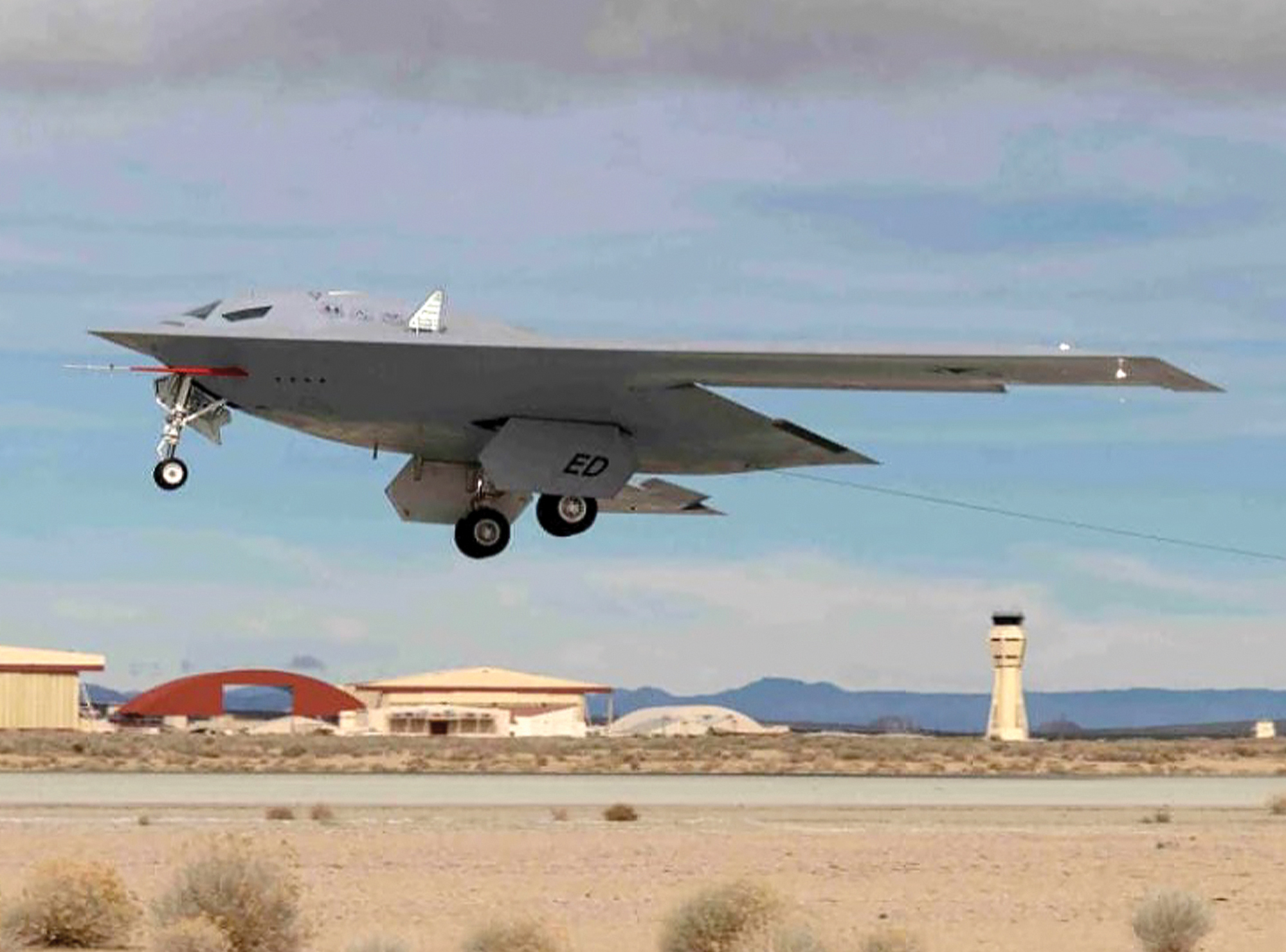
The B-21 Raider is not merely a replacement for aging airframes; it is a forced reorganization of the United States Air Force's (USAF) logistical tail. While the B-2 Spirit and B-52 Stratofortress represent heavy-lift legacy capabilities, their operational footprint is dictated by a rigid dependence on the "Tanker Bridge." The B-21’s design philosophy prioritizes a specific intersection of stealth, unrefueled range, and digital integration that effectively de-risks the most vulnerable link in the American power projection chain: the aerial refueling orbit. By reducing the frequency and volume of fuel transfers required per mission, the B-21 transforms from a tactical asset into a strategic multiplier that recovers thousands of flight hours for the overstretched KC-46 and KC-135 fleets.
The Tanker Bottleneck as a Strategic Constraint
Current long-range strike doctrine is limited by the fuel-transfer capacity of the tanker fleet. In a high-end conflict, tankers are massive, non-stealthy targets that must operate far back from the "pixelated" edge of enemy Integrated Air Defense Systems (IADS). This creates a geographical tether. Legacy bombers must depart their bases, meet tankers at specific rendezvous points (ARCP), and top off before entering contested airspace.
The B-21 addresses three primary failure points in this current architecture:
- The Persistence Gap: Every minute spent in a refueling orbit is a minute a bomber is not on station or moving toward a target. By extending internal fuel capacity and optimizing aerodynamic efficiency through its second-generation flying wing design, the B-21 minimizes these non-productive loiter times.
- Asset Displacement: For every B-52 sent on a long-range sortie, multiple tankers are required to support the round trip. This "tanker tax" depletes the available fuel for fighter screens and Intelligence, Surveillance, and Reconnaissance (ISR) platforms.
- Predictability Hazards: Refueling orbits are detectable. Even if the bomber is stealthy, the presence of a KC-46 in a specific sector provides an inadvertent "breadbox" of where the strike package must eventually emerge.
The Mechanics of Reduced Refueling Demand
The B-21’s ability to "free up" tanker assets is a function of its specific fuel consumption (SFC) and its high-altitude cruise efficiency. While the exact range of the Raider remains classified, the USAF’s shift toward a "family of systems" suggests the aircraft is designed to penetrate deeper into anti-access/area-denial (A2/AD) bubbles without needing an immediate exit for fuel.
Aerodynamic Lift-to-Drag Optimization
The B-21 utilizes a more refined planform than the B-2, aimed at reducing drag during the transition from subsonic cruise to the high-subsonic penetration phases. A higher lift-to-drag ($L/D$) ratio allows the aircraft to maintain altitude and speed with lower thrust requirements, directly translating to pounds of fuel saved per nautical mile. When scaled across a fleet of 100 aircraft, a $5%$ to $10%$ increase in fuel efficiency per airframe equates to millions of gallons of JP-8 fuel that stay in the tankers for other mission sets.
The Low-Observable Maintenance Cycle
Efficiency is not only measured in the air but in the "turn time" on the ground. Legacy stealth required thousands of man-hours to maintain Radar Absorbent Material (RAM). The B-21 utilizes next-generation coatings that are more resilient to the stresses of high-altitude flight and rapid refueling maneuvers. This increases the sortie generation rate. If an aircraft can fly more frequently with fewer maintenance interruptions, the entire scheduling of the tanker fleet becomes more predictable and less prone to emergency re-tasking.
Strategic Reallocation of the Tanker Fleet
By lowering the fuel demand per strike mission, the USAF can pivot its tanker assets toward two critical functions that have been previously neglected due to capacity constraints.
Distributed Maritime Operations (DMO)
In a Pacific theater context, the distance between fuel nodes is the primary adversary. If B-21s require $30%$ less external fuel than a B-2 for a mission of the same distance, those "saved" tankers can be pushed to support Distributed Maritime Operations. This allows carrier air wings to operate further from the center of a conflict, keeping the carriers outside the range of "carrier-killer" ballistic missiles while their F-35C complements remain fueled via the redistributed tanker capacity.
Persistent ISR and Electronic Warfare
Tankers are increasingly being viewed as multi-role nodes. A KC-46 that is not busy feeding a thirsty B-52 can serve as a communication relay or a sensor platform. The B-21’s efficiency effectively buys back the "bandwidth" of the tanker fleet, allowing it to function as a distributed data mesh across the theater.
The Cost Function of Modern Deterrence
Deterrence is a calculation of capability multiplied by the perceived ability to sustain that capability. If an adversary knows that the US strike capacity is limited by a brittle tanker fleet, the deterrent value of the bomber force is capped. The B-21 changes this equation by introducing "Logistical Ambiguity."
When a bomber can fly longer legs without refueling, the number of possible approach vectors increases exponentially. An adversary can no longer monitor a handful of known refueling tracks to predict where a strike might originate. This forces the adversary to spread their defensive sensors across a $360$-degree perimeter rather than focusing on a few predictable "tanker-fed" corridors.
Quantifying the Force Multiplier Effect
The value of the B-21 is best understood through the lens of Sortie Density.
- Legacy Model: 10 Bombers + 15 Tankers = X Targets hit per 24 hours.
- Raider Model: 10 B-21s + 8 Tankers = X+Y Targets hit per 24 hours.
The "Y" variable represents the increase in lethality generated simply because the tankers were available to support other assets or the bombers didn't have to turn back early. This efficiency reduces the total cost per target suppressed, a vital metric in an era of constrained defense budgets and high-cost munitions.
Limitations and Operational Realities
It is critical to acknowledge that the B-21 does not eliminate the need for refueling; it optimizes it. In a maximum-range profile, the aircraft will still require fuel transfers. The risk shifts from "can we fuel them?" to "can the tankers survive long enough to meet them?"
The B-21’s success depends on the concurrent development of the Next-Generation Aerial Refueling System (NGAS). While the Raider reduces the volume of fuel needed, the survability of the fuel source remains a vulnerability. A stealthy bomber met by a non-stealthy tanker in a contested zone still creates a visible signature on enemy radar. The Raider buys time for the USAF to field stealthy tankers, but it does not bridge that gap alone.
The Strategic Shift Toward Autonomous Fueling
The logical progression of the B-21’s integration into the force is the eventual pairing with autonomous refueling platforms. Small, attritable, unmanned tankers could meet the B-21 at the "tactical edge." Because the B-21 is designed with a more efficient fuel-burn rate, these unmanned tankers can be smaller and harder to detect.
This creates a tiered refueling system:
- Strategic Tier: Large tankers (KC-46) operating in safe zones.
- Tactical Tier: Smaller, potentially unmanned tankers moving fuel forward.
- Penetration Tier: B-21s operating independently within the deep-strike zone.
Forecast for Long-Range Strike Architecture
The acquisition of at least 100 B-21 Raiders will necessitate a total revision of the Air Mobility Command’s (AMC) playbook. Expect a shift away from "Mass Refueling" events—where large formations of aircraft meet a line of tankers—toward "Distributed Refueling," characterized by single-ship or two-ship transfers at varied altitudes and locations.
The primary mission of the B-21 is to break the logistical chains that have historically anchored American air power to a few vulnerable hubs. By decoupling strike capacity from high-volume refueling, the USAF regains the element of surprise. The Raider is the first airframe in decades where the logistics were as much a part of the stealth design as the wing shape itself.
The immediate tactical move for planners is the acceleration of the B-21's digital backbone to allow for real-time fuel-state sharing across the entire theater. This will allow the tanker fleet to dynamically re-route based on the Raider's actual consumption rather than pre-planned, rigid mission sets. The result is a more fluid, less predictable, and ultimately more lethal aerial presence that can sustain operations in the Pacific or European theaters with a significantly leaner, more resilient logistical footprint.