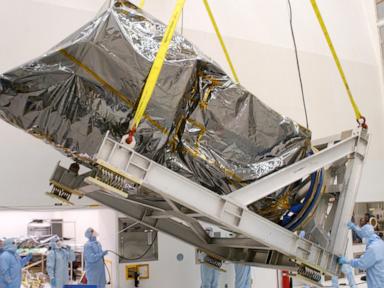
Low-Earth orbit is not a permanent sanctuary for high-value astronomical hardware; it is a high-velocity drag environment where solar cycles and rendezvous physics dictate mission survival. When NASA's Neil Gehrels Swift Observatory reentered Earth's atmosphere on November 4, 2026, ending an operational run that began in November 2004, standard news coverage framed the event around drama: a two-decade veteran of gamma-ray burst detection, a failed private rescue attempt, and a fiery breakup over North Sumatra. Narrative summaries of that kind capture human interest, yet they obscure the underlying engineering trade-offs between mission longevity, atmospheric drag physics, and active orbital servicing.
A rigorous operational analysis separates what happened from why it happened across four structural dimensions: the lifetime economics of a rapid-response observatory, the physics of solar-driven orbital decay, the mechanics and failure mode of the 2026 servicing attempt, and the broader portfolio implications for aging space telescopes such as the Hubble Space Telescope. Known telemetry and mission milestones establish the baseline timeline, while engineering assessments of servicing margins and reboost feasibility represent educated analytical inferences rather than confirmed flight telemetry. Meanwhile, you can find similar stories here: Voters Didn't Kill Data Centers in the 2026 Midterms (They Just Made Them More Expensive).
Why a Two-Year Baseline Turned Into Twenty-Two Years
Every space mission operates under a tension between initial design envelopes and realized operational life. Launch vehicles, propellant budgets, reaction wheel duty cycles, and radiation hardness allowances are sized to a baseline requirement so a project can pass cost and risk reviews. For Swift, the baseline mission duration was two years, yet the spacecraft observed more than 2,000 cosmic explosions and functioned for nearly twenty-two years—roughly eleven times its nominal design life.
Understanding how an observatory outperforms its baseline by an order of magnitude requires separating sub-system endurance from orbital sustainability. High-energy astrophysics missions that rely on rapid autonomous slewing—turning quickly toward transient high-energy events such as gamma-ray bursts detected by the Burst Alert Telescope (BAT) before coordinating follow-up with the X-Ray Telescope (XRT) and Ultraviolet/Optical Telescope (UVOT)—stress attitude control hardware and power buses continuously. Each slew consumes momentum management capacity and electrical energy. When engineering margins on momentum wheels, solar arrays, batteries, and flight software hold up over years, scientific return compounds nonlinearly: fixed launch and instrument development costs are amortized across dozens of observing cycles rather than a brief initial campaign. To see the bigger picture, check out the recent analysis by The Verge.
At the same time, long service life creates an asymmetric asset-protection problem. When a spacecraft is two years into a two-year mission, end-of-life disposal or gradual orbital decay aligns with expectations. When a platform has spent two decades building an irreplaceable multi-wavelength transient catalog and acting as a rapid-alert trigger for ground and space follow-up assets, its sudden loss carries a higher opportunity cost for time-domain astronomy. Longevity transforms a disposable instrument into critical infrastructure without necessarily giving ground controllers the propulsion margin needed to keep it aloft indefinitely.
Atmospheric Drag and the Solar Cycle Trap
In low-Earth orbit, orbital decay is governed by aerodynamic drag acting on a spacecraft moving at roughly 7.5 to 7.8 kilometers per second. Drag force scales with atmospheric density, ballistic coefficient (mass divided by drag area times drag coefficient), and the square of relative velocity. Even at altitudes of several hundred kilometers, trace thermospheric gas exerts continuous braking force that lowers orbital energy, reduces altitude, and—counterintuitively—increases orbital speed as potential energy converts into kinetic energy until denser air accelerates heating and breakup.
The critical operational trap in low-Earth orbit is that atmospheric density at a fixed altitude is not constant. Elevated solar activity—sunspots, ultraviolet irradiance variations, and geomagnetic storms—heats the upper atmosphere and causes it to expand upward. A parcel of air that sits at a relatively benign density during solar minimum can appear at much higher density during heightened solar activity, sharply increasing drag on any satellite passing through that altitude band.
For a spacecraft weighing roughly 3,200 to 3,300 pounds (about 1,500 kilograms) without sufficient onboard propellant or thrust authority to counter sustained drag, solar-driven atmospheric expansion acts like a rising tide. Once altitude drops to around 171 miles (275 kilometers), atmospheric resistance rises steeply enough that attitude control and pointing stability degrade rapidly. By late October 2026, Swift could no longer maintain steady observation in its decaying orbit, prompting controllers at Pennsylvania State University and NASA to place the observatory into safe mode and terminate science operations ahead of reentry on November 4, 2026.
A common mistake in public commentary is treating atmospheric reentry as a sudden mechanical explosion in space. In reality, reentry is the terminal phase of an energy-dissipation curve that began long before the final day. The spacecraft loses altitude progressively as drag strips orbital energy; once entry interface is reached, convective heating strips outer surfaces, structural loads break the airframe apart, and surviving high-density components—typically heavy metallic housings, reaction wheels, or optics mounts—follow ballistic trajectories along a corridor shaped by atmospheric density and wind shear. Because small variations in thermospheric density and spacecraft orientation shift the exact decay rate, reentry predictions carry wide timing windows—such as NASA's initial projection around 3:30 a.m. ET on November 4 with an eleven-hour uncertainty window on either side—even when casualty risk estimates remain low, around 1 in 2,100.
Anatomy of the 2026 Servicing Attempt and Why Proximity Failed
Allowing a productive spacecraft to burn up without trying an intervention feels wasteful when private orbital servicing companies advertise life-extension capabilities. Yet orbital rendezvous and capture are unforgiving astrodynamics problems, especially when the target was never designed with grappling fixtures, refueling ports, or cooperative station-keeping beacons.
NASA contracted Katalyst Space in July 2026 to attempt a rescue using its LINK servicing spacecraft, with the goal of boosting or stabilizing Swift's orbit. Execution broke down in the terminal proximity phase. The servicing vehicle experienced attitude control anomalies that induced spin and degraded communication links, preventing it from closing closer than roughly 12 to 15 kilometers (about seven to nine miles) from Swift. By August 2026, NASA concluded that Swift would not be saved via servicing, and the servicing craft itself later reentered in September 2026.
Viewed through a systems-engineering lens, that sequence illustrates four distinct bottlenecks in uncooperative orbital servicing:
- Relative navigation and attitude authority: Closing from tens of kilometers to meters requires tight relative state estimation and three-axis attitude control. When a servicer develops an uncontrolled spin and intermittent telemetry, aborting close approach is the only safe option; a collision between a servicing craft and a 1.5-ton observatory at orbital velocities would create hazardous debris rather than a rescue.
- Timeline compression from orbital decay: Drag accelerates as altitude falls. A servicing mission chasing a rapidly decaying target faces a shrinking operational window. Once drag outpaces what a non-docked or unready servicer can counter—or once the target's orbit sinks too low for safe, sustained rendezvous—the physics window closes regardless of commercial intent.
- Non-cooperative target interfaces: A spacecraft launched in 2004 for a two-year baseline mission was not engineered for modern robotic grappling. Even if a servicer reaches proximity, attaching to an uncooperative bus without dedicated capture interfaces introduces structural load risks and center-of-mass offsets during thrusting.
- Learning yield versus mission outcome: A failed rescue is a mission failure relative to the primary objective of saving the telescope, yet partial proximity maneuvers still generate flight telemetry on relative navigation sensors, guidance algorithms, and fault recovery. Treating telemetry capture as a secondary engineering return—without conflating it with operational success—keeps post-mortem analysis grounded.
Strategic Implications for Aging Observatories and Future Missions
The loss of Swift sharpens the decision framework for other high-value assets in low-Earth orbit, most notably the Hubble Space Telescope, which launched in 1990 and faces projected orbital decay into the mid-2030s under solar activity effects. Hubble's scientific legacy and optical stature are vastly larger than Swift's, and NASA has expressed interest in gauging commercial concepts to extend Hubble's life. However, Swift's final months provide a sobering reality check on what commercial servicing can and cannot guarantee.
First, servicing readiness must precede severe orbital decay. Waiting until an asset is already deep into drag-accelerated descent compresses decision timelines and leaves zero margin for attitude glitches, propellant shortfalls, or communications dropouts. If a life-extension or reboost campaign is viable for an aging observatory, lead times must account for spacecraft integration, launch schedules, orbital phasing, and contingency aborts well ahead of the drag cliff.
Second, cost-benefit discipline must govern rescue investments. Extending a multi-decade spacecraft is justified only when the expected marginal scientific return—measured by unique observational capabilities that cannot be replaced—exceeds the full technical and financial cost of the servicing mission plus the residual risk of failure. A low-probability, high-complexity rescue attempt on a spacecraft nearing end-of-life can consume capital that would yield higher return if directed toward next-generation instruments or dedicated replacement payloads.
Third, design for servicer compatibility and controlled disposal should become standard baseline requirements. Future observatories operating in drag-affected orbits should incorporate standardized capture fixtures, clear optical and solar-array keep-out zones for approaching vehicles, and explicit end-of-life deorbit plans. Relying on unplanned ad-hoc rescues years after launch shifts mission survival onto high-risk improvisation.
Any strategic recommendation on orbital servicing carries clear limitations. Rendezvous telemetry from a single troubled attempt does not prove or disprove the viability of every servicing architecture under calmer operational conditions, and long-term solar cycle forecasts remain probabilistic rather than deterministic. Furthermore, reboost economics depend heavily on launch costs, target mass, and orbital inclination, meaning no single servicing playbook fits every spacecraft class.
The decisive strategic play for NASA and commercial space operators is to stop treating uncooperative low-Earth-orbit rescues as late-stage lifelines and instead institutionalize early-window risk gates paired with servicer-ready spacecraft design. Agencies should set clear altitude-and-drag trigger thresholds years before projected reentry—deciding early whether to fund a well-margined reboost mission, transition observations to complementary facilities, or execute an orderly decommissioning—while requiring new low-Earth-orbit science platforms to include standardized docking/capture interfaces and controlled deorbit capability from day one.