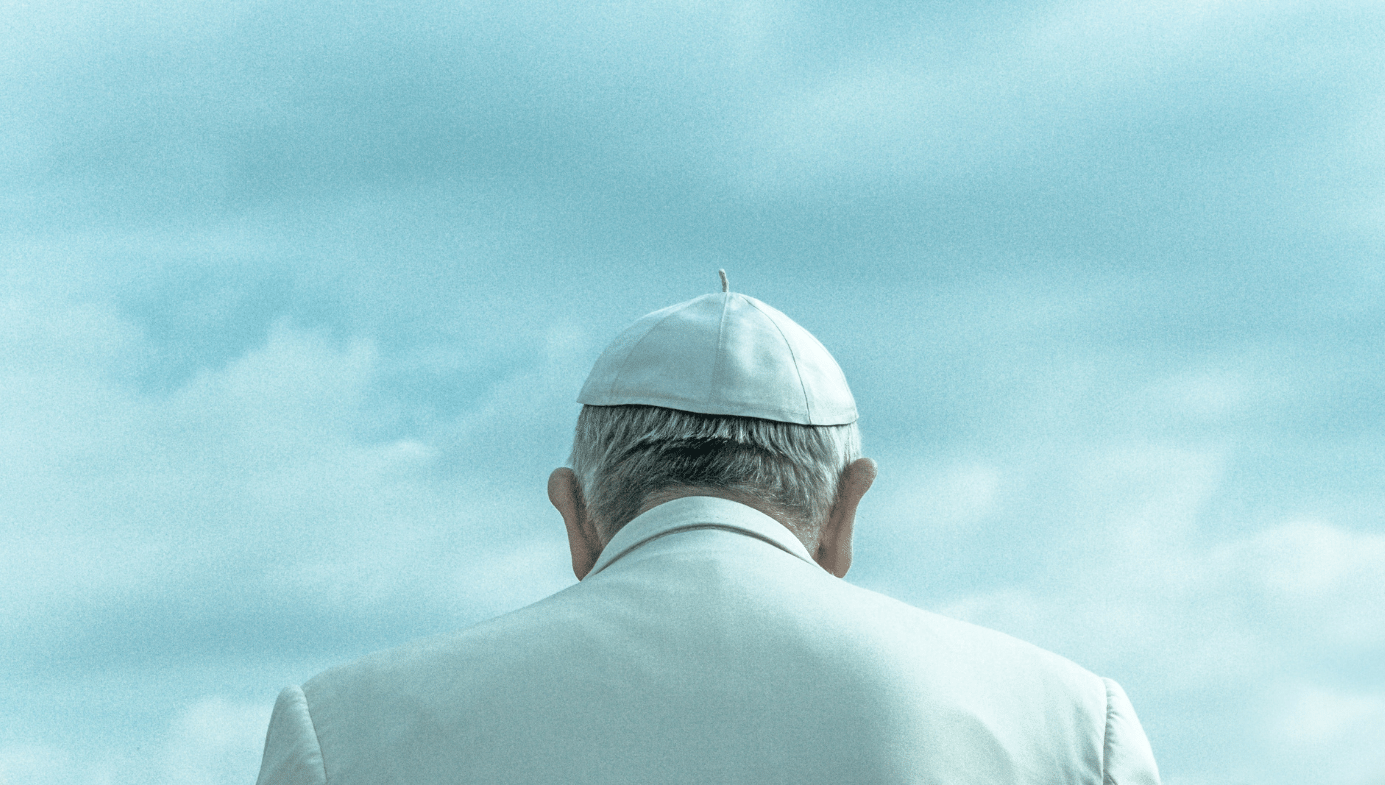
The Vatican is playing a dangerous game of moral equivalence. When Pope Leo stands before a crowd to decry "atrocious violence" and demand an immediate ceasefire in the Iran conflict, he isn't just offering a prayer for peace. He is providing a diplomatic shield for a regime that views his "universal brotherhood" as a tactical weakness to be exploited.
The lazy consensus in international journalism is that any call for a ceasefire is inherently virtuous. It’s the "moral high ground" default setting. If you’re against a ceasefire, you’re a warmonger. If you’re with the Pope, you’re a humanitarian. This binary is not just intellectually dishonest—it’s lethal.
Ceasefires are not peace. In the current Middle Eastern theater, a ceasefire is a logistics window. It is a period where the aggressor reloads, reorganizes, and digs deeper tunnels. By demanding a halt to the violence without addressing the structural reality of the Iranian IRGC’s regional strategy, the Papacy is effectively asking the democratic world to subsidize a stalemate that only benefits the extremists.
The Myth of the Neutral Arbiter
The Vatican operates on an outdated 20th-century model of diplomacy where the Pope acts as a "bridge-builder." But you cannot build a bridge to a furnace.
I have watched dozens of these conflicts play out from the inside of policy rooms. The pattern is always the same. A state-sponsored actor initiates a horrific escalation. The targeted state responds with overwhelming force because, in the real world, deterrence is the only currency that buys security. Then, right when the aggressor begins to feel the existential weight of their choices, the international "moral" community starts screaming for a ceasefire.
Pope Leo’s rhetoric ignores the Just War Theory—a framework his own predecessors helped refine. For a war to be just, it must have a "right intention" and a "probability of success" in establishing a lasting peace. A ceasefire that leaves a terror-sponsoring apparatus intact fails both criteria. It guarantees that the war will happen again in eighteen months, likely with higher casualty counts.
When the Pope calls for an end to the "atrocious violence" without explicitly demanding the total dismantling of the command structures that initiated the slaughter, he is essentially asking for a pause button on a horror movie. He wants the screaming to stop now, even if it means everyone in the room dies when the lights go out later.
Why Ceasefires are Cheap
Everyone loves a ceasefire because it costs nothing to demand one. It’s the ultimate virtue signal for a global leader. You get to look compassionate on the nightly news while avoiding the messy, brutal work of actually solving the problem.
Real peace requires the total defeat of an aggressor’s will to fight. Anything less is just a long lunch break.
- Information Asymmetry: In a ceasefire, the side that follows the rules (usually the one being pressured by the Pope) stops moving. The side that doesn't follow the rules (the one the Pope is trying to "reach") uses the quiet to smuggle parts for precision-guided munitions.
- The Sunk Cost of Mercy: Every time the Vatican intervenes to stop a conflict mid-stream, they dilute the concept of consequences. If a regime knows the Pope will bail them out with a "humanitarian plea" the moment they start losing, why would they ever stop starting wars?
- The Radicalization Loop: By freezing a conflict in its most heated state, you leave two populations simmering in hatred without any resolution. Total victory, as ugly as it sounds, provides a definitive end that allows for reconstruction. Ceasefires provide a purgatory that breeds the next generation of martyrs.
The Mathematics of "Atrocious Violence"
Let’s talk about the numbers that the Vatican’s press office won't touch. They focus on the immediate death toll—the "atrocity" of the present. But they fail to calculate the long-term body count of indecision.
If a conflict is allowed to reach its natural conclusion, the total casualties over a ten-year period might be $X$. If that same conflict is interrupted by five "humanitarian" ceasefires, the total casualties over that same decade often balloon to $3X$. Why? Because the war never ends. It just pulses. It becomes a chronic condition rather than an acute infection.
By demanding a ceasefire now, Pope Leo is potentially signing the death warrants of tens of thousands of people who will die in the "Phase Two" of this war in 2028.
The Failure of Religious Diplomacy
The Vatican’s strategy relies on the hope that "soft power" can influence "hard actors." It’s a nice thought for a Sunday homily, but it’s a disaster for a foreign policy department.
The Iranian leadership does not view the Pope as a representative of God on Earth; they view him as a useful idiot in the Western media cycle. They know that his words carry weight in Washington, Paris, and Berlin. They know that when he speaks, the pressure on Western governments to pull back their support for the anti-Iran coalition increases.
This isn't "urging peace." It’s unintentional collaboration.
I’ve seen this play out in back-channel negotiations. The aggressor sends out photos of suffering civilians—suffering they caused by using them as human shields—specifically to trigger the Vatican’s reflexive empathy. The Pope bites, issues a statement, and the tactical momentum shifts.
The Unconventional Solution
If the Pope actually wanted to stop the "atrocious violence," he wouldn’t be calling for a ceasefire. He would be calling for unconditional surrender.
That is the only contrarian take that actually holds water. If you want the killing to stop today and never start again, you don't ask the parties to stop shooting for a week. You demand the aggressor lay down their arms and dismantle their capability to cause harm.
Why doesn't the Pope do this? Because it’s "political." Because it would alienate a segment of his global audience. Because it requires taking a side in a world that demands a pretend-neutrality.
But neutrality in the face of a regional pyromaniac is just a slow-motion form of arson.
The Vatican needs to stop treating geopolitics like a series of unfortunate misunderstandings that can be resolved with a hug. The current conflict in Iran isn't a misunderstanding. It is a calculated struggle for dominance. One side believes in a world order governed by law and sovereignty; the other believes in a world order governed by theocratic expansionism.
There is no "middle ground" in that fight. There is no ceasefire that satisfies both.
The High Price of "Peace"
The Pope’s "peace" is a product of convenience. It’s the peace of the graveyard, eventually.
We have to be honest about the trade-offs. If we follow the Vatican’s lead, we might get a few weeks of quiet. The stock markets might stabilize for a month. But we will be handing the IRGC a victory they didn’t earn on the battlefield. We will be telling every other rogue state on the planet that if they just hold out long enough, the "moral leaders" of the West will eventually force their enemies to stop punching.
Stop asking for a ceasefire. Start asking for a conclusion.
If the "atrocious violence" is truly the concern, then the shortest path to ending it is the complete and total victory of the side that doesn't start wars as a matter of state policy. Anything less is just theological malpractice masquerading as diplomacy.
The world doesn't need more prayers for a pause. It needs the courage to finish the job so the prayers can finally stop being about the dead.
Place the burden of peace where it belongs: on the shoulders of the people who broke it, not on the people trying to end it once and for all.
Don't let the white robes of the Papacy blind you to the blood-red reality of what a ceasefire actually buys. It buys time. And in this part of the world, time is the only thing the bad guys need to win.
Stop falling for the ceasefire trap.