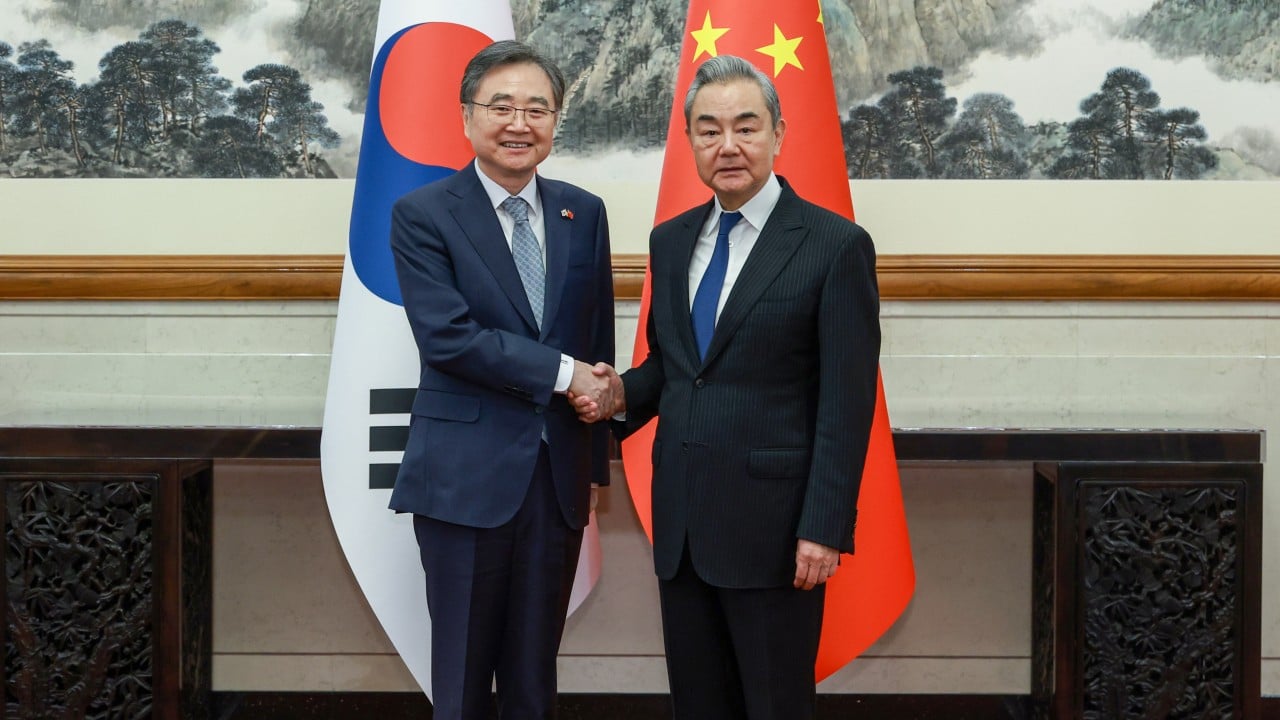
Diplomacy in East Asia rarely moves in straight lines, yet headlines love pretending it does. When China and South Korea vowed to deepen ties at the APEC summit while Seoul pushed to restart North Korea talks, most pundits treated it like a sudden, dramatic breakthrough.
It wasn't. Not even close.
What actually happened on the sidelines of the Asia-Pacific Economic Cooperation forum was a cold, calculated recognition of shared vulnerabilities. Seoul wants Beijing to use its economic leverage over Pyongyang to cool down peninsula tensions. Beijing wants Seoul to stop drifting so closely into Washington's orbit on semiconductor export controls and regional defense. Both sides needed a public win, so they gave each other one.
If you've spent any time tracking Northeast Asian geopolitics, you know the script by heart. Leaders shake hands, issue warm statements about "mutual respect" and "strategic cooperative partnerships," and promise to expand cultural and economic exchanges. Then reality sets in the next morning.
Why Seoul Is Pushing North Korea Talks Through Beijing
South Korea's push to revive dialogue with North Korea isn't driven by naive optimism. It's driven by basic math and shrinking options.
Over the past few years, direct communication channels between Seoul and Pyongyang have essentially flatlined. Inter-Korean liaison offices were blown up, hotlines went unanswered, and Pyongyang formally abandoned its decades-old goal of peaceful unification, labeling South Korea its "primary foe." When the front door is welded shut, you knock on the neighbor's window.
That neighbor is China. Beijing remains Pyongyang's single largest trading partner and primary economic lifeline, accounting for the vast majority of North Korea's external trade volume. If anyone can get Kim Jong Un to pick up the phone—or at least pause missile tests long enough for backchannel diplomats to breathe—it's Xi Jinping.
Seoul's strategy at the APEC summit rested on a few blunt realities:
- Direct deterrence has limits. Joint military drills with the United States and Japan send a strong signal, but they don't create an off-ramp for crisis de-escalation.
- Russia changed the equation. Pyongyang's deepening military alignment with Moscow—trading artillery shells and troops for fuel, food, and technical know-how—has actually made Beijing uneasy. China hates losing its monopoly on influence over North Korea.
- Domestic economic pressure. South Korean exporters are tired of taking collateral damage whenever geopolitical friction spikes in the region.
Seoul looked at Beijing's discomfort with the Moscow-Pyongyang axis and saw an opening. By asking China to play a constructive role in bringing North Korea back to the negotiating table, South Korea wasn't begging for favors. It was offering Beijing a chance to reassert itself as the indispensable power broker in Northeast Asia.
What China Actually Wants Out of Deepening Ties
Beijing doesn't do favors for free. When Chinese officials agreed to expand high-level exchanges and deepen economic cooperation with South Korea at APEC, their eyes were fixed squarely on Washington.
For years, the United States has worked tirelessly to knit South Korea and Japan into a tight trilateral security and technology framework. From Beijing's perspective, this looks a lot like containment. Worse yet for China, Washington has pressured South Korean chipmakers like Samsung Electronics and SK Hynix—both of which operate massive fabrication plants inside mainland China—to restrict advanced semiconductor equipment and exports.
China's economy faces real headwinds, from a sluggish property sector to local government debt and softer consumer demand. Losing access to South Korean intermediate goods, memory chips, and manufacturing expertise is a headache Beijing can't afford.
So China played its strongest card: market access.
- Supply chain stability. Beijing repeatedly emphasized keeping industrial and supply chains "stable and unobstructed"—diplomatic code for telling Seoul not to join American tech blockades.
- Visa-free travel and people-to-people ties. Expanding visa waivers and cultural exchanges costs Beijing almost nothing politically, yet it immediately boosts goodwill among South Korean businesses, airlines, and tourism operators.
- Free trade negotiations. Pushing forward on the second phase of the China-South Korea Free Trade Agreement, particularly around services and investment, dangles lucrative incentives in front of South Korean conglomerates.
You don't need a doctorate in international relations to see the trade-off. China offers South Korea economic breathing room and a potential diplomatic bridge to Pyongyang. In return, China expects South Korea to hedge its bets and avoid locking itself completely into an anti-China coalition.
The Structural Traps Nobody Wants to Mention
Here is where the sunny APEC summit readouts run straight into a brick wall. Wanting better ties and actually sustaining them are two completely different animals.
First, look at the North Korea problem. South Korea wants denuclearization on the agenda. North Korea refuses to even discuss giving up its nuclear arsenal, arguing its nuclear status is irreversible. China, meanwhile, prioritizes stability on the Korean Peninsula above all else. Beijing does not want a nuclear-armed neighbor destabilizing the region, but it wants a collapsed regime on its northeastern border—which would send millions of refugees into China and potentially put U.S. troops right on the Yalu River—even less.
Because their end goals don't match, Beijing will only push Pyongyang so far. It might urge restraint on intercontinental ballistic missile tests or nuclear detonations, yet it won't choke off the fuel and food supplies needed to force Kim Jong Un to disarm.
Second, the economic relationship between China and South Korea has fundamentally changed. Ten years ago, the two economies were complementary. South Korea sold high-tech components, display panels, and machinery to China; China assembled them and sold finished goods to the world.
Today, they're fierce competitors. Chinese companies now dominate global electric vehicle batteries, shipbuilding, displays, and mid-tier semiconductors—the exact industries South Korea relies on for export growth. South Korea even swung from running massive perennial trade surpluses with China to posting significant trade deficits in recent years. No amount of warm APEC handshakes reverses industrial competition.
The Washington Factor
Every move Seoul makes toward Beijing is watched closely in Washington. South Korea's alliance with the United States remains the bedrock of its national defense, backed by roughly 28,500 American troops stationed on the peninsula and the U.S. nuclear umbrella.
Whenever Seoul leans slightly toward Beijing to protect its trade interests, critics in Washington whisper about alliance drift. Whenever Seoul leans tightly toward Washington on defense and tech controls, Beijing retaliates with unofficial economic pressure—just like the 2017 THAAD missile defense dispute that hammered South Korean retail, tourism, and entertainment companies.
South Korean diplomats spend their entire careers walking this tightrope without a safety net. The APEC summit wasn't an abandonment of that balancing act. It was just another step across the wire.
How to Read East Asian Summit News Without Getting Fooled
Next time you see headlines announcing a diplomatic thaw between Beijing and Seoul, skip the opening adjectives and look at three concrete indicators instead.
Watch the semiconductor waivers and export rules. Warm words mean nothing if South Korean chipmakers still face tightening restrictions on upgrading their facilities in Xi'an or Wuxi. Follow the capital expenditure announcements from Samsung and SK Hynix; corporate balance sheets tell the truth long before foreign ministries do.
Track actual border trade and diplomatic traffic in Pyongyang. If Beijing is genuinely nudging North Korea toward talks, you'll see high-level Chinese envoys visiting Pyongyang, followed by unusual quiet at North Korean missile test sites. If missile launches continue uninterrupted while Beijing blocks new sanctions at the UN Security Council, the APEC promises were purely cosmetic.
Monitor bilateral trade balances in high-value manufacturing. Look past tourism numbers and visa announcements. Check monthly customs data on South Korean exports of petrochemicals, steel, and specialized machinery to China. That data shows whether Beijing is actually opening its market or simply replacing Korean suppliers with domestic Chinese alternatives.
Diplomacy at summits like APEC is built to look historic on television. Real progress in Northeast Asia happens slowly, quietly, and almost always behind closed doors. Keep your eyes on the supply chains and the border crossings—that's where the real story lives.