Science does not care about political branding. You can spend millions of dollars trying to paint a historic landmark "American flag blue," but biology will always have the final say.
The Lincoln Memorial Reflecting Pool is currently a bright, pea-soup green. It smells awful. Pieces of its expensive new liner are peeling off and floating on the surface like dead skin. While the White House scrambles to blame the mess on sinister bands of "radical left vandals" armed with box cutters and biological inoculation kits, the actual people running the park are quietly pointing out a much simpler truth.
The multi-million dollar makeover basically built the ultimate incubator for pond scum.
The Nightmare Recipe for Cyanobacteria
If you wanted to mass-produce green algae, you could not design a better facility than the newly renovated Reflecting Pool. It is a massive, seven-acre basin. It is incredibly shallow. It sits under the blazing Washington, D.C. sun all day with zero shade.
According to water quality experts like Steven Chapra from Tufts University, the pool combines three elements that guarantee a massive biological bloom: stagnant water, high temperatures, and an abundance of nutrients. The water pumping into the pool comes from the Potomac River via the Tidal Basin. That water is already thick with nitrogen and phosphorus from local agricultural runoff and urban fertilizer.
Then came the Trump administration's aesthetic upgrade. They insisted on painting the concrete floor a deep, dark blue. Basic physics tells you exactly what happens next. Darker colors absorb more solar radiation. The dark basin traps heat during the day and holds onto it through the humid D.C. nights. This spike in water temperature acts as a massive accelerator for cyanobacteria, commonly known as blue-green algae.
While the administration rolled out wild theories about left-wing activists pouring chemical agents into the water to humiliate the president before the nation’s 250th birthday, Interior Department officials offered a much more grounded explanation. The initial outbreak started because of residual algae sitting dormant inside the supply lines during the eight weeks of construction. When they refilled the pool, those dormant spores hit the warm, nutrient-rich, sun-drenched water. The system exploded.
Nanobubbles and the Peeling Liner Disaster
The National Park Service has been thrown into damage control, trying to manage both the biology and the political narrative. Workers have been deployed with industrial skimmers, frantically dumping hundreds of gallons of hydrogen peroxide into the basin.
The administration heavily promoted its new $1.74 million ozone nanobubbler filtration system, installed via a controversial no-bid contract given to Greenwater Services—a company owned by a prominent campaign donor. The technology injects microscopic oxygen bubbles into the water to kill the algae and suppress the phosphorus it feeds on.
But pool construction consultants point out that these techniques are strictly reactionary. They are management tools, not a cure. When the nanobubbles kill the algae, the dead organisms sink to the bottom. If you do not constantly vacuum up that organic sediment, it turns into a thick, dark muck that makes the pool look just as filthy as it did before.
The peeling liner creates an entirely separate logistical headache. Massive sheets of the blue coating are delaminating from the concrete floor. The White House points to a 350-foot gash in the lining as absolute proof of sabotage. They even arrested a 67-year-old former Olympic canoeist for simply touching a loose, rubbery flap of the material to see what it was.
Industrial coating experts view the situation with deep skepticism. Applying a waterproof seal to a seven-acre concrete slab is notoriously difficult. You have to perfectly control ambient humidity, substrate moisture, and surface preparation. If moisture seeps underneath the liner from the ground below, or if the chemical bonding failed during the rushed timeline, the entire system begins to lift. Critics have also noted that the president's own heavy motorcade drove directly across the drained pool floor during a site inspection in May, which likely compromised the fresh coating long before anyone walked into the water with a knife.
Moving Past the Finger Pointing
Fixing a massive aquatic ecosystem requires engineering, not police crackdowns. Fencing off the National Mall and threatening tourists with ten years in jail will not lower the water temperature or strip the phosphorus out of the Potomac River supply lines.
If the goal is a truly clear historic pool for the public to enjoy, the administration needs to pivot to proven aquatic management steps.
First, they must address the nutrient load at the source. Installing serious charcoal or chemical filtration units at the intake valves to strip out phosphorus before the water ever touches the basin is the only way to starve the blooms.
Second, the rushed chemical treatments need to stop. Constantly dumping high concentrations of hydrogen peroxide to torch the algae might offer a temporary visual fix, but pool consultants warn it accelerates the chemical breakdown and fading of the expensive blue liner underneath, making the peeling problem worse.
The administration has announced plans to completely drain the pool again after the Independence Day celebrations to patch the tears. If they spend that time hunting for imaginary eco-terrorists instead of fixing the fundamental bonding failures and water chemistry, the Reflecting Pool will be bright green again by August.
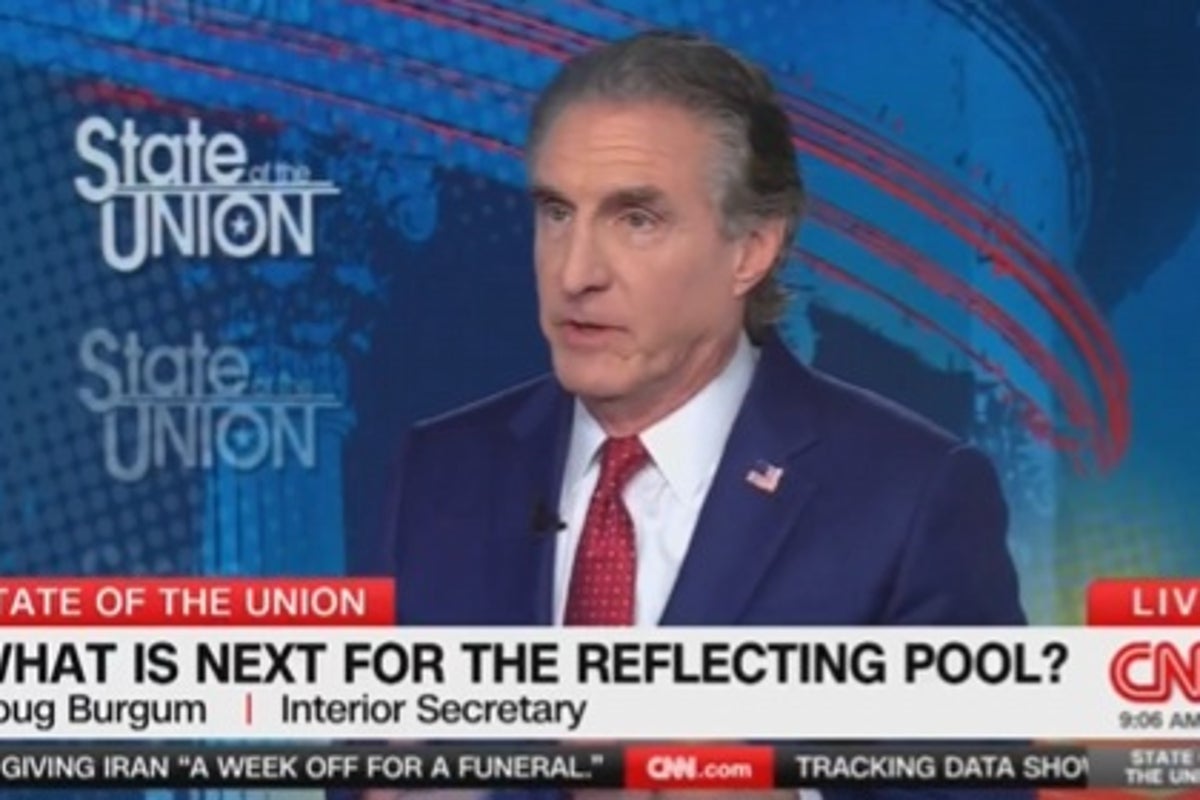
Check out this news broadcast covering the reflecting pool algae bloom to see the dramatic color transformation and the cleanup efforts on the National Mall.