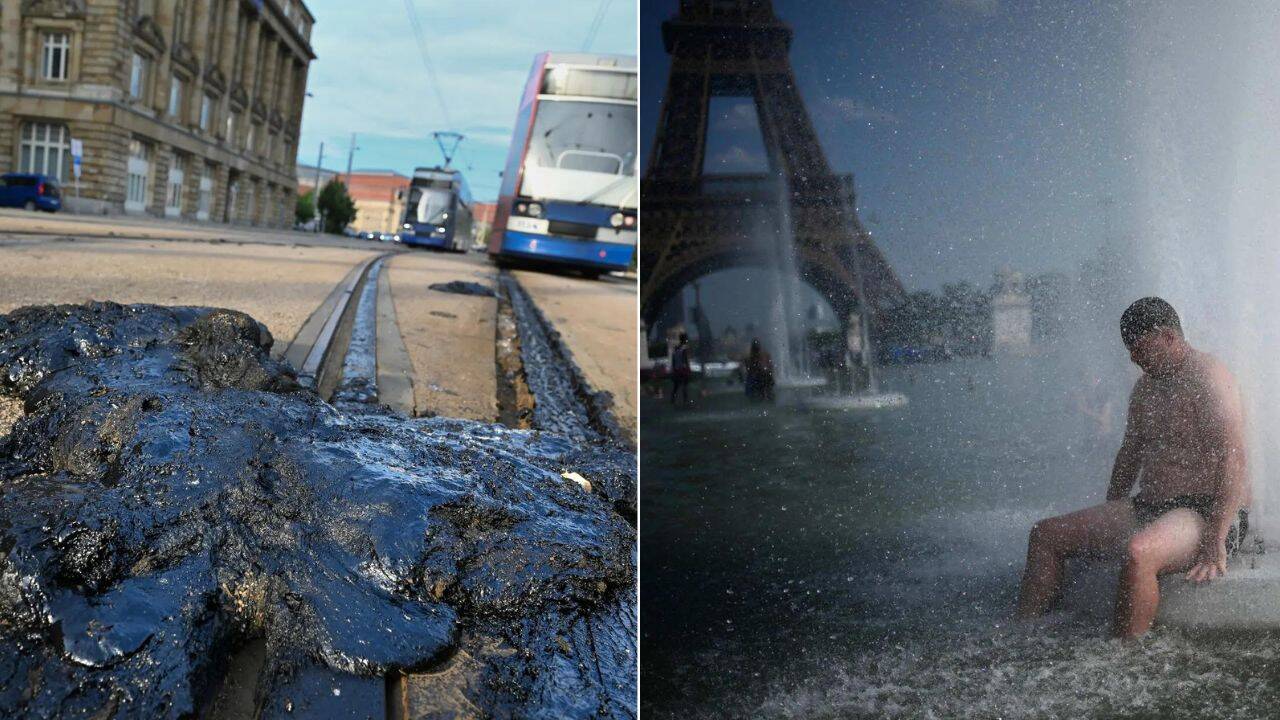
You think you know what a natural disaster looks like. We usually picture collapsed buildings, raging floodwaters, or smoke columns blotting out the sun. But the deadliest weather hazard on Earth is completely silent, invisible, and leaves no physical wreckage in its wake. It just leaves bodies.
During a single week in late June, a massive heatwave scorched Western Europe, shattering temperature records and quietly claiming 10,650 lives.
That isn't a vague projection or a scary headline meant to grab clicks. It's the hard mortality data just pooled from 27 nations by EuroMOMO, the monitoring network supported by the World Health Organization and the European Centre for Disease Prevention and Control. Between June 22 and June 28, the continent experienced a staggering spike in excess deaths that public health officials say cannot be blamed on anything else. No viral outbreaks, no statistical anomalies. Just pure, oppressive heat.
If you think this is just a normal summer cycle, you're missing the bigger picture. Attribution scientists have already looked at the mechanics of this system and concluded that a late-June heatwave of this scale would have been virtually impossible without human-caused climate change. The planet isn't just warming up a little bit; our atmosphere is actively generating lethal weather events that physics says shouldn't even be happening yet.
Why the Human Body Can't Handle the New Normal
When a heatwave hits, most people think the main danger is a bad sunburn or a mild case of dehydration. That misunderstanding is exactly why the death toll gets so high.
Extreme heat kills by systematically overwhelming your cardiovascular and respiratory systems. When the ambient temperature climbs past your body's core threshold, your heart has to pump furiously to push blood toward your skin to release heat. If you're young and healthy, your body manages the stress. If you're older, or if you live with an underlying heart condition, your cardiovascular system essentially runs out of gas.
Look at the numbers from this June blast. Out of the 10,650 excess deaths recorded during that single week, more than 9,000 victims were aged 65 and older.
The data highlights a massive regional divide in how countries survived the spike. While EuroMOMO doesn't break down numbers for every single border, it flagged France and Belgium as the two nations logging "very high excess" mortality. In fact, Belgium's public health institute, Sciensano, confirmed that this single week triggered the country's highest excess mortality during a heatwave since they started keeping records in 2000.
But don't assume the tragedy was confined to the elderly resting indoors. In Germany, where temperatures blasted to a searing 41.7°C (107.1°F), the crisis spilled into the water. Desperate to cool down, thousands of people packed into local lakes and rivers. The result? A horrifying spike in drownings. The German lifesaving federation reported that 99 people drowned in June alone, marking the highest monthly drowning toll the country has seen in over two decades. Shockingly, the majority of those victims were young men under the age of 30.
The Mathematical Fingerprint of Global Warming
We need to stop treating these events as freak accidents. The science tracking these anomalies has become incredibly precise, and the findings are undeniable.
A joint study published by Imperial College London, the UK Met Office, and the London School of Hygiene & Tropical Medicine analyzed the early-season heat waves striking England and Wales. They estimated that 2,700 people died from heat-related causes across May and June. When they ran the climate models to see how much of that could be blamed on historical emissions, the math was brutal. They found that 42% of those deaths were directly attributable to the additional heat intensity created by global warming.
Think about that. Nearly half of those people would still be alive today if the baseline climate hadn't been artificially shifted.
Europe is warming faster than almost any other landmass on Earth, outpaced only by the Arctic. When an atmospheric high-pressure system parks itself over the continent, it doesn't just bring sunny patio weather anymore. It traps an intensified pool of super-heated air that raises daytime temperatures by an extra 3°C to 4°C compared to what our grandparents experienced.
Moving Past Air Conditioning as a Cure-All
So, how do we fix this? The traditional response is to tell everyone to stay inside and crank up the air conditioning. That advice is both lazy and dangerous.
First, a massive portion of Western European housing was built centuries ago to trap heat, not repel it. Most residential buildings lack central cooling entirely. Second, when an entire continent tries to power millions of AC units simultaneously, the grid collapses. This June wave already triggered rolling power outages, forced school closures, and crippled transport networks. Relying entirely on energy-sucking appliances to save us is a losing strategy that creates a vicious feedback loop.
If we want to stop burying thousands of people every time June rolls around, municipal leaders and individuals need to shift to aggressive, practical adaptation.
- De-pave the cities immediately. Asphalt and concrete act as giant thermal batteries, absorbing heat during the day and radiating it back out at night. This urban heat island effect keeps nighttime temperatures dangerously high, preventing the human body from recovering. Replacing redundant parking zones with green spaces and urban canopies drops local temperatures instantly.
- Establish proactive hyper-local check-ins. Because heat is a silent killer, vulnerable neighbors rarely call for emergency help until it's too late. Neighborhood associations and local councils need to run active door-to-door wellness checks the moment a red-level warning is issued.
- Redesign building codes for passive cooling. We have to start retrofitting existing apartment blocks with exterior window shutters, reflective roofing materials, and green roofs. These structural changes keep interiors livable without blowing out the power grid.
The data from this summer is a stark reminder that climate change isn't a problem waiting for us in the mid-century. It's rewriting the rules of survival right now. Waiting around for global policy shifts won't save lives during the next spike. Local adaptation, smarter infrastructure, and treating extreme heat with the same urgency as a category five hurricane is the only way forward.


