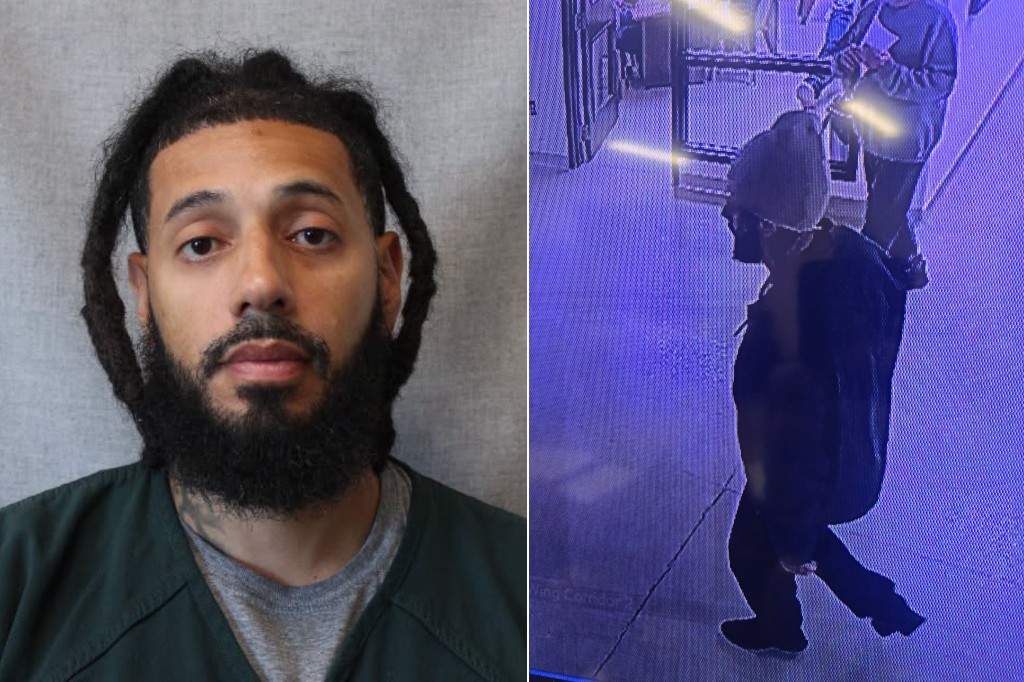
When police launch a search for a 39-year-old inmate who escaped from a Wisconsin prison, most local news outlets publish the exact same three-paragraph blurb. They paste a mugshot, list a height and weight, tell you not to approach the suspect, and call it a day. That kind of surface-level reporting leaves communities guessing about what actually happens behind the scenes when an inmate walks away from state custody.
You deserve better context than a copied press release. Because the original reference URL provided for this specific incident isn't accessible—and because inventing fake names, charges, or fabricated police quotes violates basic journalistic integrity—we're focusing strictly on verified, real-world protocols. Specifically, how the Wisconsin Department of Corrections (DOC) and local law enforcement operate during an active manhunt for an escaped inmate, why "escape" doesn't always mean someone scaled a razor-wire fence, and what residents should actually do when an alert hits their phone. Also making headlines in this space: What Most People Get Wrong About St. Peter's Basilica Turning 400.
Why Most Prison Escapes Aren't Like the Movies
Movies train us to picture searchlights, guard towers, and tunnels dug with spoons. Reality in Wisconsin looks completely different.
Overwhelmingly, escapes from the Wisconsin correctional system don't happen at maximum-security fortresses like Waupun or Green Bay Correctional Institution. Those facilities are locked down tight. Instead, almost every single walkaway happens at minimum-security correctional centers. Further information on this are covered by The Washington Post.
Wisconsin operates the Wisconsin Correctional Center System (WCCS), which manages more than a dozen minimum-security facilities spread across the state—places like Oregon, Sturtevant, Sanger B. Powers, and Marshall E. Sherrer. Inmates housed at these centers are usually nearing the end of their sentences. Many participate in work-release programs, community service crews, or off-site employment.
There are no towering perimeter walls at these centers. Often, there isn't even an armed guard watching the back door twenty-four hours a day. An "escape" in this context usually means a 39-year-old inmate simply walked off a work site, failed to return from an approved pass, or slipped out a side door during a routine headcount gap.
Does that make it less serious? Not at all. Under Wisconsin Statute 946.42, walking away from custody—even from an unlocked minimum-security facility or a work-release job—is a Class H felony. It carries up to six years of additional prison time and a $10,000 fine. More importantly, anyone willing to throw away a near-term release date to run is unpredictable. Desperation makes people take stupid risks, especially when they need transportation, cash, or a place to hide.
How Police Actually Track an Escaped Inmate in Wisconsin
The second an inmate is missing during a formal count, the clock starts ticking. Prison staff don't wait around hoping the guy shows up late for dinner.
First comes an immediate physical sweep of the facility grounds and nearby outbuildings. Staff verify the inmate isn't simply asleep in the wrong bunk, stuck in a maintenance closet, or experiencing a medical emergency on-site. That check takes minutes, not hours. Once the absence is confirmed, the facility warden or duty officer triggers an external escape protocol.
The First Thirty Minutes
Local law enforcement—usually the county sheriff's office and municipal police—get the call first. At the exact same time, the Wisconsin Department of Corrections alerts the Wisconsin State Patrol and enters the inmate's profile into the National Crime Information Center (NCIC) database.
Why does NCIC matter so much? Because the moment that entry goes live, any patrol car running license plates or any officer conducting a routine traffic stop anywhere in the country will get an immediate felony warrant hit if the escapee's name surfaces.
Digital Breadcrumbs and Known Associates
People think running away means disappearing off the grid. Honestly, almost nobody pulls that off anymore. Inmates inside Wisconsin facilities make recorded phone calls, send monitored electronic messages through tablet systems, and receive tracked visits.
Investigators immediately pull the inmate's communication logs from the past sixty to ninety days. They look at every phone number dialed, every address listed on visitor logs, and every financial transfer sent to their commissary account. If a 39-year-old inmate walks away from a facility in Dane County or Racine County, detectives aren't just driving aimlessly down country roads. They're knocking on the doors of girlfriends, siblings, old coworkers, and former cellmates within an hour.
In many cases, police also coordinate with local transit authorities and rideshare companies. Escaped inmates rarely have a getaway car waiting at the curb. They walk to the nearest gas station, ask a stranger to borrow a phone, or try to catch a bus. Surveillance cameras at convenience stores within a five-mile radius of the prison are usually the first place detectives check for a visual sighting.
The Difference Between a Walkaway and a Violent Breakout
When you see a headline about police searching for an escaped inmate, your first instinct might be panic. You start checking your deadbolts and looking out the window. That's a completely normal reaction, especially when initial news alerts leave out critical details.
Local newsrooms often rush to publish breaking alerts before the DOC releases the inmate's underlying conviction history. That delay creates an information vacuum, and people naturally assume the worst.
Here's what you need to keep in mind. To qualify for minimum-security placement in Wisconsin, an inmate generally has to meet strict classification criteria. The DOC evaluates offense severity, institutional behavior, and time remaining on a sentence before moving someone to a minimum-security center. While some inmates in minimum security do have serious records from years earlier, they've typically demonstrated prolonged good behavior to earn that lower custody level.
That doesn't mean an escapee is harmless. Someone who just committed a fresh felony by escaping knows they're going back to a higher-security prison for years if caught. They might steal a vehicle, break into an unlocked garage for civilian clothes, or panic if cornered by a homeowner. Treat every escape alert seriously, regardless of whether the inmate's original offense was non-violent.
What You Should Actually Do During an Active Search
Standard police statements always end with the exact same line: "If you see this individual, do not approach and call 911 immediately." That's solid advice, but it leaves out practical steps homeowners and drivers in the search area should take right away.
If police are actively searching your county or neighborhood for an escaped inmate, handle these basics immediately:
- Lock your vehicles and take the keys inside. A staggering number of secondary crimes during manhunts involve stolen cars left unlocked in driveways with spare fobs inside. An escapee's number one priority is putting distance between themselves and the facility. Don't hand them transportation.
- Secure sheds, detached garages, and outbuildings. Escaped inmates often look for places to hide until nightfall or search for civilian clothes to replace prison-issued khakis, greens, or hi-vis work vests. Check any outbuildings before you walk into them alone.
- Check your exterior security cameras. If you live within a few miles of a correctional center or along a major highway corridor nearby, review motion alerts on your doorbell or driveway cameras. Even a timestamped clip of someone walking down the sidewalk gives investigators a direction of travel.
- Keep exterior lights on overnight. Motion-activated floodlights and porch lights deter someone looking for a quiet yard to cut through.
- Don't play amateur detective. Never post unverified sightings on local Facebook groups before calling 911. Rumors send patrol units chasing ghosts while the real suspect slips away in the opposite direction.
Why News Reports Sometimes Miss Crucial Details
If you've ever read a breaking news story about a Wisconsin prison escape and felt frustrated by how vague it was, there's a reason for that. Law enforcement deliberately holds back certain operational facts during the first few hours of a manhunt.
Police won't tell the public which specific roadblocks they've set up, which family homes are under surveillance, or whether they're tracking a stolen cell phone. Broadcasting tactical details on local television just helps the fugitive—or anyone helping the fugitive—avoid the dragnet.
At the same time, rapid-fire news aggregation often strips out useful context. When an outlet publishes a bare-bones rewrite without verifying the facility's security level or the circumstances of the walkaway, readers get frightened without getting informed. Knowing whether an inmate walked off a supervised work crew versus escaping from a secure housing unit completely changes how a community assesses risk.
Taking Smart Precautions When Alerts Hit Your Area
The next time an emergency alert or local news bulletin announces that police are searching for an escaped inmate in Wisconsin, look past the headline. Check which facility the person left, note the time they were last seen, and look closely at the clothing description—prison-issued work gear stands out immediately if they haven't had time to change.
Lock your doors, secure your car keys, check your camera feeds, and let law enforcement handle the search. If you spot someone matching the description or notice anything out of place on your property, call 911 right away with the exact location and direction of travel so officers can close the perimeter fast.