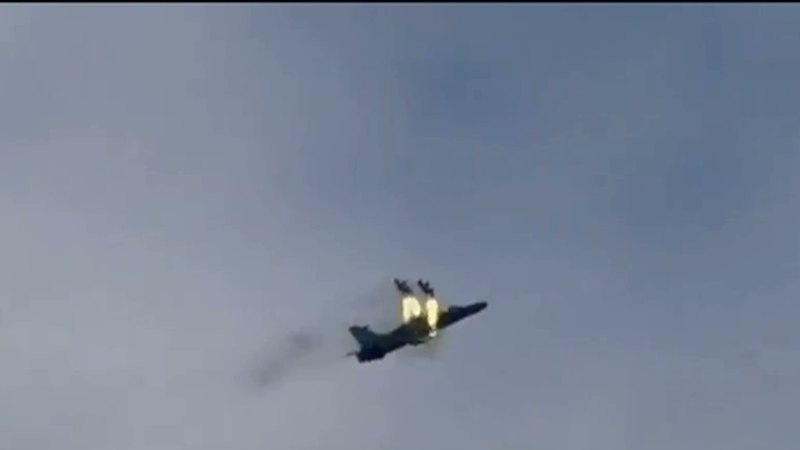
The operational margins governing military flight training are razor-thin, measured not in minutes or hundreds of feet, but in milliseconds and fractions of an acceleration vector. When an advanced tactical trainer experiences catastrophic mechanical failure immediately following rotation, the sequence of events transitions from a controlled aviation environment into a compressed physics problem where human decision-making is outpaced by mechanical deterioration.
The incident involving a Royal Air Force BAE Systems Hawk T2 operating out of RAF Valley in Anglesey, Wales, serves as a textbook case study in low-altitude emergency management. Analyzing the mechanics of the event requires breaking down the failure envelope into three distinct operational domains: the initial propulsion or systems anomaly, the aerodynamic response of a compromised airframe, and the deployment envelope of modern rocket-assisted egress systems.
The Takeoff Critical Window and Failure Propagation
In aviation engineering, the takeoff and initial climb phase represents the highest-risk operational segment due to altitude-energy bankruptcy. An aircraft rolling down a runway possesses kinetic energy (velocity) and potential energy (altitude). At rotation and initial climb-out (typically below 1,000 feet AGL), potential energy is effectively zero. If thrust is compromised or a catastrophic systems failure occurs, the aircraft relies entirely on remaining momentum and aerodynamic lift.
Eyewitness accounts and video telemetry of the Anglesey incident point toward a rapid thermal or mechanical failure originating near the rear fuselage or auxiliary power unit (APU) housing. In single-engine tactical trainers like the Hawk T2, critical flight control linkages—specifically those running aft to the tail control surfaces—often traverse high-temperature zones. When uncontained thermal anomalies or localized fires compromise these mechanical runs or hydraulic lines, the failure mode shifts instantly from a propulsion issue to a total loss of flight control authority.
Aerodynamic Instability and the Porpoising Phenomenon
When an airframe loses symmetric control or experiences localized structural burn-through, the center of lift and center of gravity relationships are violently disrupted. The observed "porpoising" or aggressive pitch oscillations—where the aircraft repeatedly pitches up into a steep climb angle before losing vertical velocity and dropping—demonstrates an unstable dynamic equilibrium.
- The Thrust-Drag-Lift Mismatch: As control rod integrity degrades, the aerodynamic surfaces (elevators and rudder) no longer track pilot input precisely. The aircraft enters an uncommanded high-alpha (angle of attack) climb.
- Energy Depletion: Steep pitching without corresponding engine thrust bleeds off airspeed rapidly. As velocity drops toward the stall margin, the wings lose lift generation capability.
- The Unrecoverable Nosedive: Deprived of forward momentum and directional control, the nose drops. At this juncture, the aircraft is no longer flying; it is descending ballistically under the influence of gravity with vector vectors pointing toward built-up civilian terrain or obstacles.
The Egress Decision Matrix
For the instructor and trainee onboard, the time delta between recognizing an unrecoverable trajectory and initiating ejection is measured in single-digit seconds. Modern zero-zero ejection seats (capable of operating at zero altitude and zero airspeed) utilize rocket motors to clear the vertical tail and deploy parachutes safely. However, low-altitude ejections leave zero margin for error.
The crew's decision to pull the ejection handles was dictated by the structural trajectory heading toward populated areas (specifically proximity to housing and infrastructure in Pencarnisiog) and the complete loss of pitch authority. Ejecting while the aircraft is climbing or at the apex of a pitch oscillation maximizes the vertical clearance between the seat trajectory and the ground. Both crew members successfully separated from the airframe, utilizing parachute deceleration deployment sequences that functioned within their designed operational parameters despite the compressed timeline.
Post-Ejection Ballistics and Thermal Dissipation
Once the crew clears the cockpit, the abandoned airframe becomes an unguided mass governed by its final momentum vector and fuel state. The subsequent ground impact transforms the remaining Jet A-1 aviation fuel into a high-energy thermal event, producing the characteristic fireball documented by observers. The absence of fatalities or severe injuries on the ground was a function of statistical probability intersecting with the exact coordinate of the crash footprint relative to nearby structures—a margin dictated purely by luck rather than aerodynamic design.
Operational Remediation and Fleet Risk Management
Military aviation safety boards approach such incidents through systematic fault-tree analysis. The investigation protocol prioritizes three parallel vectors:
- Metallurgical Autopsy: Determining whether thermal fatigue, material defect, or maintenance variance caused the initial localized fire or linkage failure.
- Redundancy Audit: Evaluating whether control cable routing in legacy trainer architectures requires enhanced thermal shielding or secondary electronic fly-by-wire backups.
- Training Protocol Review: Assessing the decision height thresholds taught to student pilots for low-level abandon-ship scenarios.
Fleet grounding protocols for the Hawk T2 class remain standard procedure while telemetry, voice recorders, and wreckage components are reconstructed in a laboratory setting. The overarching objective of the ongoing inquiry is to isolate the exact thermal or mechanical ignition point, ensuring that the interface between propulsion exhaust pathways and flight control actuation systems is re-engineered to eliminate single-point catastrophic failure vectors.


