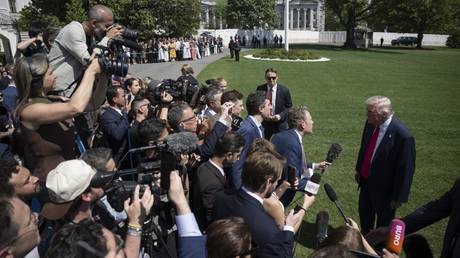
Surviving an internal confidence vote eighty-seven days before a general election does not signal political stability; it indicates that the threshold for a destructive transition currently exceeds the perceived cost of retention. Prime Minister Christopher Luxon secured the backing of his National Party caucus in Wellington, marking his second internal leadership contest in four months. While the immediate outcome prevents a chaotic government collapse on the eve of a November 7 electoral cycle, the structural mechanics driving these recurring challenges reveal deep fissures in executive control, strategic communication, and economic management.
To understand why a center-right prime minister faces persistent internal mutinies despite holding executive power, one must deconstruct the operational variables governing contemporary political survival.
The Three Vectors of Executive Erosion
Political vulnerability does not materialize randomly. It accumulates when an executive experiences simultaneous failures across distinct operational pillars. For Luxon, the erosion of authority stems from three specific vectors: communication friction, strategic unilateralism, and sluggish macroeconomic performance.
Communication Friction and the Cost of Managerial Tone
Luxon’s background as a corporate executive heavily influences his public-facing directives. Political organizations operate on emotional resonance and coalition management, whereas corporate hierarchies rely on top-down alignment.
When Luxon publicly chastised small business leaders for maintaining a parent-child mentality toward the state—following months of sluggish economic growth—he committed a fundamental audience-alignment error. Rather than projecting shared accountability for economic headwinds, the rhetoric alienated key segments of the party's core constituency.
The friction intensified with ancillary missteps, including defensive disclosures regarding the utilization of military transport for political travel. In a high-salience environment, minor logistical controversies compound into indicators of poor executive judgment, creating tactical openings for internal rivals.
Strategic Unilateralism and Caucus Alienation
A parliamentary leader derives authority from the collective buy-in of the caucus. When an executive bypasses consultative policy formation, the risk of internal rebellion spikes.
Luxon's unilateral floating of a potential electoral system referendum without prior consultation of his legislative colleagues exemplifies strategic unilateralism. Lawmakers functioning in marginal electorates treat unvetted policy announcements as existential threats to their own reelection probability.
When a leader introduces policy variance without risk mitigation for individual MPs, the caucus shifts from a supportive asset to a defensive containment unit. This dynamic directly precipitated the emergency caucus meeting and the subsequent exposure of internal challengers, including former Defense Minister Aaron Penk.
Macroeconomic Performance Constraints
The National Party campaigned heavily on economic competence, leveraging Luxon’s corporate turnaround credentials. However, persistent inflation, elevated living costs, and sluggish GDP growth have constrained the administration's delivery mechanism.
When a governing party fails to produce tangible improvements in macroeconomic indicators, the social contract between the political leader and the parliamentary caucus breaks down. MPs begin evaluating their survival through an independent lens: if the brand is toxic, retaining the architect of that brand becomes irrational.
The Game Theory of Preemptive Containment
Why did Luxon survive two confidence votes rather than facing an unceremonious defenestration? Standard political science frameworks point to the calculus of the replacement window.
An election scheduled less than three months away creates an acute coordination problem for any caucus considering a coup. Executing a leadership transition requires:
- Identification of an uncontested, universally acceptable successor who minimizes factional infighting.
- Complete reallocation of campaign infrastructure, donor relations, and media branding within a compressed timeline.
- Acceptance of immediate instability by the electorate, who typically punish governing parties perceived as disorganized or self-absorbed.
When Defense Minister Aaron Penk emerged as the internal catalyst, the party apparatus calculated that replacing the sitting prime minister eighty-seven days out posed a higher expected probability of electoral loss than enduring a weakened incumbent. The caucus applied a modified "better the devil you know" heuristic.
By forcing a closed-door vote, Luxon shifted the game from a war of attrition in the media to a binary choice within the room: endorse the leader or risk an immediate, public fracture that guarantees defeat. Rational self-preservation among backbenchers dictated consolidation.
The Opposition Factor and Electoral Symmetry
The fragility of the National Party leadership occurs within a bifurcated political market. The center-left Labour Party, led by former Prime Minister Chris Hipkins, stands ready to capitalize on any administrative dysfunction.
Polling trends indicating a tightening race mean that internal disputes are amplified by opposing media strategies. Every internal leak, cabinet reshuffle, or policy U-turn is processed by the electorate as administrative incompetence.
Yet, opposition parties face their own credibility constraints. While National suffers from executive friction, the broader macroeconomic dissatisfaction is systemic rather than purely partisan. Voters weighing options ahead of November 7 are forced to choose between a fractured right-wing coalition and an opposition bloc whose own economic stewardship remains under scrutiny from the previous term.
Strategic Execution for the Final Quarter
To convert survival into an electoral victory, the administration must alter its operational parameters immediately. The playbook requires three strict execution steps:
- Information Containment: Eliminate unvetted policy announcements. All legislative initiatives must pass through rigorous caucus alignment checks to prevent internal surprises.
- Message Discipline: Pivot executive communication away from corporate diagnostics and toward direct relief mechanisms for cost-of-living pressures. The language of management must be replaced by the language of security.
- Friction Reduction: Channel potential rivals—such as Chris Bishop, Erica Stanford, and Mark Mitchell—into visible, high-impact portfolio execution roles that showcase collective competence rather than solitary authority.
The foundational vulnerability of the New Zealand executive office under Luxon is the persistent gap between corporate intent and political execution. Closing that gap before November is the sole variable determining whether these confidence votes were a temporary inoculation or the final prelude to electoral defeat.