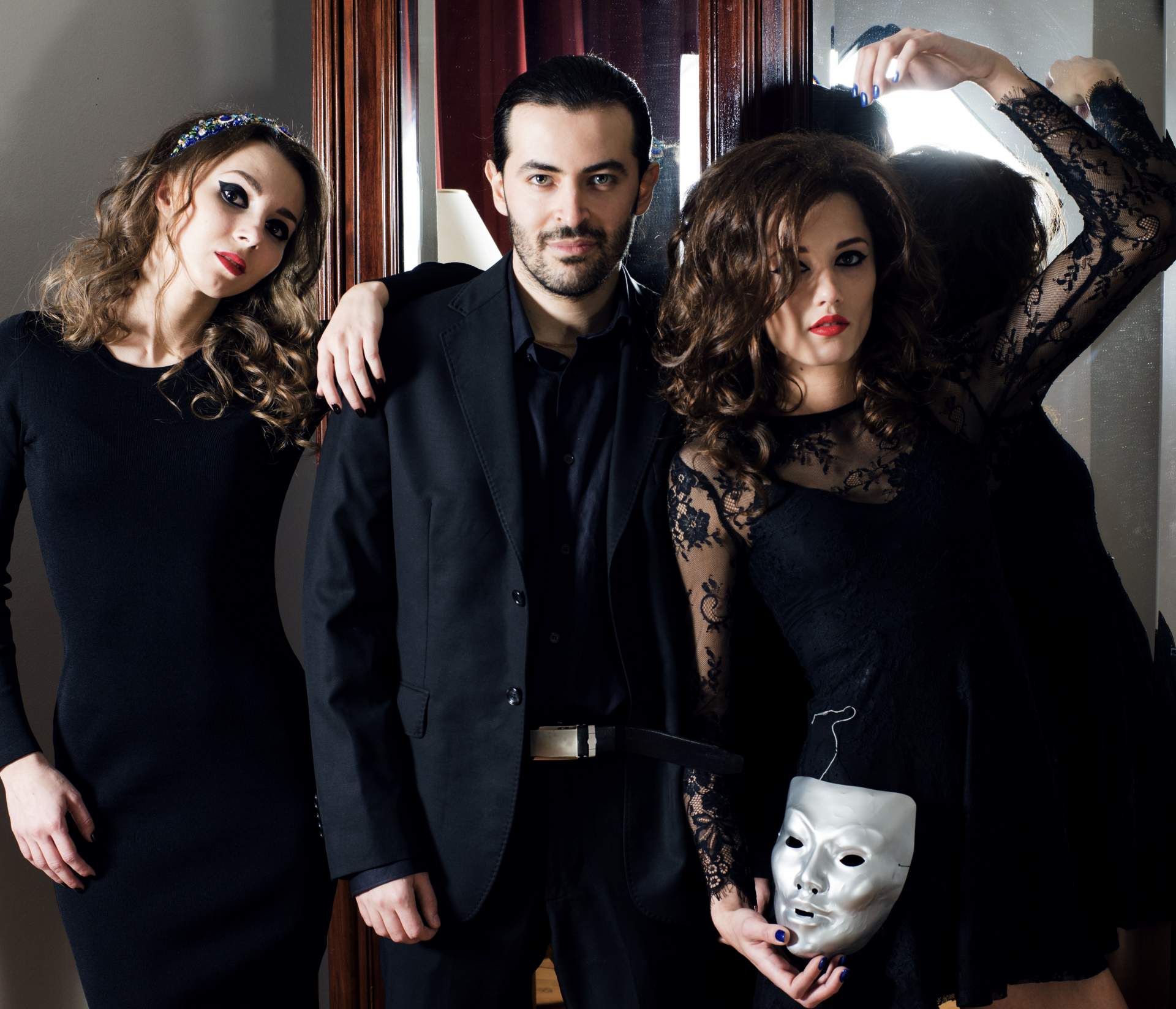
The selection of the 79th Cannes Film Festival jury is never just a list of names. It is a manifesto. This year, led by Greta Gerwig, the panel consisting of Demi Moore, Chloé Zhao, Stellan Skarsgård, and their peers represents a calculated pivot in how the world’s most prestigious festival intends to define "cinematic excellence." While the trades focus on the glamour of the red carpet, the real story lies in the friction between the old guard of European auteurism and a new, more muscular form of global storytelling that these individuals personify.
For decades, the Cannes jury was the gatekeeper of a very specific, often exclusionary, high-art aesthetic. To win the Palme d'Or, a film usually had to be punishingly slow, intellectually opaque, or Western-centric. The 2026 jury suggests those walls are finally coming down. By placing Moore—a veteran of the Hollywood machine who has reinvented herself through body-horror and independent grit—alongside Zhao, a director who bridged the gap between intimate naturalism and Marvel-scale spectacle, the festival is signaling that it no longer views "commercial" and "artistic" as mutually exclusive terms.
The Moore Factor and the Resurrection of the Icon
Demi Moore’s presence on the jury is the most significant tactical move the festival has made in years. For too long, Cannes treated American stars of her era as decorative elements—people to fill seats at the amfAR gala but not necessarily to sit in the dark rooms where the soul of cinema is debated.
Her appointment is a recognition of her survival. Moore understands the industry from the inside out, having navigated the transition from the "Brat Pack" era to becoming the highest-paid woman in Hollywood, and then weathering the industry's cruel tendency to discard actresses over forty. Her recent work in challenging, visceral roles has earned her a seat at the table where she can judge not just the performance, but the bravery required to make it. She brings a pragmatism to a jury room often filled with theorists.
Zhao and the Architecture of the New Auteur
Chloé Zhao represents the literal future of the medium. Her inclusion is a safeguard against the festival sliding back into Euro-centrism. Zhao’s specific "gaze"—one that finds the epic in the mundane—is exactly what the Palme d'Or race needs to remain relevant.
When Zhao looks at a film, she isn't looking for the technical perfection that Skarsgård might prioritize or the emotional resonance Moore might seek. She is looking for the intersection of land and soul. In a year where the competition lineup is rumored to be heavy on environmental themes and displaced-person narratives, Zhao becomes the most influential voice in the room. She understands how to ground a massive story in the dirt.
The Skarsgård Anchor
Every jury needs a veteran who cannot be easily swayed by flashy editing or trendy social messaging. Stellan Skarsgård is that anchor. With a career spanning from Lars von Trier’s provocations to the massive world-building of Dune, he is the bridge between the festival’s radical past and its blockbuster-adjacent present.
Skarsgård’s role is to demand technical rigor. He is the one who will ask if a film is actually well-constructed or if it is simply hiding behind a timely "important" subject. In the private deliberations at the Villa Domergue, his voice will likely be the one grounding the younger jurors when the hype of a standing ovation threatens to cloud their judgment.
Breaking the Gendered Expectation of the Jury
The gender balance of this jury is not a diversity hire; it is a power shift. For the majority of its history, Cannes was a boys' club where women were the muses, not the masters. Greta Gerwig’s presidency, supported by Moore and Zhao, creates a majority that views narratives through a lens that has been suppressed for nearly eighty years.
This shift will manifest in the types of films that win. We should expect a move away from the "male gaze" tropes of the mid-20th century—the tortured male genius, the silent female victim, the voyeuristic camera. Instead, the focus will likely shift toward agency and internal complexity. This isn't about being "woke"; it’s about being accurate to the human experience, which the festival has frequently ignored in its pursuit of "cool" nihilism.
The Pressure of the Palme
The jury does not operate in a vacuum. They are under immense pressure from distributors, streamers, and the French government itself to pick a winner that can actually find an audience. The 2020s have been brutal for arthouse cinema. Theatrical windows are shrinking, and the Palme d’Or needs to be more than a trophy; it needs to be a marketing engine.
The tension in the jury room will come from this conflict. Do they reward the difficult, three-hour experimental film from an unknown director, or do they give the prize to a recognizable name that can save independent theaters? With Moore’s business savvy and Skarsgård’s industry experience, this jury is uniquely equipped to handle that burden. They are not just picking a favorite movie; they are selecting a brand ambassador for the entire industry for the next twelve months.
Why the Critics are Wrong about Star Power
Some purists argue that having too many "stars" on a jury dilutes the intellectual purity of the festival. This is a tired argument that ignores the reality of how movies are made today. A director like Zhao or an actor like Moore has more skin in the game than a career critic ever will. They understand the compromises, the budget constraints, and the sheer luck required to finish a film.
When this jury sits down to watch the final film of the competition, they aren't looking at it as fans. They are looking at it as practitioners. They know when a performance is faked and when a director is using camera tricks to cover up a weak script. This expertise is what makes the 2026 panel one of the most formidable in the festival's history.
The Hidden Power of the Deliberation Room
The public sees the photos of the jury laughing on a balcony, but the reality is far more combative. The deliberations are notoriously heated. Previous jurors have spoken about shouting matches, tears, and tactical voting blocks.
In this specific group, the dynamic will be fascinating. You have Gerwig’s intellectualism, Moore’s veteran instincts, Zhao’s quiet intensity, and Skarsgård’s blunt Scandinavian honesty. It is a recipe for a winner that is forged in fire rather than reached through polite consensus.
The Stake for the Industry
Cannes remains the only place where a single film can change the trajectory of global culture overnight. If this jury picks a winner that fails to resonate, the festival’s influence slips further toward the abyss of irrelevance. If they pick a masterpiece, they prove that cinema still has the power to stop the world in its tracks.
This jury understands that their legacy is tied to the film they choose. They aren't there to be liked; they are there to be right. As the screenings begin and the lights go down in the Grand Théâtre Lumière, the weight of that responsibility will be the only thing that matters. The world is watching to see if they have the nerve to choose a film that actually matters, rather than one that just fits the festival's traditional mold.
Watch the films that receive the secondary prizes—the Grand Prix and the Jury Prize. These are often the "compromise" films. The Palme d'Or winner, however, will be the film that managed to satisfy the disparate, formidable perspectives of Moore, Zhao, and Skarsgård simultaneously. If such a film exists in the lineup, this jury will find it.