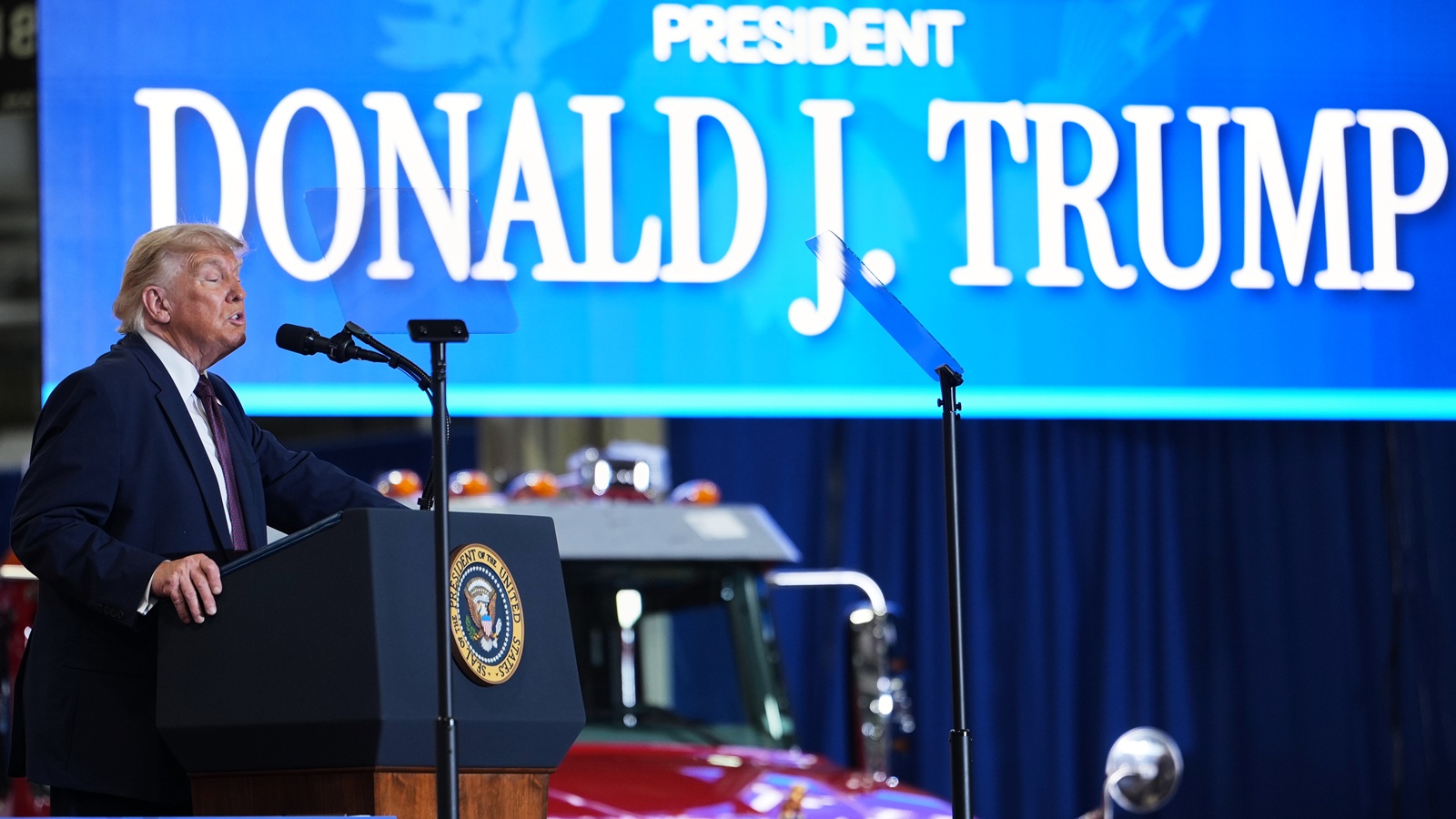
Donald Trump’s recent financial disclosures have revealed an unprecedented wave of stock market activity, with his portfolio executing more than 3,600 trades in the first three months of 2026 alone. This rapid-fire trading involved massive stakes in major corporations like Nvidia, Apple, and Tesla, frequently occurring just days before the president publicly praised these firms or enacted policies that directly boosted their businesses. While the Trump Organization asserts these accounts are managed independently by third parties, the overlap between executive action and personal financial benefit has shattered historical norms and sparked intense ethical scrutiny.
The scale of the trading is immense. A 113-page disclosure filed with the U.S. Office of Government Ethics outlines a frantic pace of financial maneuvering, averaging roughly 50 transactions for every day the stock market was open. The volume of capital moving through these accounts is estimated to be anywhere between $100 million and $750 million. For a figure who historically tied his net worth to real estate and private licensing deals, this aggressive pivot into liquid equity markets represents a major shift in how the Trump family fortune interacts with the global economy.
The Mechanics of a Rapid Fire Portfolio
The trading activity did not focus on quiet, defensive index funds. Instead, it targeted high-profile technology giants, defense contractors, and consumer brands that sit directly under the thumb of federal regulatory agencies. Documents show that the portfolio acquired millions of dollars in Nvidia shares across multiple transactions in early 2026.
The timing of these purchases raises immediate questions about the partition between public policy and private wealth. On January 6, 2026, the portfolio purchased between $500,000 and $1 million worth of Nvidia stock. Exactly one week later, the Department of Commerce officially approved a highly contested regulatory shift, allowing the sale of advanced semiconductor chips to customers in China. Nvidia stock surged on the news. A second massive purchase of Nvidia shares, valued between $1 million and $5 million, occurred on February 10, just days before the company announced a major domestic artificial intelligence partnership. Advanced Micro Devices received similar regulatory clearance on the exact same timeline, and the portfolio just happened to buy up to $100,000 of AMD stock on that identical January 6 date.
This pattern repeats across multiple sectors. The portfolio bought shares of Thermo Fisher Scientific on March 11, 2026. That same afternoon, the president toured a Thermo Fisher facility in Ohio, using his public platform to call it a great company and openly urging other pharmaceutical manufacturers to direct business toward it. On that very same day, the account acquired up to $500,000 in Apple stock. Shortly thereafter, public remarks at an event in Kentucky were used to praise Apple’s domestic manufacturing strategies. On March 25, the portfolio acquired shares of Micron Technology. The following day, during a widely broadcast media appearance, the president singled out Micron as one of the hottest corporations in the market.
The Perfect Timing of Policy and Praise
The commercial impacts of presidential statements are immediate and measurable. When the executive branch signals favor toward a specific corporation, stock prices react. Following the Apple endorsement, the tech giant's stock climbed 14%. Micron saw an even sharper upward trajectory. While a standard investor must read the tea leaves of public policy, the individual setting the policy operates with absolute certainty.
Industrial policy and foreign affairs have also lined up perfectly with these financial plays. Throughout February and March of 2026, the portfolio accumulated at least $600,000 worth of Boeing and General Electric shares. In May, the administration announced a multi-billion-dollar trade agreement ensuring that China would purchase hundreds of Boeing commercial aircraft, specifically designated to be built with General Electric engines. The portfolio also held significant stakes in major defense contractors like Lockheed Martin, Northrop Grumman, and General Dynamics during periods of escalating geopolitical tensions in the Middle East.
Federal immigration enforcement strategies also run parallel to the portfolio's selections. As the administration poured billions of dollars into border enforcement and logistics contracts, the president’s account purchased more than $260,000 in Palantir Technologies, a data analytics firm deeply embedded within federal immigration tracking infrastructure.
The Loophole That Shields the Commander in Chief
To understand how this occurs without triggering immediate prosecution, one must look at the unique architecture of American ethics laws. The Stop Trading on Congressional Knowledge Act of 2012, alongside older conflict-of-interest statutes, creates a strict legal firewall for almost every civil servant in the federal government. A cabinet secretary or an immigration official holding specific stock in a company they regulate faces severe criminal penalties.
The president is legally exempt from these specific statutes. The framers of modern ethics laws feared that forcing a president to divest from all assets could impair their ability to govern during a national crisis, or artificially limit the pool of citizens eligible for the office. Because of this carveout, the trading behavior outlined in the Office of Government Ethics report is entirely legal.
Modern predecessors handled this legal loophole by voluntary restriction. George H.W. Bush and Bill Clinton placed their wealth into blind trusts, relinquishing all knowledge of where their money was invested. George W. Bush liquidated his corporate stock holdings entirely to avoid the appearance of impropriety. Barack Obama restricted his investments to broad mutual funds and Treasury bonds, assets too massive to be manipulated by individual policy shifts. Joe Biden avoided individual equities altogether. The current strategy completely breaks from this history.
Why the Discretionary Defense Fails the Test of Public Trust
The formal defense mounted by the White House and the Trump Organization rests entirely on the concept of automated and discretionary management. Representatives state that third-party financial institutions hold exclusive authority over the accounts, executing trades through automated programs without giving the Trump family advance notice or seeking their input.
This argument ignores how human behavior and public statements interact. Even if the president does not press the button to purchase Nvidia or Apple stock, he receives the periodic disclosure forms detailing exactly what he owns. Once an official knows they hold millions of dollars in a specific corporate entity, every subsequent policy choice, tariff exemption, or public endorsement involving that entity is inherently compromised. The financial incentive exists whether the trade was automated or manual.
The defense also fails to account for the unique power of the modern presidency to move markets purely through language. When the executive branch can alter a company's market value by 10% with a single post on social media, the traditional definitions of insider trading become obsolete. The true problem is not just whether the president is trading on inside information, but that the president is actively manufacturing the information that drives the trade.
The regular American investor operates at a permanent disadvantage in an equity market where the ultimate regulator is also a major participant. As billions of dollars flow through these discretionary accounts, the boundary between the wealth of the state and the wealth of the executive continues to erode, leaving the public to guess where policy ends and profit begins.
Tracking Trump stock trades provides a detailed breakdown of the high-volume trading data and the specific corporate investments outlined in the federal disclosure reports.