The heat in Houston during a June afternoon doesn’t just sit on you; it presses down like a physical weight. On the asphalt outside a neighborhood soccer complex in Gulfton, the air shimmers with the scent of melting tar and cheap tacos. Carlos Mendoza wipes grease from his forehead, his eyes locked on his eleven-year-old son, Mateo, who is currently weaving a battered Nike ball through a maze of orange cones. Mateo wears an oversized, faded Lionel Messi jersey. It is his prized possession.
For three years, the talk in this household, and in thousands of households across Harris County, has been anchored to a single summer. 2026. The World Cup was coming to their backyard.
Houston’s NRG Stadium, a short drive down the interstate from where Carlos fixes air conditioning units for a living, was selected to host seven matches, including a round-of-32 knockout and a round-of-16 clash. It felt like a gift. For a community deeply rooted in the global game, this wasn’t just entertainment. It was a pilgrimage brought to their doorstep.
But the dream is evaporating. It is being squeezed out by the cold, unyielding mechanics of modern sports economics.
The Digital Wall
Carlos open his phone, the screen cracked across the bottom corner, to show the ticket portal. His thumb hovers over the numbers. For a single category-three ticket to a group-stage match—not even a premium knockout game—the face value plus the inevitable, opaque fees sits comfortably north of $300. For a family of four, once you calculate parking, a couple of stadium sodas, and transportation, the afternoon quickly mutates into a $1,500 venture.
To a corporate executive, $1,500 is a entertaining client dinner. To Carlos, it represents roughly forty-five hours of manual labor in attic spaces that routinely top 120 degrees.
He closes the app. The silence between father and son is heavier than the humidity.
"We will watch it on the television," Carlos says, trying to inject a note of cheerfulness into his voice. "The screen is bigger anyway. Better angles."
Mateo nods, but his shoulders sag. The boy isn't stupid. He knows that the roar of seventy thousand voices echoing from inside the stadium won't be audible through their living room TV speakers, even if they can hear the distant traffic from the loop.
This is the reality of the 2026 World Cup for the very people who give the sport its soul. The tournament has transformed from a global celebration into an exclusive playground for high-net-worth individuals and corporate hospitality packages. The standard ticket-buying process has become a masterclass in financial exclusion, driven by dynamic pricing algorithms that view human passion merely as an optimization metric.
The Algorithm Doesn't Bleed
What is happening in Houston is not an isolated anomaly. It is the culmination of a decade-long shift in how major sporting events are monetized.
Consider the mechanics of the modern ticket marketplace. When FIFA opened its multi-phase ticket applications, demand predictably shattered records. But high demand in the twenty-first century no longer just means long lines or crashed servers; it triggers automated pricing models designed to extract the absolute maximum dollar amount the market can bear.
On the secondary market, the inflation is even more grotesque. Speculative ticketing—where brokers list seats they do not yet officially possess—drives prices into the thousands before the average fan even gets a chance to log in.
Let's look at the numbers cleanly. In previous tournaments hosted in nations with lower median incomes, soccer governing bodies historically offered heavily subsidized "Category 4" tickets reserved exclusively for residents of the host country. These tickets were occasionally priced as low as $10 to $20, ensuring that the local working class could populate the stadiums. For 2026, while a nominal domestic price tier exists, the sheer volume of global corporate demand and the lack of strict price caps on resale platforms have rendered those affordable seats statistically invisible to the average Houstonian.
The financial calculus of hosting a World Cup is always presented to city taxpayers as a win-win scenario. Cities pledge millions in infrastructure upgrades, security, and logistics, operating under the promise of an economic windfall. Tourism dollars will flood local hotels. Restaurants will overflow. Uber drivers will make a killing.
But this economic narrative conveniently ignores who pays the upfront cultural tax. The public funds the security apparatus and the traffic diversions, yet the public is priced out of the building.
A City Built on the Global Game
To understand why this stings so bitterly in Houston, you have to understand the city's DNA. Houston does not possess a singular identity; it is a tapestry of enclaves. It is one of the most ethnically diverse metropolitan areas in the United States, a place where over 140 languages are spoken at home.
Soccer is the connective tissue here. Walk through any park on a Sunday morning—whether it's George Bush Park out west or the fields in East End—and you will see the world in miniature. You will see league matches played with fierce intensity by men and women who spent the week pouring concrete, practicing law, or cooking in commercial kitchens.
For these communities, the World Cup coming to NRG Stadium was supposed to be a validation. It was an acknowledgment that Houston belongs to the global community of the beautiful game.
Instead, the event is taking on the characteristics of a spaceship landing in the middle of the city. The locals can gather outside and admire the shiny hull, but only those with the gold-plated keycards are allowed inside the air-conditioned cabin.
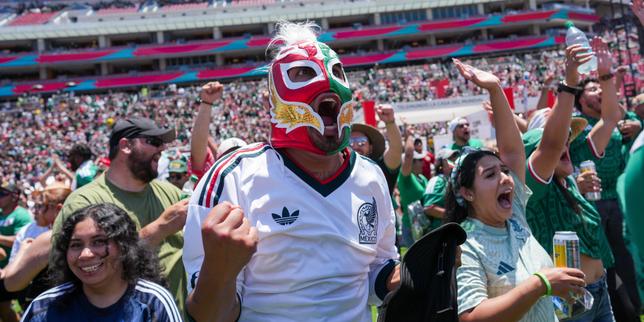
The irony is thick. The tournament relies entirely on the vibrant, chaotic, passionate culture of soccer fandom to sell its television broadcast rights to global networks. The broadcasters want the television viewers to see the flags, the face paint, the tears, and the unbridled joy in the stands. That atmospheric electricity is the actual product being sold. Yet, by pricing out the people who naturally generate that electricity, the event risks sterilizing itself.
The New Stadium Status Quo
What replaces the traditional fan? The corporate spectator.
Step into a modern premium suite or a club-level section during a high-stakes match. The energy is different. It is polite. It is calculated. It is the sound of golf claps and networking conversations over artisanal catering. The people sitting in the lower bowl are often there because a logistics firm or a financial institution had extra passes in their marketing budget.
There is nothing inherently wrong with corporate sponsorship; it funds the massive technological scale of modern sports. But when the balance tips so far that the baseline community is entirely displaced, the sport loses its gravity. It becomes a television studio wrapping rather than a cultural event.
The frustration among local fans is compounded by a feeling of helplessness. There is no alternative window. There is no secondary box office where you can line up early and buy a ticket with cash from an honest teller. Everything is mediated through digital gatekeepers who profit off the volatility of the market. The transaction fees alone on some resale tickets cost more than the entire face value of a ticket to the 1994 World Cup in the United States.
The View from the Outside
The sun begins to dip below the horizon in Gulfton, painting the Houston sky a bruised shade of purple and orange. Carlos packs up the cones into a mesh bag. Mateo is still kicking the ball against a concrete wall, over and over, listening to the rhythmic thud-smack of leather against stone.
"Do you think Mexico will play here?" Mateo asks, catching the ball under his foot.
"Maybe," Carlos says. "The bracket could bring them here for the knockout rounds."
"It would be loud," Mateo says softly.
"Yes," Carlos replies, looking toward the distant silhouette of the stadium area. "It would be very loud."
The reality of the 2026 World Cup is that its success will likely be measured in spreadsheets. Billions of dollars in revenue will be reported. Attendance records will technically be broken because every corporate seat will be counted as filled, regardless of whether the ticket holder spent the second half at the sushi bar in the concourse. Executive committees will toast to a historic triumph.
But outside the gates, in the neighborhoods that give the city its heat and its life, the tournament will leave a different legacy. It will be remembered as the summer the world came to town, looked at the people who built the pitches, and told them they weren't invited inside.
Carlos walks back to his truck, his hand resting on his son's shoulder. The boy is still dribbling, keeping the ball close, protecting it from an imaginary defender on a field he will only ever see through a glass screen.