The fluorescent hum of a neighborhood pharmacy has a specific sound. It is the sound of anxiety muffled by plastic bottles. For Sarah, a retired schoolteacher in Ohio, that hum felt like a countdown. She stood at the counter, her hand hovering over a credit card she knew was nearing its limit. The pharmacist didn’t look up; he didn’t need to. They both knew the cost of the insulin in the bag was more than a monthly mortgage payment.
Sarah is a hypothetical composite of millions, but her fear is a mathematical reality. Her life depends on a supply chain that stretches across oceans, moving through sleek corporate boardrooms and gritty manufacturing plants in countries she will never visit. Now, that supply chain is facing a shockwave from the highest office in the United States.
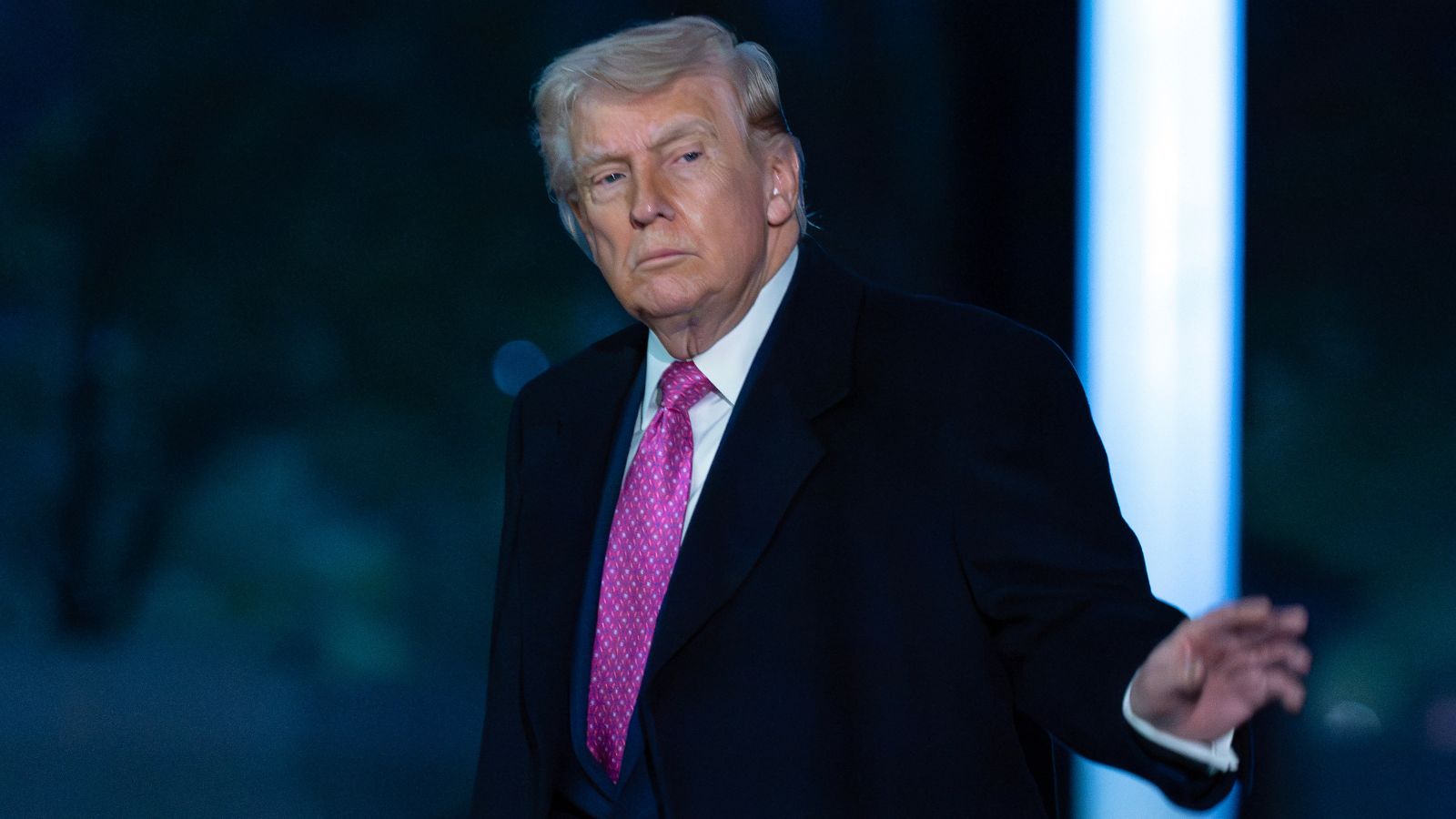
Donald Trump has issued a directive that sounds more like a declaration of war than a trade policy: a 100% tax on pharmaceutical companies that move their production out of the United States. It is a "medicine tax" designed to chain the industry to American soil. To the voter in the checkout line, it sounds like a homecoming. To the executive in the glass tower, it sounds like an extinction event.
The stakes are not merely financial. They are biological.
The Blueprint of a Threat
The logic behind the ultimatum is rooted in a brutal kind of simplicity. For decades, Big Pharma has operated on a global arbitrage model. They research in Boston, patent in DC, and manufacture in Singapore, Ireland, or China to keep margins high and taxes low. This "offshoring" has left the American domestic medicine chest dangerously thin. During the heights of global supply disruptions, we realized that we didn't just outsource the labor; we outsourced the survival.
The proposed 100% tariff—effectively a total profit wipeout—targets any company that dares to shutter an American factory in favor of a cheaper foreign alternative. It is a wall built of spreadsheets.
But economics is rarely a straight line. It is a spiderweb. Pull one thread, and the whole structure shudders. If a company is told it must manufacture a complex biologic drug in a high-cost American facility or face a 100% tax on its imports, it faces a binary choice. It can absorb the massive cost of building a new domestic infrastructure, or it can pass that cost directly to Sarah at the pharmacy counter.
The tension lies in the "or."
The Ghost Factories
Consider the anatomy of a modern pill. It isn't just powder in a capsule. It is the result of a delicate dance of "Active Pharmaceutical Ingredients" (APIs). Currently, a staggering percentage of the world’s APIs are produced in India and China. We stopped making them here because the environmental regulations were too strict and the labor was too expensive. We traded resilience for a lower price point.
Now, the government is demanding that the dance happen on American soil.
For a moment, imagine the sheer scale of the shift. Building a pharmaceutical plant isn't like opening a warehouse. It requires specialized "clean rooms," highly trained chemical engineers, and years of FDA certifications. It is a slow, methodical process in an era of Twitter-speed politics.
When the 100% tax is introduced, the immediate reaction won't be the sudden appearance of new factories. It will be a frantic calculation of risk. If a company stays abroad, the tariff makes their medicine twice as expensive. If they move home, the construction costs and American wages might make the medicine twice as expensive anyway.
The consumer is caught in the middle of a high-stakes game of chicken. The government is betting that the companies will blink and lower their margins to stay competitive. The companies are betting that the government won't actually let the price of heart medication double overnight.
The Invisible Margin
There is a cold irony in calling this a "medicine tax." Taxes are usually something we pay to the state to fund the commons. This tax is a deterrent. It is meant to be so painful that no one ever actually pays it. But in the transition period—the "gray years" between the policy's enactment and the theoretical return of American manufacturing—the friction is where the heat is generated.
In this scenario, the "Invisible Margin" is the human cost of the transition.
If a pharmaceutical giant decides to fight the tariff in court, or if they decide to stop supplying certain low-margin generics because the tax makes them unprofitable, the shelves in Sarah’s pharmacy go bare. This isn't just about the price of a luxury car or a new smartphone. This is about the availability of the chemicals that keep lungs pumping and blood sugar stable.
The policy assumes that Big Pharma's loyalty can be bought—or coerced—through the threat of lost profits. It assumes that the American market is so valuable that no company would ever walk away. And they are likely right. The U.S. pays the highest prices for drugs in the world. We are the Golden Goose.
But a goose that is being choked doesn't lay more eggs. It struggles.
The Ripple on the Water
The 100% tax doesn't stop at the border. It changes the way investors look at the entire sector. Biotech startups—the tiny engines of innovation that eventually sell their discoveries to the giants—rely on a predictable path to profitability. If that path is suddenly blocked by a massive tax liability, the funding for the next cure might simply evaporate.
Why risk billions on a new Alzheimer’s drug if the manufacturing requirements might double your overhead before you even sell a single dose?
We have seen this pattern before in other industries, but medicine is different. You can live without a domestic steel industry for a few years while you rebuild. You cannot live without your thyroid medication for a few weeks. The "lag time" in pharmaceutical manufacturing is measured in lives.
The argument for the tax is one of national security. It is the belief that a country that cannot heal itself is not truly sovereign. There is a deep, resonant truth in that. Relying on a geopolitical rival for your antibiotics is a strategic nightmare. The question isn't whether we should bring manufacturing home. The question is whether a 100% tax is a scalpel or a sledgehammer.
A Cold Walk Home
Back at the pharmacy, Sarah finally slides her card. The transaction clears, but she feels the weight of it. She doesn't care about trade deficits. She doesn't care about the Active Pharmaceutical Ingredient percentage of her pills. She cares that the conversation in Washington has turned her life-saving medicine into a pawn on a chessboard.
The ultimatum is out there. It is a bold, aggressive attempt to rewrite the rules of global trade. It seeks to undo forty years of globalization with a single pen stroke. If it works, we will see a landscape of gleaming new American factories, a "Rust Belt" transformed into a "Bio Belt," and a nation that finally holds the keys to its own medicine cabinet.
If it fails, we will see a spike in costs that makes the current inflation look like a rounding error. We will see "gray markets" for imported drugs and a widening gap between those who can afford the "American-made" price tag and those who are left waiting.
The hum of the pharmacy continues. The shelves are full for now. But the air is different. There is a sense that the floor is moving, that the very basics of survival are being renegotiated in real-time.
We are no longer just patients or consumers. In the shadow of the 100% tax, we have become the collateral in a struggle to define what a country owes its citizens, and what a corporation owes its country. The ultimatum has been delivered. The response will be written in the prices we pay and the breaths we take.
The cost of medicine was already high. Now, the cost of the politics surrounding it is becoming absolute.