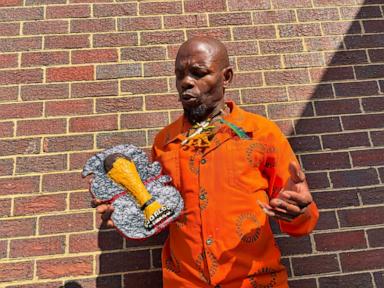
The headlines write themselves. "Brushes Over Bars." "How Art is Liberating South Africa’s Incarcerated." They are feel-good stories designed to make comfortable citizens feel even more comfortable about the state of modern correctional facilities. A prison opens a clean, well-lit gallery space. Inmates hang oil paintings of landscapes or expressive self-portraits. High-society patrons sip cheap wine at an opening night gala, nod thoughtfully, and buy a piece for their living room.
Everyone wins, right? The inmate finds a voice. The prison gets a public relations victory. The buyer feels socially conscious.
It is a beautiful illusion. It is also completely wrong.
The lazy consensus dominating public discourse asserts that introducing art galleries into the carceral framework is a progressive, rehabilitative triumph. This perspective confuses distraction with rehabilitation and aesthetic PR with systemic reform. Having spent over a decade analyzing prison logistics, recidivism metrics, and institutional budgets, I can tell you that these galleries are little more than expensive band-aids on a gaping wound. They do not fix the structural failures of the penal system; they merely make those failures look pretty on a gallery wall.
The Aesthetic Trap of the Carceral PR Machine
Prisons are, by definition, violent, high-stress environments designed for isolation and punishment. In South Africa, facilities like Pollsmoor or Johannesburg Central (popularly known as Sun City) operate at double or triple their intended capacity. Gang violence is an everyday reality. Sanitation is frequently abysmal. Tuberculosis spreads faster than ideas.
Into this grim reality enters the prison art gallery.
When an institution allocates space, security personnel, and budget to curate art exhibitions, it is engaging in a highly sophisticated form of reputation management. It creates a localized zone of forced positivity. The media covers the gallery opening, not the overcrowding in the cells next door.
This is what criminologists refer to as institutional window dressing. By focusing public attention on the few inmates who possess the specific, marketable talent required to produce gallery-grade art, the state successfully diverts attention from the thousands of inmates sitting in dark cells without access to basic literacy programs, psychological counseling, or legal representation. It is a brilliant strategy for shifting the narrative from systemic neglect to individual creative triumph.
The Recidivism Lie: Why Art Is Not a Plan
The primary metric of success for any correctional program must be its impact on recidivism—the rate at which released inmates commit new crimes.
Advocates for prison art galleries routinely claim that creative expression reduces reoffending by building self-esteem and providing a sense of purpose. This sounds reasonable in a theory seminar, but it collapses under economic reality.
Inmates do not reoffend because they lack self-esteem. They reoffend because they face an economy that actively shuts them out.
When an individual walks out of a South African prison with a criminal record, they enter a job market with an unemployment rate hovering around 32%. If they are under 35, that number climbs past 45%. They lack housing, a professional network, and up-to-date technical skills. A portfolio of abstract paintings will not pay rent in Johannesburg. It will not buy groceries in Khayelitsha.
To understand why the art-as-rehabilitation model is structurally flawed, look at the hierarchy of needs within a post-release environment:
- Tier 1: Survival. Secure housing, food stability, and immediate income.
- Tier 2: Stabilization. Resolving addiction issues, establishing a legal identity (obtaining IDs), and building a non-criminal support network.
- Tier 3: Marketable Skill Acquisition. Mastering trades that are actively hiring—welding, plumbing, coding, commercial driving, or agricultural management.
- Tier 4: Self-Actualization. Artistic expression, creative exploration, and personal hobbies.
Prison art galleries invert this pyramid. They spend scarce institutional resources on Tier 4 self-actualization while leaving Tier 1 and Tier 3 completely unaddressed.
Imagine a scenario where a department spends $50,000 annually to maintain an art studio and gallery space inside a maximum-security prison. Over a year, that program might deeply benefit ten highly talented inmates. Meanwhile, 900 other inmates in the same facility receive zero vocational training. When those ten artists are released, maybe one sells enough work to survive. The other nine face the exact same economic desperation as the rest of the prison population.
This is not a rehabilitation strategy. It is a lottery system masquerading as social justice.
The Distortion of the Creative Economy
The commercialization of prison art introduces a strange, exploitative dynamic that few outside the industry want to acknowledge.
When an inmate's art is sold in a gallery, who actually profits? Usually, a percentage goes to the artist’s account, a percentage goes to the gallery or facilitating NGO, and a percentage often goes back to the state or prison fund. On paper, this allows inmates to save money for their eventual release or send funds home to their families.
In practice, it creates an institutional incentive to commodify the inmate's trauma. The art market thrives on compelling narratives. A painting by an anonymous student is worth a fraction of a painting by a convicted bank robber or gang member. The market demands that the inmate lean into their criminality, their pain, and their institutionalization to sell the work.
Instead of helping the inmate move past their worst decisions, the commercial art apparatus requires them to continuously perform and package that past for the consumption of wealthy art collectors. The gallery does not liberate the inmate from the prison; it chains their economic value to the fact that they are locked inside it.
Furthermore, it creates intense, sometimes dangerous hierarchies inside the walls. In an environment where resources are scarce, an inmate who suddenly becomes a high-earning artist becomes a target for extortion by both prison gangs and corrupt correctional officers. The influx of cash into a prison cell block without rigorous financial oversight rarely ends well for the person holding the money.
Redirecting the Canvas: What Real Reform Demands
If we are serious about transforming correctional facilities from warehouses of human misery into engines of social rehabilitation, we have to stop falling for superficial success stories. We need to dismantle the premise that art is an effective substitute for structural preparation.
This requires a shift toward hard, unglamorous, and deeply pragmatic vocational training.
We must prioritize skills that have a direct, measurable path to employment the day an inmate walks through the gates. South Africa does not have a shortage of painters; it has a massive shortage of certified mechanics, renewable energy technicians, industrial welders, and small-business managers.
Shift to High-Demand Trades
Resources currently allocated to high-profile cultural projects should be redirected toward establishing accredited technical workshops inside prisons. If an inmate spends three years learning how to install solar panel arrays or fix commercial refrigeration units, they leave prison with a tangible asset that employers are actively searching for.
Reform Post-Release Infrastructure
Rehabilitation does not happen inside a cell; it happens during transition. Investment must pour into halfway houses, transitional employment placement programs, and the legal removal of arbitrary barriers that prevent rehabilitated individuals from obtaining work licenses.
Democratize Education, Don't Exceptionalize Art
Basic literacy and high school equivalency diplomas do more to lower recidivism rates than any creative arts program ever could. Educational spending should be distributed evenly across the entire prison population to lift the baseline capability of every inmate, rather than concentrated on a handful of artists to create a compelling PR narrative.
Admitting the failure of the prison gallery model is uncomfortable because it forces us to confront a harsher reality: fixing broken human lives requires systemic economic investment, not a weekend exhibition. It demands that we provide inmates with the tools to survive in a brutal economic environment, rather than the tools to decorate their own confinement.
Stop buying the art. Start demanding the math.