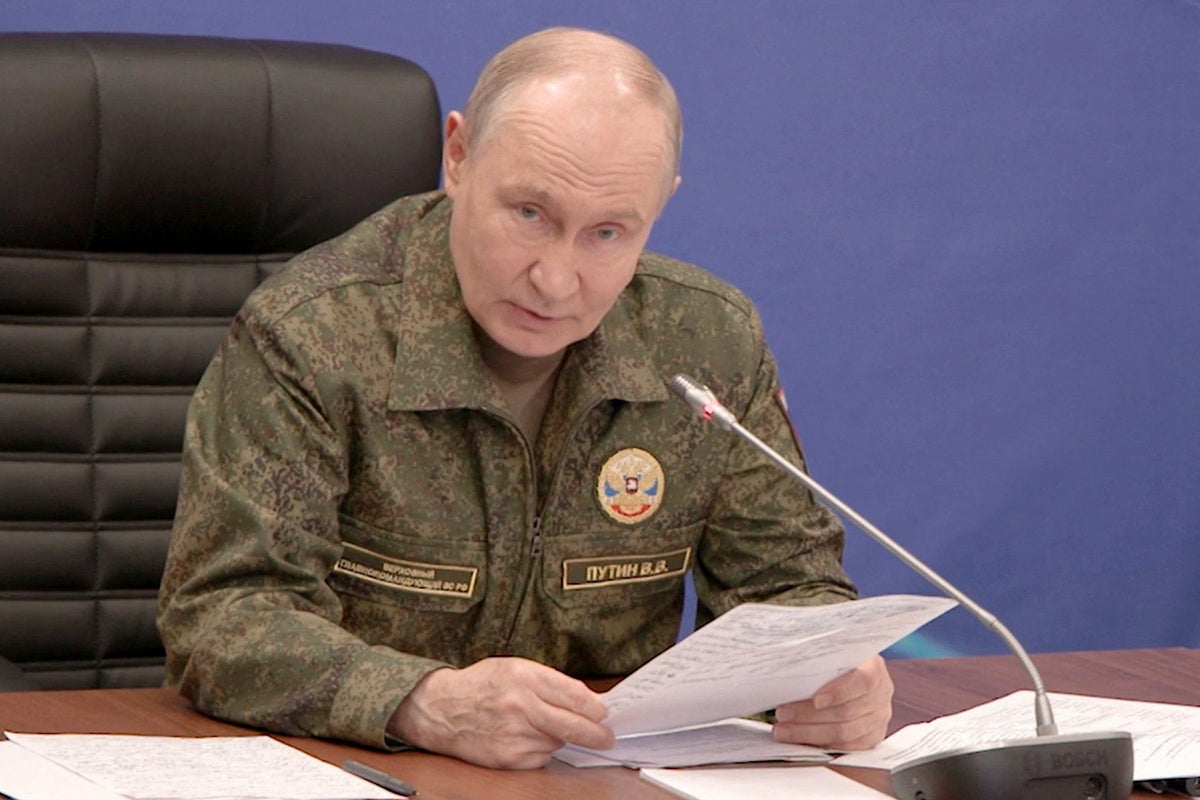
The conventional wisdom surrounding the war in Ukraine usually boils down to a single assumption. People assume Vladimir Putin is holding out for the right deal, waiting until he secures enough territory or extracts enough concessions from the West to finally call it quits. If someone just crafts the perfect diplomatic exit ramp, the fighting will stop.
That assumption is completely wrong.
We aren't dealing with a standard geopolitical chess match where a leader settles for a draw when the cost gets too high. Look at the underlying math of the Russian state today. Putin hasn't just built a war machine; he has converted the entire Russian Federation into a structure that requires conflict to stay upright. Stopping the war isn't a matter of signing a piece of paper. For the Kremlin, peace is a direct threat to the survival of the regime.
The reality is that the Russian leader cannot stop the invasion because the alternative—a sudden return to a peacetime footing—would trigger economic, social, and political chaos inside Russia that he cannot control.
The Economic Trap of a Military State
Over the last few years, the Kremlin fundamentally altered the plumbing of the Russian economy. Military and defense spending now devours roughly 8% of Russia's GDP. Nearly 40% of the entire federal budget flows directly into the war effort, funding weapons factories, logistics, and massive payouts to soldiers and their families.
This isn't sustainable long-term, but it creates a powerful short-term illusion of prosperity. Factory towns that were economically dead a decade ago are booming because they run three shifts a day making artillery shells. Poor regions in Siberia and the Russian Far East are seeing unprecedented inflows of cash because the government pays astronomical salaries to contract soldiers—amounts that civilian jobs in those regions could never match.
Think about what happens if a permanent ceasefire takes effect tomorrow.
- The Factory Shutdowns: Demand for tanks, drones, and ammunition drops instantly. Tens of thousands of workers face layoffs or severe pay cuts as factories scale back.
- The Civilian Economy Collapse: The civilian manufacturing sector has been starved of investment since 2022. It can't just absorb millions of workers overnight.
- The Spending Cliff: Turning off the faucet of wartime spending would send the country into a sudden, deep recession.
Putin has backed himself into a corner where he must keep printing money and feeding the military leviathan just to keep the GDP numbers looking positive. The war is the economy now.
The Veteran Nightmare Waiting at Home
An even bigger threat to the Kremlin sits right on the front lines. Russia currently maintains hundreds of thousands of active troops in Ukraine. If peace breaks out, those men come home.
The demographic makeup of this force is a ticking political time bomb. To avoid draft riots in politically sensitive cities like Moscow and St. Petersburg, the Kremlin recruited heavily from prisons, remote villages, and marginalized communities. Hundreds of thousands of these men will return to civilian life with severe physical trauma, untreated psychological issues, and a total desensitization to violence.
The historical parallels are terrifying for any autocrat. When disgruntled, armed veterans return from a mismanaged, brutal campaign, they don't always integrate quietly back into society. They start asking questions. They wonder why so many of their friends died for a stalemate. They look at the corruption in Moscow with fresh anger.
Remember the brief Wagner mutiny led by Yevgeny Prigozhin? That was a terrifying preview for Putin. It proved that the armed men fighting his war can turn their guns toward Moscow in a heartbeat if they feel betrayed or mismanaged. By keeping the war going indefinitely, Putin ensures these men stay deployed, supervised, and far away from the halls of power.
The Information Bubble Burst
Right now, total state control over media and aggressive wartime censorship keeps a lid on public dissent. Any Russian who calls the conflict a war faces years in prison. The state hides the true casualty figures, which Western intelligence estimates have climbed past a million killed and wounded.
A formal end to the conflict breaks that spell. When the fighting stops, the full scale of the disaster becomes impossible to hide.
Tens of thousands of families will realize their missing loved ones aren't coming back. Veterans will talk openly about the horrific realities of the frontline, the systemic incompetence of the military command, and the utter disregard for human life. The myth of a glorious, flawless imperial conquest evaporates, replaced by the grim reality of a ruined neighbor and a deeply scarred generation of Russian men.
Putin knows his approval rating and authority rely entirely on his image as an invincible strongman. Exposing the true cost of this campaign without a total, undeniable capitulation from Kyiv is a political risk he won't take.
What This Means for Western Strategy
Western leaders keep searching for a diplomatic golden ticket, but the harsh truth is that Putin isn't a good-faith actor waiting for an honorable exit. He has tied his personal survival to the continuation of hostilities.
If you want to understand where this conflict goes next, stop looking at the negotiating tables and start looking at Russia’s internal friction points. The war will not end because of a clever treaty. It will end when the internal contradictions of Russia's wartime state become too heavy to support.
For the international community, the path forward requires a shift in focus.
- Target the Real Revenue: Sanctions must tighten around the remaining networks that allow the Kremlin to fund its massive military payroll.
- Support Ukraine's Deep Strikes: As Ukrainian drones systematically hit Russian oil infrastructure and military hubs, they bring the material cost of the war directly to the Russian public, cracking the illusion of safety Putin tried to build.
- Accept the Long Game: Western policymakers need to abandon the illusion of a quick diplomatic breakthrough and prepare for a sustained campaign aimed at draining the Kremlin's economic capacity until the system simply cannot sustain itself.


