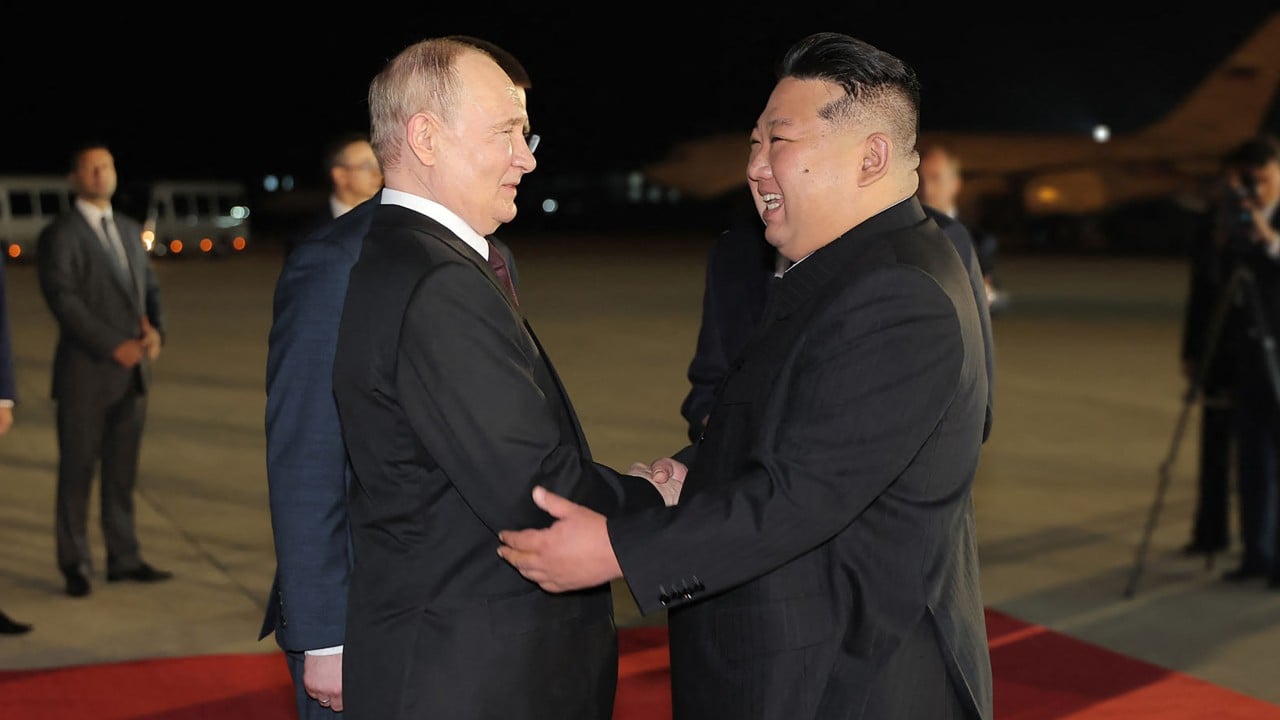
Imagine the diplomatic headache in Washington if Vladimir Putin and Kim Jong Un shake hands on Chinese soil during an Asia-Pacific Economic Cooperation summit. It sounds like a geopolitical thriller plot. Yet intelligence analysts and foreign policy watchers have flagged this exact scenario as a live possibility whenever China hosts the APEC leaders' gathering.
Let's get straight to the core reality. China is hosting the 2026 APEC summit, and while Russia is a formal APEC member economy, North Korea isn't. That doesn't stop Beijing from inviting Kim Jong Un as a special guest or orchestrating a bilateral sideline meeting in Beijing or the host city while Putin is already in the country. If Putin travels to China for APEC, the logistical and security barriers for a face-to-face sit-down with Kim vanish overnight.
You don't need a crystal ball to see why this matters. A trilateral proximity between Xi Jinping, Vladimir Putin, and Kim Jong Un—even without a formal three-way photo op—sends a blunt message to the United States and its Pacific allies.
How a Non-Member Like North Korea Fits Into APEC
Most casual observers assume APEC summits are strictly closed doors for the 21 member economies. That's a misunderstanding of how host nations operate.
Host countries hold wide discretion over guest invitations for informal dialogues and side events. When China takes the APEC chair, Beijing controls the guest list for non-member outreach sessions. Even if Kim Jong Un never steps foot inside the official APEC economic leaders' retreat, nothing stops him from taking his armored train across the Yalu River into China during the exact same week.
Think about the mechanics of presidential travel for both Putin and Kim. Neither leader flies commercial, and both face severe international sanctions, arrest warrants, or airspace restrictions. Putin's International Criminal Court warrant severely limits where he can land without risking diplomatic friction. Kim rarely leaves North Korea at all, preferring slow, heavily guarded rail travel through Chinese territory.
China is the single safest corridor on earth for both men. If Putin is already making the trip to China for APEC, coordinating a parallel visit by Kim cuts the security risk in half. One host, one airspace umbrella, one massive intelligence shield provided by Beijing's Ministry of State Security.
What Moscow and Pyongyang Actually Want From Another Handshake
Forget the boilerplate diplomatic statements about "traditional friendship" and "regional stability." Putin and Kim don't meet for nostalgia. They meet because each holds something the other desperately needs right now.
Russia's Artillery and Manpower Math
Russia's defense industry has ramped up massively, yet modern warfare burns through shells faster than factories can stamp them out. North Korea sits on one of the largest stockpiles of Soviet-compatible artillery munitions and ballistic missiles on the planet. According to South Korean intelligence estimates and U.S. State Department disclosures over the past two years, Pyongyang has shipped millions of artillery shells and dozens of short-range ballistic missiles to Russian ports.
In return, Moscow has supplied North Korea with refined petroleum, food shipments, and—most worryingly for Seoul and Tokyo—technical assistance on satellite reconnaissance and missile guidance systems. A meeting on the sidelines of a Chinese summit gives Putin and Kim a secure, bug-free environment to negotiate the next phase of that barter system without relying on intercepted cables or lower-level envoys.
Kim Jong Un's Push for Diplomatic Legitimacy
Kim hates being treated like a pariah. Showing up in China while 21 Pacific Rim leaders—including representatives from the United States, Japan, and South Korea—are gathered in the same country is a massive propaganda win for Pyongyang.
Even a brief handshake with Putin in a Beijing guesthouse signals to North Korean domestic audiences that their leader stands at the center of global power politics. It breaks the narrative of isolation. Honestly, you have to respect the sheer opportunism of it. Kim gets global media coverage simply by parking his train in the same time zone as an APEC summit.
Beijing's Complicated Balancing Act
Here's where people get the China-Russia-North Korea dynamic wrong. Western commentators often lump Beijing, Moscow, and Pyongyang together as a unified "axis." That's lazy analysis.
Xi Jinping wants stability on the Korean Peninsula and calm trade relations with Washington and Brussels. China's economy relies heavily on exports to the exact Western markets sitting around the APEC table. Hosting an APEC summit is supposed to showcase China as a responsible, open-for-business global stabilizer.
Having Putin and Kim openly plotting arms deals in the lobby threatens to hijack Beijing's carefully scripted economic message.
Yet Xi can't easily tell Putin not to come, nor can he publicly snub Kim without risking chaos on China's northeastern border. If Putin arrives for APEC and insists on meeting Kim while in China, Beijing's smartest play is quiet compartmentalization. Keep the Putin-Kim meeting geographically separated from the main APEC venue—say, holding the APEC summit in a southern hub like Shenzhen while Putin and Kim meet up in Beijing or Harbin. That way, Xi preserves plausible deniability with Western trade partners while still facilitating his neighbors' requests.
Why Washington and Seoul Are Watching the Train Tracks
Intelligence agencies don't wait for official press releases to know when a summit is brewing. They watch logistics.
If you want to track whether a Putin-Kim meeting is actually happening alongside China's APEC schedule, ignore the rumor mill and look at physical indicators:
- Rail movements near Dandong: Kim's green armored train requires hours of track clearance, bridge inspections, and halted commercial freight along the Sino-North Korean border.
- Flight tracking of Russian special flight squadrons: The Rossiya Special Flight Squadron regularly sends advance Il-76 transport planes carrying armored Aurus limousines and communications gear days before Putin lands anywhere.
- Hotel blackouts in Beijing or Shenyang: Sudden diplomatic floor closures at state guesthouses like Diaoyutai almost always precede high-level unannounced visits.
South Korea's National Intelligence Service and the U.S. Indo-Pacific Command monitor these exact signatures daily. Any overlap between Putin's APEC flight plan and North Korean rail security sweeps will trigger immediate consultations between Washington, Seoul, and Tokyo.
The Strategic Fallout for Pacific Allies
Suppose the meeting happens. What changes the morning after?
First, expect immediate friction inside the APEC summit itself. While APEC is strictly an economic forum that avoids formal security resolutions, American, Japanese, and South Korean delegations won't sit quietly while Russia and North Korea trade weapons down the road. You'll see coordinated press briefings condemning UN Security Council violations, which in turn will irritate Beijing and derail consensus on trade communiqués.
Second, Tokyo and Seoul will accelerate their own trilateral defense integration with Washington. Every time Putin and Kim get closer, South Korean domestic debate over developing an independent nuclear deterrent flares up again. That's Beijing's worst nightmare—a nuclear-armed South Korea or Japan right on China's doorstep.
Third, sanctions enforcement gets even harder. When Russia—a permanent member of the UN Security Council—openly embraces North Korea on Chinese territory, the credibility of international sanctions regimes takes a direct hit. Other nations watching from the sidelines see that defiance carries few immediate consequences when backed by major powers.
How to Read the Signals Without Falling for Hype
Geopolitical commentary loves dramatic headlines, especially when two sanctioned leaders might share a room. Keep a clear head as news develops around the summit calendar.
Start by separating APEC official business from bilateral sideline diplomacy. Putin attending APEC is normal protocol for a member economy, even if Western leaders boycott his sessions. Kim traveling to China at the same time is an opportunistic parallel visit, not North Korea joining APEC.
Watch Beijing's official readouts closely. If Chinese state media gives prominent front-page coverage to a Putin-Kim encounter, Xi is signaling defiance toward Washington. If Xinhua buries the meeting in a three-sentence wire note while flooding the airwaves with APEC trade deals, Beijing is trying to distance itself from the optics.
Follow primary diplomatic trackers like 38 North for satellite imagery of North Korean border activity and official statements from the U.S. Department of State or South Korea's Ministry of Foreign Affairs to verify actual travel movements rather than relying on anonymous social media leaks. The real story isn't whether they shake hands—it's what cargo starts moving across the border two weeks later.