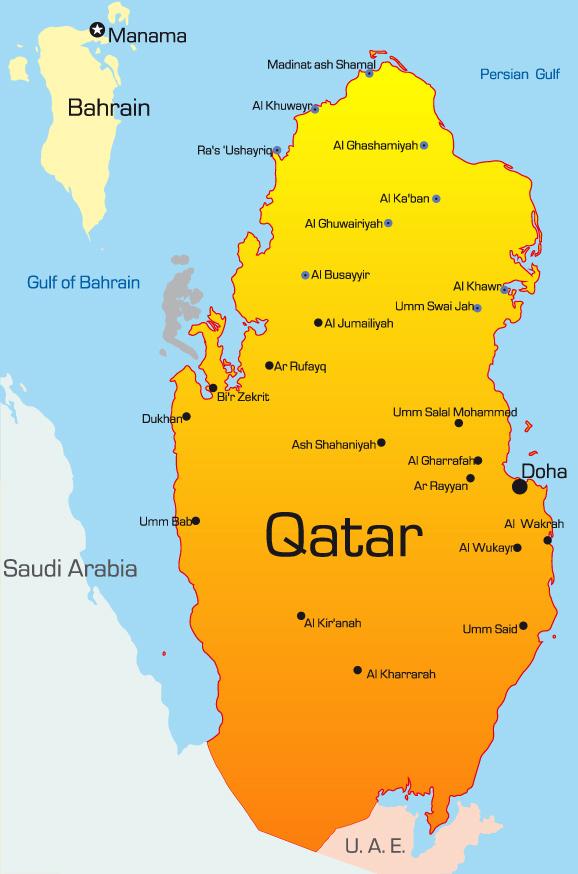
Energy markets hate uncertainty. When you talk about the Strait of Hormuz, you’re talking about the world’s most sensitive maritime chokepoint. Right now, there’s a quiet but intense debate brewing over who pays for passage and how much. Qatar has made its position clear. They aren't interested in permanent transit fees that could hike prices for everyone from gas suppliers to the person filling up their car in Europe or Asia.
Qatar is the heavyweight of Liquefied Natural Gas (LNG). They rely on the free flow of traffic through that narrow stretch of water. Any talk of a "permanent toll" is a non-starter for Doha. They've indicated they might talk about a temporary fee—perhaps to cover specific security costs or infrastructure—but anything that looks like a permanent tax on global energy is a line in the sand.
Why the Strait of Hormuz dictates global prices
The Strait of Hormuz is barely 21 miles wide at its narrowest point. Through this gap flows about a fifth of the world’s total oil consumption and nearly a third of global LNG. If costs go up here, they go up everywhere.
Qatar’s stance isn't just about protecting their bottom line. It’s about regional stability. They know that once a "permanent" fee starts, it never goes away. It becomes a geopolitical tool. It becomes a weapon. By pushing back now, Qatar is trying to keep the regional trade lanes from becoming a toll booth for every nation with a coastline on the Persian Gulf.
The logistics are staggering. On an average day, millions of barrels of crude leave terminals in Saudi Arabia, Iraq, Kuwait, and the UAE. Qatar’s massive LNG carriers follow the same path. If a permanent fee is slapped on these vessels, we aren't just talking about a few thousand dollars. We’re talking about millions in added costs every month.
The temporary toll compromise
Doha isn't being completely rigid. They’ve suggested that a temporary toll might be negotiable. Why the distinction? It’s basically a way to fund specific needs without setting a dangerous precedent.
Maybe there’s a need for enhanced maritime security. Maybe there’s a push for better environmental monitoring or emergency response teams in the area. Qatar is saying they’re willing to pay their fair share for actual services rendered. But they won't pay a "freedom of navigation" tax just for the privilege of existing in the Gulf.
This distinction matters because it keeps the pressure on other regional players. It signals that while Qatar is a team player, they won't be bullied into long-term financial commitments that don't have a clear expiration date or a specific purpose.
Geopolitical tensions and the risk of escalation
You can't talk about the Strait of Hormuz without talking about Iran. They sit on the northern shore and have often threatened to close the strait during times of high tension with the West. When a neighboring state suggests a transit fee, it’s often viewed through a lens of security.
Qatar plays a unique role here. They’ve managed to maintain a working relationship with Tehran while hosting a massive US military base at Al-Udeid. They’re the ultimate middleman. Their opposition to permanent fees is partly a diplomatic move to keep the status quo. If one side starts charging, the other side might retaliate with their own fees or, worse, physical blockades.
Honestly, the last thing the global economy needs is another layer of cost in the supply chain. We’ve already seen how Houthi attacks in the Red Sea have sent insurance premiums through the roof. If the Strait of Hormuz adds a permanent fee on top of rising insurance and fuel costs, the inflationary pressure would be brutal.
What this means for your energy bills
If you think this is just a high-level spat between diplomats, think again. LNG prices are incredibly sensitive to transport costs. Qatar is currently massive-scale expanding its North Field production. They want to be the world's most reliable and cost-effective supplier.
A permanent fee would act like a tariff. It makes Qatari gas more expensive compared to gas from the US or Australia, which doesn't have to pass through such a volatile chokepoint.
- Higher transit costs mean higher shipping rates.
- Higher shipping rates lead to higher utility bills for consumers in Japan, South Korea, and the EU.
- It creates a ripple effect that touches everything from plastic manufacturing to home heating.
Qatar’s push for a "negotiable" and "temporary" solution is a clever way to stay flexible. They’re leaving the door open for cooperation while keeping a hand on the deadbolt.
The broader impact on maritime law
The UN Convention on the Law of the Sea (UNCLOS) generally protects the right of "transit passage" through international straits. This means ships should be able to move through without being stopped or taxed just for passing.
By opposing permanent fees, Qatar is actually defending the existing international order. If they allowed a permanent toll to go through unchallenged, it would give a green light to other countries controlling narrow waterways—like the Malacca Strait or the English Channel—to start thinking about their own "passage taxes."
It’s a slippery slope. Today it’s a security fee in the Gulf. Tomorrow it’s a "maintenance tax" in the Mediterranean. Qatar knows this. They’re playing the long game to ensure that the oceans remain open for business.
Navigating the next steps
The regional council meetings will likely be heated. Expect Qatar to demand a clear breakdown of where any "temporary" money goes. They'll want audits. They'll want sunset clauses.
If you’re an investor in energy or shipping, watch the wording of the next joint statements coming out of the GCC. If the word "permanent" stays out of the text, Qatar has won the round. If "service fees" start appearing without a defined end date, expect shipping stocks to react and insurance brokers to start recalculating their risks.
Keep an eye on the North Field expansion updates. Qatar’s ability to dominate the market depends on keeping these transit routes cheap and fast. They aren't about to let a local toll ruin a multi-billion dollar global strategy.
Check the latest maritime insurance indices for the Persian Gulf region. These often signal a price hike before the diplomats even finish their coffee. If those rates stay flat while fees are being discussed, it means the market trusts Qatar's ability to keep things temporary. If they spike, the market is betting on a long-term headache.
Stay informed on the specific security proposals being floated for the Strait. Any move toward a unified regional coast guard or monitoring system will be the primary justification for those "negotiable" temporary fees. Track those developments to see how much this will actually cost the end user.