Baguette. Flour. Electricity.
In a country that treats its morning bread like a constitutional right, watching the price of basic sustenance climb while paychecks stay stubbornly flat feels less like a line item on a consumer index and more like a quiet breach of trust. If you liked this article, you might want to look at: this related article.
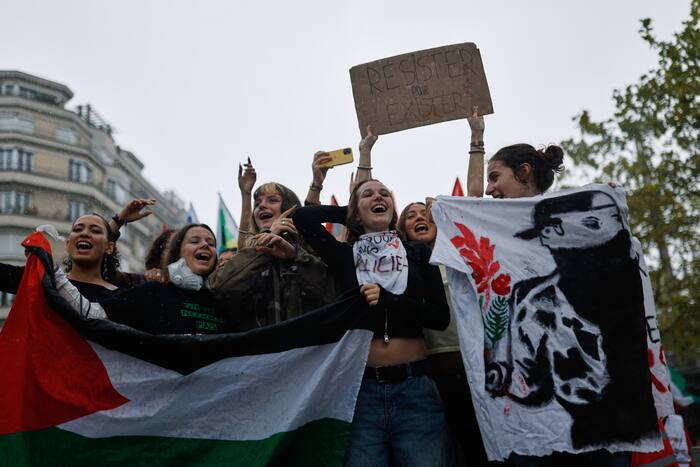
Across France, crowds have gathered again on boulevards, roundabouts, and train platforms, carrying signs against rising prices and mounting social strain. Television clips show chants echoing under gray skies, sirens wailing in the distance, and union banners snapping in the wind. Economists talk about inflation rates, supply chains, energy tariffs, and wage negotiations. Politicians talk about fiscal discipline, structural reform, and purchasing power.
Numbers. Always numbers. For another angle on this event, see the latest coverage from TIME.
Yet numbers rarely capture the small, sharp sting that happens at a neighborhood checkout counter when a staple costs two euros more than it did a year ago. They do not show a mother putting back a carton of butter or a young worker calculating whether a twenty-kilometer commute is still worth the tank of diesel.
To understand why French protesters take to the streets over rising prices and social strain, we have to step away from the broadcast studio and listen to the kitchen table. Because an economic policy is never just an abstraction on a spreadsheet. It is a daily negotiation between what a person earns and what it takes simply to stay whole.
When Every Euro Carries a Weight
I know what that math feels like from the inside. Years ago, during a stretch of lean freelance work and rising utility bills in another European city, I stood in front of an open refrigerator staring at half a lemon, three eggs, and a jar of mustard, trying to stretch forty euros across five days until a delayed invoice cleared. Nothing dramatic happened on that Tuesday. There was no tear-gas canister, no shattered storefront, no headline ticker scrolling at the bottom of a screen. Just the quiet hum of the fridge and a sudden, heavy awareness of how thin the margin between stability and panic can be.
That is the invisible stake behind street protests that outsiders sometimes dismiss as routine French unrest. Protest in France is often treated abroad like seasonal weather—predictable, theatrical, even cliché. People joke about strikes and demonstrations as if anger were a national hobby rather than a response to friction.
That dismissal misses the real story.
People do not leave warm apartments on cold mornings, lose a day's wages, risk tear gas, or stand shoulder-to-shoulder with strangers over a spreadsheet quirk. They move when the math of daily life stops working. When rent, groceries, fuel, and heating eat up so much of a paycheck that there is nothing left for a broken washing machine, a child's school trip, or a single unexpected bill, stress stops being an individual problem. It becomes a shared pressure cooker.
To make this concrete, let us trace a hypothetical scenario—a composite picture drawn from real pressures facing households across France today. Suppose we call her Claire. Claire is thirty-four, works full-time in municipal logistics in a mid-sized town outside Lyon, and shares a two-bedroom flat with her eight-year-old son. She is not destitute. She has a job, a lease, and a routine. On paper, she is the working backbone the system relies on.
In reality, Claire lives on a tightrope. Every month begins with fixed deductions: rent, electricity, water, phone, transit pass. By the tenth of the month, the remaining balance has to cover food, school supplies, clothes for a growing boy, and any medical co-pays. When grocery prices creep up—even by a few percentage points here and there—Claire does not experience that as "moderating inflation." She experiences it as choosing between fresh fruit and chicken thighs, or skipping a winter coat until next month.
Multiply Claire by millions of households across towns, suburbs, and rural counties. Suddenly, social strain is no longer a sociological buzzword. It is exhaustion wearing a work badge.
The Myth of the "Typical" Consumer
Official statistics love averages. An average says inflation cooled, or real wages edged up, or energy markets stabilized. Averages are useful tools for tracking broad currents, yet they are terrible at describing what happens to a specific family in a specific zip code.
Think of the economy like a train running through the countryside. If the locomotive speeds up by ten percent, the average speed of the train looks great. Yet the last car—the one carrying people whose wages are frozen, whose rents were recently renewed at market rates, or whose commutes require long car rides because public transit is sparse—is still jolting over rough track.
When costs rise unevenly across essentials, the pain concentrates at the bottom and lower-middle tiers. Food and energy are non-negotiable. You can delay buying a new television or skip a restaurant meal, though even small luxuries are often the first casualties when budgets tighten. You cannot easily stop heating a drafty apartment in November, or stop feeding a child, or stop paying for fuel when there is no train line from your village to your workplace.
That asymmetry breeds resentment. It is one thing to tighten your belt when everyone seems to be tightening theirs together. It is quite another to watch corporate profits, shareholder payouts, or high-end consumption make headlines while your own cart shrinks week by week.
Here, I have to admit something honest: even for people who study economics and public policy for a living, inflation and social strain can feel strangely slippery. Why does a two- or three-percent rise in prices feel catastrophic to one household and barely noticeable to another? Why do protests erupt over specific fuel taxes, pension rules, or supermarket margins when the underlying grievances are clearly broader?
Part of the answer lies in psychology and history. Human beings are wired to feel losses far more sharply than gains. Losing fifty euros of purchasing power every month hurts much more than the relief of seeing a headline inflation figure tick down by half a point. When prices jump fast over two or three years and then merely grow more slowly, the higher price tags remain. The baseline has shifted.
France also carries a long historical memory of collective action. From nineteenth-century bread riots and labor struggles to the Gilets Jaunes movement and recent pension and cost-of-living demonstrations, taking to the streets has long functioned as a pressure valve when citizens feel unheard by distant institutions. Whether you admire that tradition or find it disruptive, ignoring the grievance behind it rarely makes it disappear.
Where the Strain Actually Lives
Look closely at what happens when economic squeeze meets social strain, and you see cracks opening in places that do not make the evening news.
It shows up in friendships when one person has to decline dinner because twenty-five euros is a steep price for a meal out, while another feels awkward suggesting a cheaper spot. It shows up in marriages and co-parenting arrangements where money arguments start over a utility bill that has nothing to do with love. It shows up among young adults who delay moving out, delay starting families, or feel like they are running hard just to stay in the same place.
Consider another hypothetical scenario—this one centered on a small neighborhood shopkeeper, let's call him Marc, who runs a bakery and corner grocer in a struggling town. Marc is caught right in the middle of the squeeze. His suppliers raise prices on flour, butter, packaging, and electricity. His customers—many of them retirees on fixed pensions or hourly workers—push back when he raises the price of a loaf or a pint of milk by ten or twenty centimes.
Marc is not a villain profiting from misery, nor is he an abstract "small business sector." He is a man standing behind a counter twelve hours a day, watching his margins evaporate while his regulars look tired and angry. When protests shut down roads or transit lines, Marc loses foot traffic on one hand while sympathizing with the anger driving the blockade on the other.
That trap—where workers blame high prices, shopkeepers blame high costs, and governments blame global shocks—is where social strain turns bitter. Everyone feels squeezed, yet no one feels in control.
The Divide Between Center and Periphery
One of the deepest fault lines running through these protests is geographic and cultural, not just financial.
In major urban centers—especially Paris—life is expensive, yes, but it also comes with dense public transit, abundant jobs, cultural amenities, and visibility. Out in la France périphérique—smaller towns, rural belts, and outer suburbs—the equation looks harsher. Jobs are often further away. Public transit may be infrequent or nonexistent. A car is not a convenience; it is survival.
When fuel prices climb or regional rail service feels strained, residents in those areas feel doubly penalized: first by the cost itself, and second by the sense that policymakers in capital offices design rules without understanding what daily life looks like thirty miles from the nearest metro line.
You can hear that frustration in the way protesters talk about dignity. Dignity is a word that comes up again and again in social movements, even when the immediate spark is a price tag. Because being able to provide for yourself and your family without constant anxiety is tied directly to self-respect. When hard work stops guaranteeing a decent standard of living, people do not just feel poorer. They feel disrespected.
Why Protests Keep Returning
Whenever crowds fill the streets over the cost of living, commentators tend to ask the same two questions: Will this force the government to back down? and How long will it last?
Those are fair questions, yet they treat protests like a storm that either breaks a dam or passes harmlessly out to sea. A more accurate metaphor might be a fever. A fever is uncomfortable, messy, and alarming to watch, yet it is a symptom of an underlying infection or inflammation rather than the disease itself. Cooling the forehead with a damp cloth may bring temporary relief, but unless the deeper cause is addressed, the temperature rises again.
When governments respond to cost-of-living protests with temporary subsidies, fuel vouchers, or targeted price caps, those measures can genuinely help households weather an immediate spike. A check or a rebate puts real money in a real pocket for a month or two. Nobody struggling to pay an electric bill turns down relief because an economist calls it a distortion.
Still, band-aids have limits. If housing remains scarce and costly, if wages lag behind essential expenses, if public services feel stretched thin, and if ordinary people feel shut out of decisions that shape their lives, the underlying strain stays right beneath the surface. It may quiet down for a few weeks. It may shift from street marches to union walkouts or ballot-box anger. It rarely vanishes completely until people feel real breathing room again.
What We Miss When We Only Watch the Clashes
There is a temptation in fast media cycles to focus on the sharpest visuals: smoke, standoffs, shouting matches, dramatic quotes. Those moments grab attention in seconds. They also flatten a complex human story into a tug-of-war between "order" and "disorder."
Walk past the cameras, though, and you find quieter scenes that tell you just as much. You see neighbors swapping tips on discount markets, parents stretching leftovers into a second dinner, workers trading shifts to cover child care, and ordinary citizens standing on a corner holding a hand-painted sign because they cannot think of any other way to say, This is too heavy to carry alone.
You do not have to agree with every slogan on a protest banner to recognize the weight behind it. You do not have to view every strike as a masterstroke to understand why someone who has done everything "right"—worked, saved what they could, played by the rules—feels pushed to the edge when the ground shifts beneath their feet.
At its heart, the story of rising prices and social strain in France is a mirror held up to a wider modern dilemma. Across much of the developed world, families are discovering that stability is fragile, that essential costs have a stubborn way of climbing faster than comfort, and that economic numbers only matter insofar as they leave room for human dignity.
A receipt is a small slip of paper. Keep enough of them, line them up side by side, and they read like a map of a nation's mood—every euro a quiet test of whether tomorrow will feel a little lighter than today.