The rain in Melaka does not fall so much as it settles, heavy and warm, turning the red bricks of Christ Church into the color of dried blood and slicking the narrow asphalt along Jonker Street until the trishaws seem to float on black mirrors.
By seven in the evening, the tourists have retreated to air-conditioned hotel lobbies, and the city reverts to what it has always been beneath the UNESCO plaques and the souvenir magnets: a quiet, observant crossroads where history is never truly past. Sit at a plastic table outside a kopitiam off Jalan Bunga Raya, order a kopi kosong, and listen. You will hear Hokkien, Bahasa Melayu, and Tamil braided together in the effortless cadence of people who have shared the same humid air for five hundred years.
Look closer, though. Notice who sits at which table.
Politicians in Kuala Lumpur treat Melaka as a laboratory. Because it is small, compact, and demographically balanced—roughly two-thirds Malay, a quarter Chinese, and a smaller fraction Indian—analysts love to call it a microcosm of Peninsular Malaysia. When Melaka votes, the nation leans in to read the tea leaves. Yet the numbers returned from the ballot boxes in Melaka tell a story far more unsettling than simple party wins or losses. They reveal an electorate hardening along ancestral fault lines, like concrete setting in the afternoon sun.
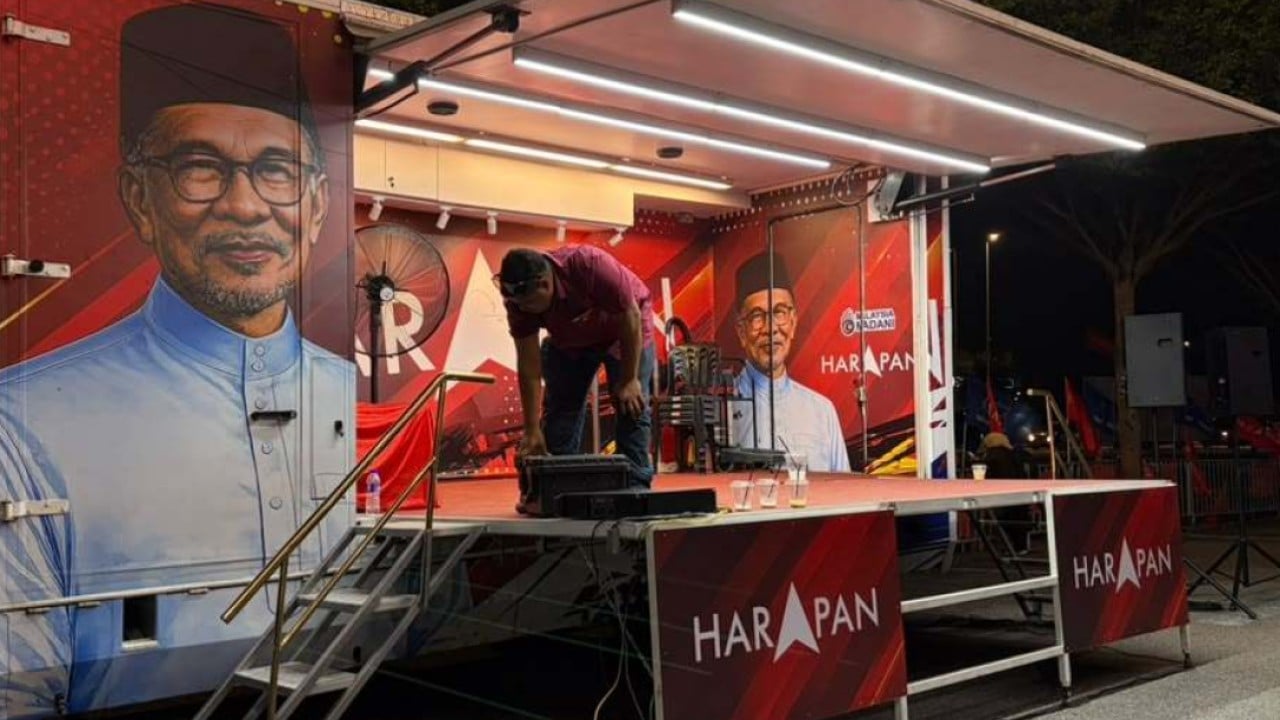
And standing squarely in the path of that slow-moving wall is Prime Minister Anwar Ibrahim.
The Arithmetic of Anxiety
To understand why a state smaller than metropolitan London carries the weight of Malaysia's political future, you have to step away from the podiums and into the living rooms.
Consider a hypothetical voter—let us call him Cikgu Razak, a retired secondary school teacher living in a tidy single-story terrace house in Masjid Tanah, forty minutes northwest of Melaka’s historic core. Razak is not an extremist. He spent thirty years teaching mathematics to Malay, Chinese, and Indian teenagers, buying them iced syrup during exam weeks and attending their weddings years later. He believes in fairness. He also believes, with a quiet ache that keeps him awake at two in the morning, that the ground beneath his children’s feet is shifting.
Razak’s pension stretches thinner every month at the wet market. When he scrolls through his phone at night, the algorithms do not show him macroeconomic charts from Putrajaya or foreign direct investment pledges in semiconductor plants. They show him short, urgent videos warning that Malay political power is eroding, that traditional privileges are under silent siege, and that the coalition governing the country relies too heavily on non-Malay support to survive.
Now walk twenty miles south to a hardware shop near Melaka Raya, run by a hypothetical second-generation merchant named Mei Ling. Her grandfather arrived from Fujian with two wooden crates and a ledger book. Mei Ling voted for Anwar Ibrahim’s reform movement with tears in her eyes, believing that decades of institutional patronage were finally giving way to a Malaysia where her daughter’s university placement would depend on her exam scores rather than her ancestry. Today, watching the government tread cautiously around conservative sensitivities to avoid offending rural voters, Mei Ling feels a different kind of exhaustion. She wonders if the reforms she risked her voice for have been quietly shelved to appease people who will never vote for Anwar anyway.
Here lies the cruel geometry of Malaysian politics. Both Razak and Mei Ling are decent people. Both love their country. Yet the political currents pulling at them move in opposite directions, and every step Anwar takes to reassure one risks alienating the other.
Why Melaka Always Speaks First
Political observers often treat elections as scorecards, tallying seats won and margins lost. That misses the deeper truth. Elections in Melaka function less like a scoreboard and more like a barometer—an instrument measuring invisible atmospheric pressure long before the storm breaks over the rest of the peninsula.
When Melaka held its state election in November 2021, the result shocked complacent strategists across the country. Barisan Nasional, the longtime ruling coalition anchored by the United Malays National Organisation, swept twenty-one of the twenty-eight seats in a landslide, while Pakatan Harapan—Anwar’s multiracial coalition—crumbled to just five seats. At the time, many dismissed it as an anomaly caused by pandemic fatigue and low voter turnout, which dipped to roughly sixty-five percent.
They were wrong. What Melaka had actually detected was the early tremor of what Malaysians now call the "green wave"—a surge of Malay nationalist and Islamist sentiment channeled through Perikatan Nasional. By the time the general election arrived a year later in November 2022, that tremor had become an earthquake. Perikatan Nasional captured seventy-four parliamentary seats nationwide, wiping out old guard figures and proving that the rural and semi-urban Malay heartland had decisively shifted its allegiance.
Subsequent polling and by-election patterns radiating out from Melaka and neighboring states confirm that those ethnic voting blocs have not softened. They have calcified. In predominantly Chinese urban seats, support for the ruling unity government remains overwhelmingly solid, often exceeding eighty percent—less out of blind devotion than out of fear of the conservative alternative. Meanwhile, in Malay-majority constituencies across Melaka’s interior, opposition messages framing the government as beholden to non-Malay interests have found deep, fertile soil.
Think of Malaysian politics right now like a suspension bridge anchored to two cliffs on opposite sides of a gorge. On one cliff stands the non-Malay electorate, demanding institutional reform, meritocracy, and secular governance. On the other stands the Malay heartland, demanding economic protection, cultural primacy, and religious reassurance. For decades, a single dominant party stood in the center and held both cables by sheer institutional weight. Today, that center has hollowed out. Anwar Ibrahim is standing in the middle of the bridge in a rising wind, holding a frayed cable in each hand, trying to pull both cliffs closer together while the canyon widens beneath him.
The Man Who Waited Twenty-Five Years
To appreciate the irony of Anwar’s predicament, you have to remember what his name meant in 1998.
I still remember the afternoon Kuala Lumpur went quiet before the tear gas fell. The air smelled of scorched rubber and rain-soaked concrete. Young men and women—Malay students in headscarves standing shoulder to shoulder with Chinese shopkeepers and Tamil clerks—chanted Reformasi until their throats bled. For a quarter of a century, Anwar Ibrahim was not merely a politician; he was an idea. He survived solitary confinement, a black eye beamed onto front pages around the world, fabricated charges, and years in the political wilderness because he promised a simple, radical thing: that a Malaysian could be proud of their heritage without fearing their neighbor.
When he finally took the oath of office in November 2022, it felt like the closing scene of an epic film. Except real life does not roll credits.
Because no single coalition won a parliamentary majority, Anwar was forced to build a "unity government" alongside his fiercest historical rivals—Barisan Nasional, the very machine he had spent twenty-five years trying to dismantle. Overnight, the insurgent became the incumbent. The man who built his legend challenging the establishment had to govern through it.
And the Malay nationalist tide did not recede out of respect for his struggle. Instead, it surged.
Why? Because identity politics thrives on grievance, and economic transition always breeds fear. Malaysia is caught in the middle-income trap, trying to pivot from low-cost manufacturing to high-value technology while phasing out blanket fuel and food subsidies that cost the treasury tens of billions of ringgit every year. When the government rationalizes diesel subsidies to plug fiscal leaks, an economist in Putrajaya sees responsible balance-sheet management. A small-scale farmer outside Jasin in Melaka sees the price of transporting his produce jump overnight—and hears an opposition speaker on TikTok whisper that the government is squeezing ordinary Malays while protecting corporate elites.
Facts rarely win an argument against fear. Fear speaks faster, hits harder, and never asks for a footnote.
Inside the Echo Chamber
Walk through any night market in Melaka on a Friday evening and watch how political persuasion actually happens today. It is no longer conducted through giant stadium rallies or newspaper editorials. It happens on six-inch screens illuminated in the dark.
Over the past five years, short-form video platforms have rewritten the rules of Malaysian political engagement. During the 2022 election cycle, opposition campaigns flooded social media with hyper-localized, emotionally charged content tailored specifically to young Malay voters—many of whom were casting ballots for the first time after the voting age was lowered to eighteen. These videos did not debate tax policy or judicial independence. They spoke in the intimate language of belonging, dignity, and betrayal.
Anwar’s administration, staffed largely by veterans schooled in twentieth-century political warfare, was caught flat-footed. A cabinet minister might spend an hour in Parliament delivering a meticulous, data-rich speech explaining how foreign investment in Malaysia surged past three hundred billion ringgit, creating thousands of skilled jobs. By midnight, that speech is buried beneath ten thousand thirty-second clips accusing the administration of abandoning Islam or surrendering sovereignty.
You cannot fight a brushfire with a textbook.
And yet, trying to out-flank nationalists on their own terrain carries a fatal trap. Whenever Anwar’s government leans harder into religious conservatism—expanding the authority of Islamic development bodies, taking hardline stances on cultural controversies, or hesitating on promised institutional reforms—it rarely wins over hardcore opposition voters, who view such moves as cynical theater. Instead, it deepens the quiet disillusionment among the urban voters who carried him to power, risking a collapse in turnout at the next ballot box.
In Melaka, where margins in mixed constituencies can hinge on a few hundred votes, apathy among progressive supporters is just as lethal as enthusiasm among nationalist rivals.
The Invisible Stakes of Quiet Resignation
What frightens me most when I talk to ordinary Malaysians across Melaka is not anger. Anger is loud; it shows up to vote, it argues, it still cares enough to fight. What is spreading beneath the surface now is something far colder: resignation.
It is the quiet decision of a young software engineer in Ayer Keroh to apply for a work permit in Singapore rather than wait for wages at home to catch up with housing prices. It is the shrug of a retired civil servant who decides that all politicians are the same and stays home on polling day. It is the subtle, unspoken calculation parents make when choosing schools, neighborhoods, and social circles—gradually retreating into familiar enclaves because bridging the divide feels exhausting.
When ethnic lines firm up in a multiethnic society, the damage does not announce itself with sirens. It arrives as a slow thinning of trust. Neighbors still nod politely across the driveway, still exchange festive cookies during Hari Raya and Chinese New Year, still share the same roads and hospitals. Yet the invisible thread connecting their sense of a shared destiny grows taut, ready to snap under the next economic shock.
History offers no mercy to leaders who mistake surface calm for structural stability. In 1969, Malaysia learned in blood and smoke how quickly unaddressed economic resentment and racial polarization can tear through a prosperous society. More than half a century later, the country is infinitely wealthier, better educated, and more connected to the global economy—yet the foundational question remains unresolved: can Malaysia build a national identity strong enough to hold its diverse communities together without erasing what makes each of them distinct?
Can the Tide Be Turned?
Politicians love grand slogans, and Anwar Ibrahim has coined one of his own: Malaysia Madani—a vision of a civil, compassionate, and sustainable society. On banners strung across Melaka’s roundabouts, the words look noble and reassuring.
Banners, however, do not pay grocery bills, and slogans do not dismantle decades of mutual suspicion.
If Anwar wants to turn the Malay nationalist tide before the next electoral cycle tests his coalition in Melaka and beyond, the answer does not lie in mimicking the rhetoric of his opponents. Trying to out-nationalize nationalists is a race with no finish line. Nor does it lie in lecturing rural voters about macroeconomic fundamentals while their immediate cost of living remains punishing.
The tide only turns when politics stops being an abstract battle over identity and becomes a tangible improvement in daily dignity.
That means delivering visible, unmistakable economic relief to the Malay heartland—not through temporary cash handouts that vanish in a week, but through real wage growth, modern agricultural supply chains, technical training that leads to high-paying local jobs, and public schools good enough that middle-class parents of every race want their children inside them. It means proving that good governance is not a sterile urban slogan, but the reason a clinic in rural Melaka has medicine on its shelves and a small business owner gets a loan without paying a bribe.
At the same time, it requires candor with the reformist base—an honest reckoning that transforming an entrenched system takes longer than one parliamentary term, paired with real, non-negotiable milestones on anti-corruption enforcement, judicial independence, and institutional accountability so supporters know their patience is buying actual change rather than excuses.
Most of all, it requires courage. Courage to tell Malay voters that their future is not threatened by their non-Malay neighbors, and courage to tell non-Malay voters that lifting up left-behind communities is an investment in everyone’s stability.
Evening on the Straits
Late in the afternoon, walk out to the edge of the Melaka Straits, where land reclamation projects have pushed the shoreline out into the muddy green water. Cargo ships sit low on the horizon, waiting their turn to pass through one of the busiest maritime arteries on earth. Nearly a third of global trade glides past this quiet coastline every year.
For centuries, every empire that wanted to shape Southeast Asia had to pass through Melaka. Portuguese captains, Dutch merchants, British administrators—all of them stood on this shore, staring out at the shifting tides, convinced they could bend the current to their will. Their fortresses are ruins now, while the straits keep moving, indifferent to flags and titles.
Anwar Ibrahim spent a lifetime fighting for the chance to stand at the helm of this nation. Now he has the wheel, the wind is rising, and the channel ahead is narrow. Down on the streets of Melaka, beneath the flickering neon of the kopitiams and the quiet glow of smartphone screens, millions of ordinary people are watching to see whether he will steer toward the open water—or let the tide carry them back onto the rocks.