The fluorescent lights in a windowless Bethesda conference room hum at a frequency just low enough to give you a headache by four in the afternoon. Imagine, for a moment, a senior compliance officer—let us call her Elena—staring at two pieces of paper on a mahogany table.
To her left sits a formal subpoena from a Senate oversight committee, embossed with the seal of the United States Congress, demanding records on a delayed software rollout for veterans' healthcare. To her right sits a federal procurement directive issued by the White House, instructing her company that before it hands over a single page or answers a single question from Capitol Hill, it must first route the request through the executive branch.
Elena is not a politician. She is a mid-level executive at a private technology firm that happens to derive seventy percent of its revenue from federal contracts. Yet in that quiet conference room, the air feels suddenly thick with constitutional tension.
If she ignores Congress, her company faces contempt citations, public hearings, and a reputational firestorm. If she bypasses the White House, she risks violating the terms of the very contracts that keep three thousand engineers employed.
Pause. Breathe. That dilemma is no longer a mere thought experiment.
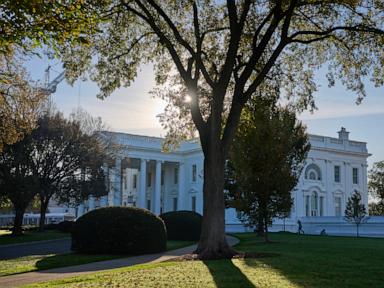
According to reporting on federal procurement policies and executive branch directives under President Donald Trump, the administration has moved to require federal contractors to notify and consult with the White House before responding to congressional inquiries or oversight requests. On paper, it reads like a dry procedural adjustment buried inside government acquisition rules. In practice, it redraws the map of how accountability works in Washington.
The Architecture of the Fourth Branch
To understand why a rule aimed at private vendors matters to ordinary citizens, you first have to recognize how the modern American government actually operates. We tend to picture the federal workforce as civil servants sitting behind government desks, bound by oaths of office and direct statutory obligations.
That picture is decades out of date.
Across defense, healthcare, cybersecurity, logistics, and infrastructure, the federal government relies heavily on a sprawling network of private contractors. According to data from the Government Accountability Office and federal procurement tracking systems, Washington spends hundreds of billions of dollars every year on contracted goods and services—often outnumbering traditional civil servants on major operational initiatives. When a federal agency builds a satellite, manages a border facility, or processes Medicare claims, a private corporation is frequently holding the wrench.
Think of the executive branch as a massive skyscraper, and private contractors as the structural steel beams hidden behind the drywall. For years, when Congress wanted to inspect the building—to ask why a project went over budget, why a data breach occurred, or whether taxpayer money was spent legally—lawmakers could knock directly on the contractor's door. Committees sent letters. Executives testified. Documents changed hands.
Under the directive requiring contractors to check with the White House first, a new lock has been installed on that door.
Supporters of the policy argue that this lock is not about hiding information, but about basic organizational coherence and constitutional privilege. From the perspective of executive branch attorneys and White House officials, federal contractors operate as extensions of the agencies that hire them. During the course of their work, these companies routinely handle sensitive national security data, proprietary agency deliberations, and communications protected by executive privilege.
If a contractor responds directly to a congressional committee without consulting the administration, executive branch defenders contend, the company might inadvertently disclose classified material or waive privileges that legally belong to the President, not to a private vendor.
In any large corporation, if a subsidiary receives a legal demand from an outside regulator, it checks with the parent company's general counsel before turning over files. Proponents of the Trump administration's directive view the federal government through that same lens: the executive branch is a unified entity, and the White House has both the right and the duty to coordinate how executive-branch information leaves the building.
When Oversight Meets a Bottleneck
Now step across the rotunda to Capitol Hill, and the view changes entirely.
For members of Congress—whether Democrats investigating administration policies or Republicans scrutinizing agency spending—oversight is not a polite favor granted by the White House. It is a core constitutional power, rooted in Article I and repeatedly affirmed by the Supreme Court as essential to the legislative function. You cannot write effective laws or allocate trillions of taxpayer dollars responsibly if you cannot see how the money is actually being spent.
Legal scholars and congressional oversight veterans point out a glaring asymmetry when contractors are told to route inquiries through the White House. Unlike civil servants, who are protected by federal whistleblower statutes and statutory mandates requiring direct communication with Congress, private contractors live and die by contract renewals. Their survival depends on staying in the good graces of the executive agencies that award their work.
Consider what happens next when a congressional committee investigates a controversial program—say, a cost overrun on a defense system or conditions inside a privately operated detention center.
Without a White House gatekeeping rule, a contractor's legal team weighs its statutory obligations and responds directly to lawmakers, often negotiating the scope of document production in good faith. With a mandatory White House check-in, every congressional letter becomes a political flare fired straight into the West Wing.
The timeline stretches. Attorneys at the Office of Management and Budget or the White House Counsel's office review the request. Negotiations over executive privilege begin—even when the records belong to a private, for-profit corporation rather than a federal agency.
Critics of the directive, including government watchdog groups and former congressional investigators, warn that this creates a structural chill. Even if the White House never explicitly forbids a contractor from testifying, the sheer friction of mandatory consultation signals to every vendor in the Beltway that cooperating enthusiastically with Capitol Hill carries commercial risk. In Washington, where silence is often the safest business strategy, a procedural speed bump easily becomes a brick wall.
The Human Toll of the Paper Chase
Years ago, watching a procurement dispute unfold up close taught me a simple truth about bureaucracy: paperwork never feels urgent until you trace it back to the person waiting at the end of the line.
When an oversight inquiry stalls in a tug-of-war between the White House Counsel and a House committee, the headlines focus on constitutional brinkmanship. Nobody writes about the VA clinic waiting for a functioning scheduling system, or the rural broadband project stuck in compliance limbo, or the mid-level project manager who noticed a flaw in a billing formula six months ago and just wants to answer a senator's question honestly without losing her security clearance.
Let us return to Elena in that Bethesda conference room.
She reads the Senate subpoena again. The committee wants to know why a database migration went forty million dollars over budget. Elena knows the answer: the agency changed the technical specifications three times after the contract was signed, and her company billed for every hour of rework as the contract allowed.
In a straightforward world, Elena sends the change orders to the Senate committee, explains the timeline, and lets lawmakers hold the agency accountable for shifting the goalposts.
Under the White House consultation requirement, Elena cannot simply send the files. She must first notify the contracting officer and route the congressional request to administration officials. Suddenly, a factual accounting of software specifications becomes entangled in a broader political battle between the executive and legislative branches over how the administration manages federal spending.
Elena is trapped in a vise. On one side sits the constitutional authority of Congress to compel testimony and documents. On the other sits the contractual leverage of the executive branch, which controls her firm's future bids. She did not sign up to referee a separation-of-powers dispute, yet she is the one standing on the fifty-yard line as both teams charge.
A Pattern Older Than Any Single Administration
It is tempting to view this clash solely through the lens of contemporary partisan politics, as just another chapter in the turbulent relationship between Donald Trump and Capitol Hill. That would be a mistake.
The tension between presidential control and congressional oversight is woven into the DNA of the American system. Going back to George Washington's administration—when lawmakers first demanded documents relating to a failed military expedition under General Arthur St. Clair—presidents have guarded executive branch information, while Congress has fought to pry it open.
Over the past half-century, however, the rise of the "contract state" has complicated that balance in ways the Framers never envisioned. As successive administrations—both Democratic and Republican—outsourced core government functions to private companies, a massive gray zone emerged. Private corporations began performing public duties, spending public money, and collecting sensitive data on millions of Americans, all while operating under corporate legal structures rather than traditional public-accountability rules.
Recent administrations have each wrestled with how tightly to control the flow of information from that gray zone. When the executive branch centralizes control over contractor communications with Congress, it is flexing a muscular theory of the unitary executive—the idea that the President must maintain complete control over everyone who executes federal policy, whether they wear a government badge or a corporate lanyard.
Conversely, when lawmakers push back, they are defending the principle that outsourcing public work cannot mean outsourcing public accountability. If an administration can shield programs from legislative scrutiny simply by hiring a private company and instructing that company to clear all congressional replies with the White House, then privatization becomes an invisibility cloak.
What Remains Unanswered
Even for seasoned procurement attorneys, the legal boundaries surrounding this directive remain murky and untested.
Can a White House policy directive legally override a congressional subpoena served directly on a private corporation? Constitutional scholars note that while the executive branch can assert executive privilege over specific communications involving presidential decision-making, commercial records held by a private vendor rarely qualify for broad constitutional immunity. Yet until a contractor defies a directive—or defies a subpoena—and forces a federal judge to rule on the collision, the ambiguity itself does the work.
Ambiguity breeds caution. Caution breeds delay.
For the taxpayer funding the contracts, the mechanics of that delay are invisible. You do not see the emails routed between corporate outside counsel and agency lawyers. You do not see the redactions debated in closed-door meetings, or the testimony dates quietly pushed from spring to autumn while lawyers argue over jurisdiction.
You only see the outcome, or the lack of one.
Back in Bethesda, the afternoon sun drops below the neighboring office building, casting long shadows across the mahogany table. Elena picks up her phone to call her company's outside litigation counsel, knowing the conversation will not be about fixing the veterans' database, cutting costs, or improving service. It will be about who gets to see the truth first, and how much it will cost her company to tell it.