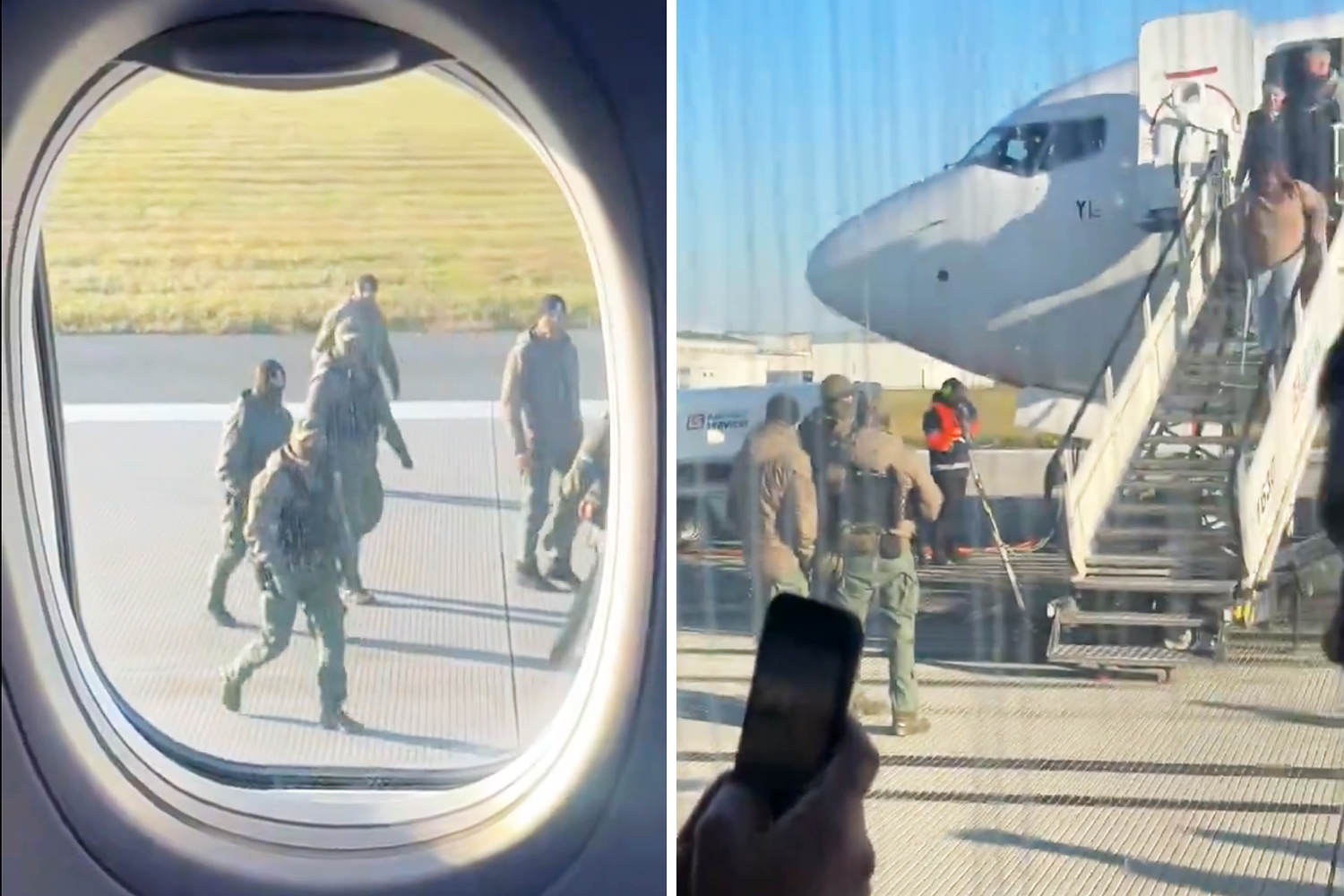
Silence.
At thirty-five thousand feet above the English Channel, silence is never actually silent, yet it is the very first thing you notice when the routine of commercial flight fractures. Normally, the cabin of a Boeing 737 or an Airbus A320 is a symphony of mundane white noise: the low, steady thrum of twin turbofans, the metallic rattle of a beverage cart inching down the aisle, the rustle of magazines, and the soft, pressurized hiss of recycled air scrubbing the cabin. When a Dublin-to-Rome flight suddenly banks hard over western France—abandoning its leisurely southeast trajectory toward the Mediterranean for the stark, restricted tarmac of a French military airbase—that symphony doesn't stop. Instead, your brain simply mutes everything except the sudden, sharp tilt of the horizon outside your scratched plastic window.
Most news reports reduce an event like a bomb threat diversion into a sterile three-paragraph wire brief. They give you the flight number, the airline, the name of the military installation—perhaps Istres-Le Tubé or Évreux-Fauville—and a clinical assurance from a spokesperson that the aircraft landed safely and passengers were evacuated via stairs. They treat the incident like a logistical hiccup, a minor footnote in the daily ledger of global aviation.
They miss the entire story. Because when a commercial airliner is intercepted by fighter jets and forced down onto a military runway over a suspected explosive device, the real event doesn't happen on the tarmac. It happens inside the pressurized aluminum tube during the twenty minutes it takes to get there.
The Anatomy of a Sudden Descent
To understand what unfolds inside that cabin, consider a hypothetical passenger—let’s call him Marco—sitting in row 14, right over the wing. Marco is returning home to Rome after a long weekend in Dublin, half-asleep with his forehead pressed against the cool acrylic window, thinking about nothing more consequential than whether he will make his regional train connection at Termini.
The first clue is never an announcement. Flight crews are trained in the art of compartmentalized calm; panic is a contagion far more dangerous in a confined space than almost any mechanical failure. Instead, the clue is physical. Marco feels the engines throttle back abruptly, that familiar, stomach-lifting sensation of an early descent, followed by a banking turn steeper than standard commercial protocol usually allows. In normal operations, turns are shallow, capped at around twenty-five to thirty degrees so passengers barely spill their coffee. When an aircraft receives a credible security threat—whether via a note found in a lavatory, an anonymous call to air traffic control, or an electronic message transmitted mid-flight—the priority shifts instantly from passenger comfort to kinetic urgency.
In the cockpit, two pilots who spent the morning checking routine weather reports over the Irish Sea are now executing a high-workload emergency checklist. Under international aviation protocols established by the International Civil Aviation Organization (ICAO), a bomb threat triggers a rigid, unforgiving sequence of events. Air traffic control clears a dedicated corridor beneath the aircraft, shunting other commercial traffic miles away. Simultaneously, national air defense networks scramble quick-reaction alert aircraft.
If Marco looks out his window over northern France, he might catch a glimpse of a Dassault Rafale or a Mirage 2000 pulling alongside the wingtip. To an uninitiated passenger, seeing a matte-gray fighter jet armed with live air-to-air missiles hovering fifty yards away is a moment of pure, unadulterated surrealism. You are no longer a customer who paid eighty euros for a budget ticket; you have become a potential weapon, and the fighter pilot outside your window is there to ensure you do not reach a populated city if things go wrong.
Why Military Bases Become Sanctuaries
People often wonder why an airliner facing a security threat doesn't simply land at the nearest major international hub, like Paris Charles de Gaulle or Lyon. The answer comes down to the cold, hard geometry of blast radii and emergency infrastructure.
Civilian airports are dense ecosystems of fuel farms, glass terminals, packed concourses, and dozens of other aircraft parked nose-to-tail. Bringing a suspected explosive device into that environment multiplies the potential casualties by orders of magnitude. Military airbases, by contrast, are built for isolation and containment. They feature exceptionally long, reinforced runways designed for heavy transport planes, vast expanses of empty concrete far from civilian neighborhoods, and specialized Explosive Ordnance Disposal (EOD) units already stationed on site.
When a Dublin-to-Rome flight diverts to a French military installation, it isn't landing at a terminal. It is guided to a remote dispersal area—often called an isolation parking stand—miles away from the base's main hangars.
Think of the cabin at this moment like a pressure cooker where the heat has just been turned up, yet the lid remains bolted shut. Because the crew cannot risk triggering a barometric or radio-controlled device—or inciting a stampede that would shift the aircraft's center of gravity during landing—information is rationed carefully. The captain’s voice comes over the intercom, measured and deliberately flat: "Ladies and gentlemen, due to an operational security requirement, we are diverting to a military airfield in France. Please ensure your seatbelts are fastened and follow all crew instructions."
No mention of the word "bomb." Never that word.
Yet, human beings are remarkably perceptive animals when trapped in a metal cylinder. You can feel the tension radiating off the flight attendants as they walk the aisle, their eyes scanning overhead bins, their smiles tight and rehearsed. You hear the muffled, urgent clicks of the interphone near the galley. Around Marco, the ambient chatter dies. A woman two rows ahead quietly slips her wedding ring off and back on, over and over. A father reaches across the armrest to grip his teenage son’s knee. In those final ten minutes before touchdown, the illusion of modern travel—the idea that hurtling through the stratosphere at five hundred miles per hour is as safe as riding a city bus—evaporates completely.
The Protocol of the Unknown
I have spoken with aviation security veterans and crew members who have lived through high-altitude diversions, and the consistent thread in every account is the agonizing weight of ambiguity. You don't know if the threat is a malicious hoax called in by someone trying to delay an ex-partner's flight, a scribbled message left by a disturbed passenger, or a genuine, ticking reality tucked inside a carry-on bag three rows behind you.
In the aviation industry, there is no room for guessing. Statistically, the overwhelming majority of bomb threats against commercial flights turn out to be false alarms—hoaxes designed to disrupt, terrify, or test response times. In the post-9/11 era, multi-layered screening at airports like Dublin involves millimeter-wave scanners, explosive trace detection swabs, and automated CT baggage systems that analyze the molecular density of every item loaded into the cargo hold. Getting an actual explosive device past modern European airport security is extraordinarily difficult.
Yet statistics offer zero comfort when your wheels touch down on an unfamiliar military runway and you look out to see flashing red lights, armored security vehicles, and fire trucks arrayed in a wide semicircle around the plane.
Once the aircraft rolls to a stop on the remote tarmac, the real physical ordeal begins. Unlike a normal arrival, there is no jet bridge. Depending on the severity of the threat assessment, the captain may order a rapid disembarkation via mobile airstairs, or—if the threat is deemed imminent—deploy the inflatable evacuation slides.
Passengers are ordered to leave everything behind. Everything. Your passport, your laptop, your jacket, the duty-free bag at your feet. When people hesitate—and human psychology is strange enough that people regularly try to grab their rolling suitcases even while smelling smoke—the flight attendants' voices transform instantly from polite hospitality to sharp, unmistakable command: "Leave your bags! Get out now!"
Cold Tarmac and Slow Hours
Step off the bottom of those stairs onto the concrete of a French airbase, and the sensory shock hits you all at once. The air smells of jet fuel, damp earth, and cold wind. Armed gendarmes and military police in tactical gear form a perimeter, herding two hundred bewildered people toward waiting buses that will transport them to a secure gymnasium or holding hangar.
For the next six to ten hours, time stretches into an elastic, exhausting blur. Every single passenger must be individually screened, interviewed by intelligence officers, and matched against the flight manifest. Meanwhile, out on the isolated tarmac, robotic units and bomb-sniffing dogs systematically work their way through the empty aircraft, inspecting every lavatory panel, every life vest pouch, and every single piece of luggage pulled from the belly of the plane.
It is easy, reading a news ticker on your phone over morning coffee, to view this entire apparatus as an overreaction when the inevitable follow-up headline announces that no explosives were found. People complain about the cost of scrambling fighter jets, the disruption to airline schedules, the ruined weekend plans.
Look closer at the alternative. Commercial aviation is the safest mode of long-distance transport ever devised by human engineering precisely because it operates on a doctrine of absolute zero tolerance for ambiguity. Every procedural step—from the fighter intercept over the Channel to the armed guards on a French runway—is a link in a chain forged out of past tragedies. The system doesn't care if the threat turns out to be a bad joke written on a napkin; it treats every whisper of danger as if lives depend on it, because once in a thousand times, they do.
Hours later, when the all-clear is finally given, a relief aircraft arrives to ferry the exhausted passengers the rest of the way to Rome. They climb the stairs carrying nothing, wearing the same clothes they put on in Dublin, their phones dead, their nerves frayed thin. As the engines spool up once more and the plane lifts off into the darkening European sky, nobody reaches for a magazine. Nobody complains about the legroom. Everyone simply stares out the window, watching the ground fall away, acutely aware of the fragile, invisible miracle keeping them aloft.