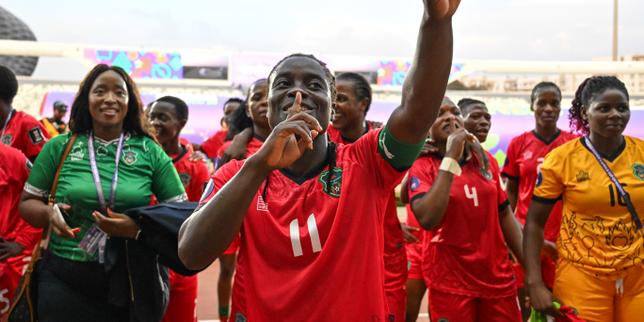
The final whistle of the Women's Africa Cup of Nations usually triggers a predictable wave of commentary. Observers praise the passion on the pitch, executives point to rising broadcast footprints, and official statements celebrate a new dawn for continental sport. Yet beneath the celebratory gloss of a $2 million winner's purse and an expanded 16-team tournament, a more complex structural reality dictates the pace of progress. Money is flowing into the tournament, but the financial architecture supporting the daily lives of domestic players remains brittle.
To understand why the women's game on the continent still fights for basic operational stability, one must look past the headline figures and examine how wealth actually trickles down from continental bodies to local clubs. The Confederation of African Football has undeniably altered its financial trajectory, lifting the total prize pool to $5.8 million for the 2026 edition hosted in Morocco. For the champions, the reward has climbed ten-fold over a relatively short span, moving from a paltry $200,000 to a respectable sum that commands attention.
However, cash injection at the tournament level does not automatically translate into a functional professional ecosystem. Most domestic leagues across the continent operate on shoestring budgets where delayed salaries, inadequate medical insurance, and substandard training facilities remain the baseline reality for the vast majority of athletes. A national team player may experience world-class tournament conditions for three weeks under the spotlight, only to return to a club environment where basic equipment is scarce and monthly wages are erratic.
This structural disconnect points to a deeper strategic blind spot. Governing bodies focus heavily on marquee international events while leaving the domestic club tier underfunded. Without a healthy domestic league structure capable of sustaining players year-round, the talent pipeline relies almost entirely on individual brilliance rather than systematic institutional development.
The expansion to 16 teams introduces another layer of competitive disparity. While adding slots for nations like Tanzania, Burkina Faso, and Senegal broadens the geographical reach of the sport, it exposes vast gaps in infrastructural readiness. Traditional powerhouses like Nigeria's Super Falcons or South Africa face entirely different domestic support systems compared to federations that treat women's squads as an afterthought until qualification is secured. When a national team achieves an upset on the global stage, it is routinely a triumph achieved in spite of institutional structures, not because of them.
International exposure does offer a viable escape hatch for elite performers. European and North American clubs increasingly scout African competitions, scooping up top-tier talent who then build lucrative careers abroad. While this migration elevates individual profiles and strengthens national team squads, it drains local leagues of their marquee attractions. A domestic competition devoid of its biggest stars struggles to command local broadcast rights, secure independent sponsorships, or build sustainable ticket sales.
Fixing this imbalance requires a fundamental shift in how federations allocate capital. Prize money for continental showpieces matters, but mandatory minimum wage structures for domestic leagues and strict infrastructural compliance rules for clubs matter more. Until domestic leagues offer financial security, the sport will remain trapped in a boom-and-bust cycle dictated by national team heroics every two years.
The ambition is real, and the talent on the pitch is undeniable. But passion alone cannot subsidize a professional industry. Until the financial plumbing beneath the elite level is fixed, the gap between continental celebration and everyday reality will continue to widen.