When an epidemic collides with decades of state-sponsored extraction, violence, and institutional abandonment, calling it a mere crisis of trust is a convenient sanitization of history. The recurring Ebola flare-ups in the Democratic Republic of Congo are routinely diagnosed by international observers as a failure of local populations to understand science, a psychological barrier of skepticism, or an unfortunate epidemic of misinformation. This diagnosis is fundamentally backward. People do not reject medical intervention because they are inherently superstitious. They reject it because the institutions arriving with syringes and quarantine protocols have historically brought exploitation, broken promises, and violence long before any virus crossed the threshold.
To understand why outbreaks spin out of control across the eastern provinces, one must look past the superficial metrics of compliance and examine the architecture of the state. Decades of structural decay, compounded by active armed conflict involving multiple militia groups and foreign interests, have left communities entirely on their own. When a mobile clinic rolls into a village where children have been starving for months and clean water is an abstract luxury, the arriving medical team is rarely viewed as a neutral savior. They are viewed as the latest emissaries of a distant power structure that extracts wealth while offering nothing in return. If you found value in this piece, you might want to read: this related article.
The Anatomy of Institutional Failure
Public health interventions do not happen in a vacuum. They land in a hyper-politicized environment where every actor is scrutinized through the lens of survival. For generations, the eastern regions of the country have experienced governance primarily through the barrel of a gun or the extraction of minerals. Under these conditions, rumor is not an irrational deviation from the truth; it is a rational survival mechanism.
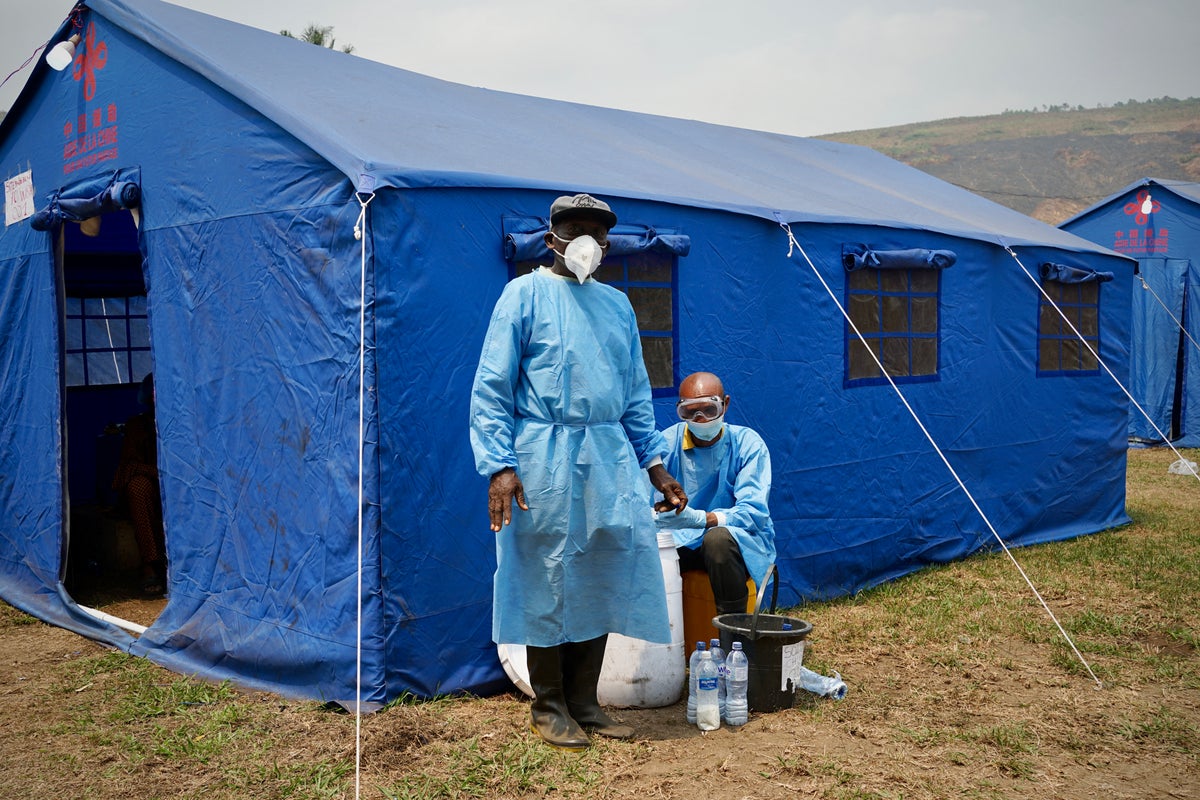
Consider a hypothetical village deep in Ituri or North Kivu. A foreign-funded health delegation arrives escorted by armed forces or UN peacekeepers, setting up isolation tents and enforcing strict burial restrictions. To an epidemiologist sitting in Geneva or Atlanta, these measures are textbook infection control. To a local farmer whose brother was killed by armed militias last week and whose crops were burned, men in biohazard suits look less like healers and more like an occupying force. For another perspective on this event, refer to the latest coverage from National Institutes of Health.
When authorities demand that families surrender their dead for safe burials—violating centuries-old cultural practices of mourning and physical connection—they are asking for an extraordinary degree of vulnerability. When that vulnerability is met with coercion rather than empathy, resistance is inevitable. The international response has repeatedly stumbled because it treats community resistance as a communications problem to be solved with pamphlets, rather than a political problem rooted in structural violence.
How Epidemics Are Weaponized
The spread of hemorrhagic fever is intrinsically tied to the physical geography of war. Armed groups control territory, tax trade routes, and routinely target medical facilities. When treatment centers are burned to the ground, it is rarely random vandalism. These attacks are tactical expressions of local grievances against a central government and international agencies perceived as colluding with elite power brokers.
Health workers on the front lines carry an unbearable burden. They navigate active combat zones, dodge ambushes, and try to trace infection chains among populations constantly displaced by fighting. Yet, the strategic frameworks governing these responses often remain stubbornly technocratic. They deploy high-tech countermeasures, experimental vaccines, and centralized command structures while ignoring the local power brokers, traditional authorities, and civil society networks that actually hold social fabric together.
Blaming local skepticism allows international agencies and national governments to sidestep their own accountability. If the failure to contain a virus can be blamed entirely on community ignorance, then the structural failings of the global health architecture—slow funding disbursement, top-down decision-making, and a total disregard for local economic realities—remain unquestioned.
Re-engineering the Response
Stopping transmission requires a radical inversion of how public health emergencies are managed. Top-down mandates enforced by armed security consistently fail because they treat human beings like vectors rather than citizens. Real containment begins only when response teams surrender operational control to local leaders who understand the political nuances of their communities.
This means shifting resources directly into the hands of local nurses, traditional elders, and regional civil organizations who have spent decades earning the right to speak on behalf of their neighbors. It means addressing concurrent crises of hunger and displacement simultaneously with viral containment, recognizing that a body weakened by malnutrition cannot fight off infection, and a mind consumed by daily survival cannot prioritize long-term epidemiological theory.
Until global health institutions abandon the comforting myth that communities are simply misinformed, outbreaks will continue to outpace medical technology. The pathogen is only as powerful as the fractures in the society it invades. When the underlying fractures of neglect, exploitation, and violence are left unaddressed, every medical intervention becomes a band-aid on a hemorrhage, leaving populations vulnerable to the next inevitable shock.