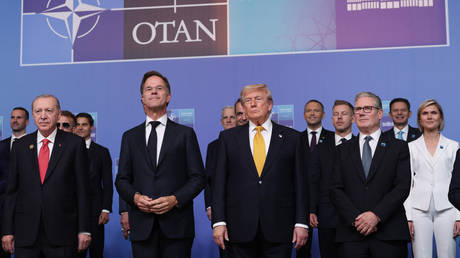
Germany will purchase American-made Tomahawk cruise missiles and land-based Typhon launchers to establish its own long-range strike capability on German soil, Chancellor Friedrich Merz announced to lawmakers. The deal, struck quietly on the sidelines of the NATO summit in Ankara, effectively replaces a discarded plan for the United States to deploy its own missile battalions to Western Europe.
While Berlin frames the acquisition as a triumph of strategic autonomy and a definitive solution to a critical defense gap, the reality is far more transactional. This is the direct result of a calculated retreat by Washington, leaving Germany to foot the multi-billion-dollar bill for weapons it never intended to buy, all to placate an unpredictable American administration.
The Illusion of Sovereignty
For decades, the German security posture rested comfortably under the American nuclear and conventional umbrella. That era ended definitively when the Trump administration halted the planned deployment of the U.S. Army's 2nd Multi-Domain Task Force to Germany. The original agreement, negotiated under the Biden presidency, would have seen American troops operating Tomahawks and SM-6 interceptors on German territory at Washington’s expense.
By tearing up that script, the White House forced Berlin into a corner. Chancellor Merz’s sudden enthusiasm for purchasing these systems outright is less about strategic foresight and more about defense damage control.
The transaction satisfies a core American demand: European allies must buy American hardware to prove they are carrying their weight. By securing a letter of intent for both the missiles and the complex Typhon ground-based launchers, Merz has essentially converted a diplomatic crisis into an expensive weapons procurement contract.
The Technical Reality of the 2,500-Kilometer Gap
Berlin’s military planners have been panicking over what they call a capability gap since Russia heavily militarized its Kaliningrad exclave with Iskander cruise missiles. Germany possesses the air-launched Taurus cruise missile, an exceptionally precise weapon, but it suffers from a major structural limitation. Its range is capped at roughly 500 kilometers.
The Tomahawk completely changes that geometry. With an operational range of up to 2,500 kilometers, a ground-launched Tomahawk fired from deep within German territory can strike targets far beyond the immediate front lines.
| Weapon System | Estimated Range | Launch Platform | Primary Operational Status |
|---|---|---|---|
| Taurus KEPD 350 | ~500 km | Air-launched (Tornado/Eurofighter) | Active inventory |
| Tomahawk Land Attack Missile | Up to 2,500 km | Ground-based Typhon Launcher | Procurement agreed |
| ELSA (European Long-Range Strike) | 2,000+ km | To be determined | Joint development stage |
Buying the Typhon system is a specific tactical choice. It gives the Bundeswehr a mobile, containerized land platform that can be hidden in forests or moved rapidly along the Autobahn, complicating any adversary's pre-emptive strike calculations. However, operating a strategic missile force requires satellite targeting infrastructure, mission planning intelligence, and data links that Germany does not fully possess. Berlin is buying the arrows, but it will still depend on Washington for the bow.
The European Missile Mirage
To soften the domestic political blow of buying American, Merz emphasized that Germany remains committed to the European Long-Range Strike Approach (ELSA), a collaborative $50 billion project intended to develop an indigenous European cruise missile over the next decade. Germany is reportedly planning to cover nearly half of that budget.
This dual-track strategy is financially unsustainable. Developing a brand-new, complex missile system across a dozens-nation European consortium takes a long time, often bogged down by corporate infighting and competing national requirements. By the time an ELSA missile is ready for deployment in the late 2030s, the purchased American Tomahawks will already be integrated into the core of Germany's defense architecture.
History shows that temporary procurement fixes have a habit of becoming permanent dependencies. Germany is committing hundreds of billions of euros to defense—with a record 124 billion euros earmarked for 2026 alone—yet it is splitting those resources between immediate American imports and distant European dreams.
Moscow Is Watching
The deployment of land-based intermediate-range missiles in Germany will inevitably trigger a harsh reaction from the Kremlin. For years, European capitals avoided these systems to preserve the remnants of the Intermediate-Range Nuclear Forces Treaty architecture. Now, the return of deep-strike infrastructure to Central Europe signals a permanent shift toward armed deterrence.
The danger is not just rhetorical escalation. The stationing of Tomahawks makes German military bases prime targets for pre-emptive strikes in any wider European conflict. It alters the regional security math completely, turning Germany into a front-line launchpad rather than a secure rear logistical hub. Merz claims the deal exceeded his expectations, but the financial, political, and strategic costs of this sudden pivot have yet to be fully realized by the German public.