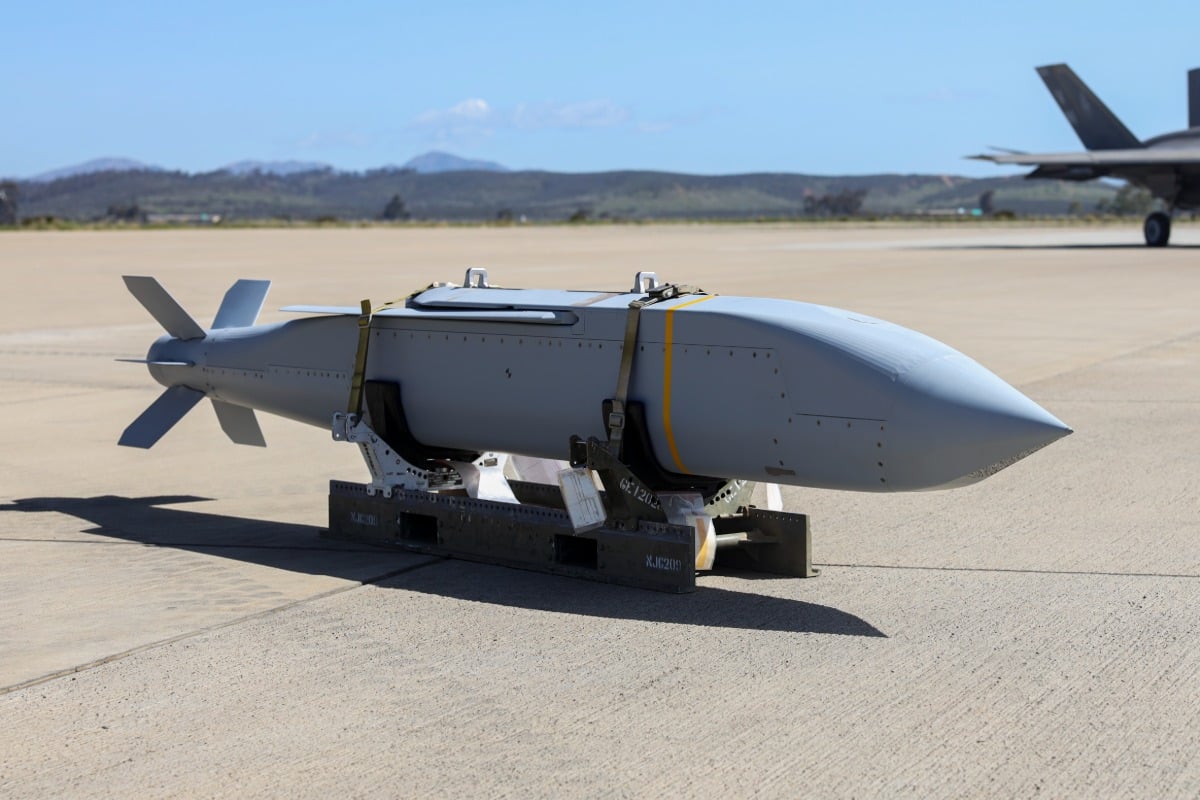
The Hellenic Air Force is quietly sending its inventory of AGM-154C Joint Standoff Weapons back to Raytheon. Ostensibly, it is a standard maintenance cycle to replace expiring components, swap out depleted batteries, and ensure the precision-guided glide bombs remain airworthy. Beneath the bureaucratic surface of Foreign Military Sales lies a much harsher geopolitical reality. Greece is staring down a massive gap in its standoff strike capabilities, and refreshing a two-decade-old inventory is a desperate stopgap measure to retain a credible deterrent in the Aegean.
When Greece originally purchased the JSOW-C in the mid-2000s to equip its F-16 Block 52+ fleets, the weapon represented the peak of medium-range precision strike. Carrying a BROACH multi-stage warhead designed to punch through hardened concrete bunkers, the JSOW offered Athens a "launch-and-leave" capability from up to 130 kilometers away. But weapon systems do not age gracefully in coastal Mediterranean environments. Solid-state electronics degrade, internal seals fail, and the critical imaging infrared seekers require specialized factory recalibration that local depots simply cannot perform.
This contract is not a sign of military modernization. It is a symptom of a procurement strategy caught between long-term strategic ambitions and short-term survival.
The Hidden Logistics Crisis of Standoff Munitions
Munitions have a shelf life. Air forces often track these lifespans through total captive-carry hours, measuring the stress an airframe and its under-wing payload endure during routine flights. For a weapon like the AGM-154C, which relies on deployable wings to achieve its 12:1 glide ratio, the mechanical linkages and internal actuators must function flawlessly on the first try. A single failed deployment converts a sophisticated precision asset into a very expensive, unguided lawn dart.
The reality of Western defense logistics is that maintaining older stocks is becoming exponentially more complex. Raytheon closed down the primary JSOW production lines years ago as the U.S. military pivoted toward longer-range, engine-driven cruise missiles like the JASSM. Consequently, repairing a legacy batch of weapons means sourcing obsolete microelectronics or paying premiums for custom component runs.
+--------------------------------------------------------------+
|             AGM-154C JSOW Lifecycle Degradation              |
+--------------------------------------------------------------+
| Component          | Primary Vulnerability                   |
+--------------------+-----------------------------------------+
| Flight Batteries   | Chemical degradation over 15-20 years   |
| Wing Actuators     | Seal failure and lubricant gumming      |
| IIR Seeker         | Optical clouding and sensor degradation |
| GPS/INS Unit       | Obsolete anti-spoofing architecture     |
+--------------------------------------------------------------+
Athens has no alternative but to pay the premium. The country's defense budget is heavily strained by the procurement of French-made Rafale fighters and upcoming commitments to the F-35 program. Buying brand-new, top-tier cruise missiles to fill every slot in the armory is financially impossible. Buying time by refurbishing existing inventory is the only viable path forward.
The Aegean Deterrence Math
The strategic calculus in the eastern Mediterranean has shifted dramatically since Greece first inducted the JSOW. Point-defense systems have grown considerably more lethal. While a 130-kilometer standoff range was once sufficient to keep Greek F-16 pilots safe from adversarial surface-to-air missile batteries, modern multi-layered air defense networks have pushed the boundaries of the danger zone outward.
To achieve that maximum 130-kilometer range, a Greek F-16 must launch the JSOW from high altitude—roughly 30,000 feet—while flying at high subsonic speeds. In a contested environment, climbing to that altitude turns a non-stealthy Fourth-Generation fighter into an obvious target on long-range radar.
If an aircraft must risk entering the engagement envelope of an advanced S-400 or long-range SAM battery just to release its glide bomb, the standoff advantage of the weapon is effectively neutralized.
📖 Related: The Ground War Trap in Iran
This limitation forces a tactical compromise. Launching the JSOW from low altitudes to mask the fighter behind terrain or the curvature of the earth reduces the weapon's maximum range to just under 30 kilometers. Suddenly, the strike fighter is forced well within the range of standard point defenses just to deliver its payload. The weapon is still incredibly precise, utilizing its imaging infrared seeker for terminal guidance to bypass radio-frequency jamming, but the operational window to use it safely has shrunk to a razor-thin margin.
Why Upgrades Keep Beating Out New Procurement
Every dollar spent refurbishing an old weapon is a dollar not spent acquiring its successor. Yet, the Hellenic Air Force continues to prioritize these sustainment contracts. The reasoning comes down to software integration and fleet compatibility.
Integrating a completely new weapon system onto an existing fighter aircraft is an engineering nightmare. It requires rewriting mission computer software, undergoing extensive flight-certification testing, and retraining ground crews and pilots. The JSOW is already fully integrated into the source code of the Greek F-16 fleet. Sending the weapons back to Raytheon for a factory overhaul preserves operational continuity without requiring millions of dollars in software modifications.
Furthermore, Western defense manufacturing is completely choked by global demand. Production slots for modern long-range munitions are backlogged by years. Even if Greece placed a massive order for next-generation strike weapons today, the physical delivery of those assets would likely not occur until the turn of the decade. The refurbishing of legacy weapons isn't a choice. It is a stopgap necessity driven by an industry that cannot build new systems fast enough to meet current demand.
The factory floor remains the bottleneck. By keeping these older glide bombs on life support, Athens maintains its nominal strike capacity on paper, hoping that the mechanical refurbishments will be enough to bridge the gap until the next generation of airpower finally arrives in force.


