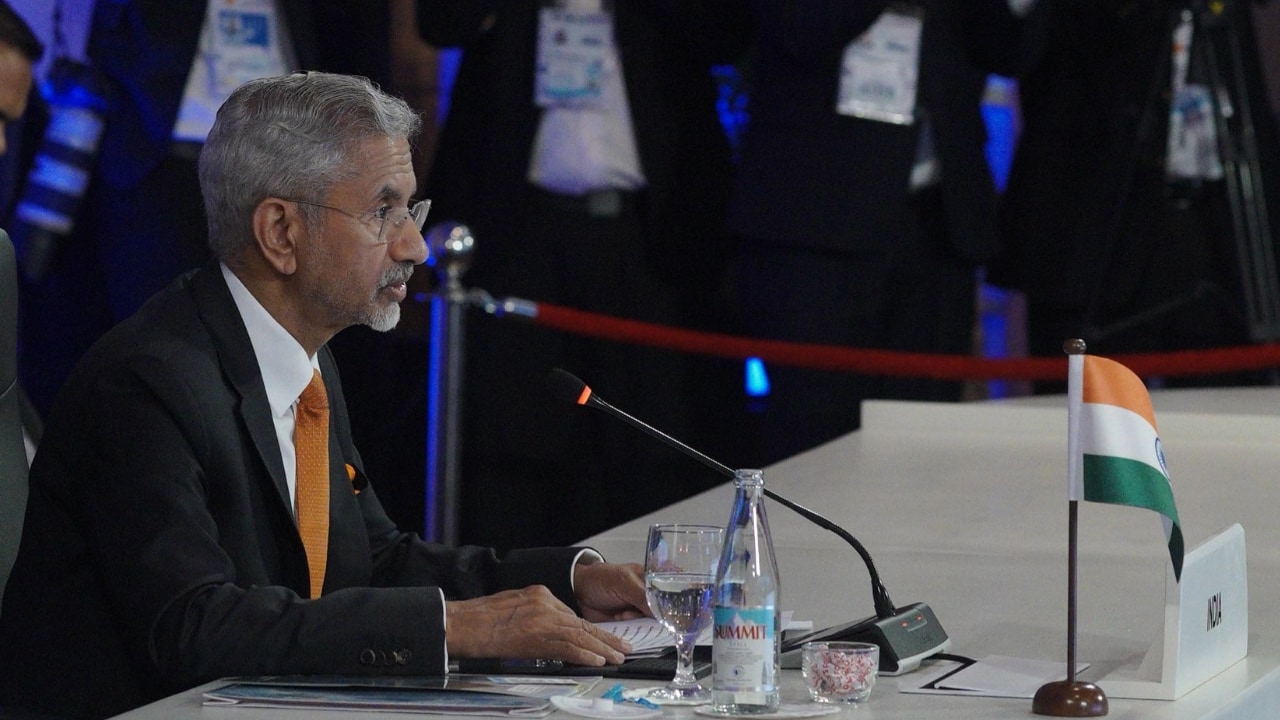
In the Philippine capital of Manila, diplomats gathered for the ASEAN Post-Ministerial Conference. India's External Affairs Minister S. Jaishankar delivered an unambiguous message. The world is experiencing extreme disruption, and no single nation or coalition can insulate itself alone.
Behind the formal speeches, a complex strategic drama is taking shape. India and the Association of Southeast Asian Nations represent a combined population exceeding two billion people. They control critical trade corridors across the Indian Ocean and the South China Sea. Yet, beneath their public commitments to de-risk supply chains and safeguard maritime trade, deep structural friction threatens to slow their momentum.
The core challenge goes far beyond diplomatic rhetoric. While both sides agree on the risks of supply chain volatility, their economic and security priorities remain fundamentally misaligned. India wants to rebuild supply chains outside China's shadow. ASEAN member states rely heavily on Chinese industrial machinery, raw materials, and regional trade infrastructure. This divergence exposes a critical tension in the Indo-Pacific architecture.
De-Risking Networks in a Fractured Regional Economy
Supply chains have become fragile. Global logistics networks face persistent instability from geopolitical conflict, maritime chokepoint delays, and unilateral trade policies.
During his address in Manila, Jaishankar flagged supply chain vulnerabilities as the most visible point of stress for developing economies. Energy, food, and health security can no longer be assumed. For India, de-risking requires building alternative production corridors that bypass dominant manufacturing hubs. India’s domestic initiatives, such as production-linked incentive schemes, aim to position the country as an alternative manufacturing base for electronics, active pharmaceutical ingredients, and green technology.
Southeast Asian economies operate under a different reality. Countries like Vietnam, Malaysia, and Thailand have integrated deep trade connections with Chinese supply chains over decades. Intermediate goods flow continuously from Chinese factories into Southeast Asian assembly lines before reaching global consumer markets. Demands for clean decoupling are economically unfeasible for these nations. When New Delhi urges ASEAN to de-risk, Southeast Asian capitals see a call to restructure systems that sustain their export-driven growth.
The numbers illustrate this divide. Trade between India and ASEAN reached historic levels over recent years, yet it remains dwarfed by Southeast Asia’s trade volume with Beijing. While India offers strategic balance, it does not match the commercial volume or infrastructure capital provided by its northern neighbor. The economic gravity of East Asia continues to pull ASEAN inward, creating a gap between shared geopolitical intentions and daily commercial reliance.
Maritime Security and the Limits of Strategic Unity
Water unites this region. The year 2026 marks the official ASEAN-India Year of Maritime Cooperation.
Speaking at the conference, Jaishankar stressed that maritime trade security is a source of direct anxiety for nations bound by open sea lanes. Observing international maritime law, specifically the United Nations Convention on the Law of the Sea, remains crucial for freedom of navigation.
Yet, translating legal commitments into shared maritime defense operations presents major obstacles. ASEAN is not a military alliance. It is a diverse consensus-driven bloc where individual member states hold starkly different stances on external security partnerships.
The Philippines, hosting this year’s summit under the chairship theme "Navigating Our Future Together," has taken an assertive stance in defense of its maritime claims. Manila has welcomed deeper security ties with India, highlighted by its acquisition of India’s BrahMos supersonic cruise missile system. This partnership represents a concrete defense export for New Delhi and a visible deterrent for Manila in contested waters.
Other ASEAN members remain deeply hesitant. Countries like Cambodia and Laos maintain close economic and political ties with Beijing, routinely blocking strong joint statements on maritime disputes. Indonesia and Malaysia maintain carefully calibrated neutrality, avoiding actions that could draw them into great-power confrontations. When India calls for adherence to maritime law, it speaks to a divided audience where security calculations vary by coastline.
India faces its own strategic trade-offs. New Delhi seeks to expand its naval presence across the eastern Indian Ocean and into the South China Sea to secure vital shipping corridors. However, it must balance its eastern maritime strategy with heavy security commitments along its northern land borders.
On the sidelines of the Manila meetings, Jaishankar held bilateral discussions with Chinese Foreign Minister Wang Yi. Jaishankar highlighted that peace along the Line of Actual Control remains a prerequisite for normalizing bilateral relations following disengagement agreements. He also directly raised Indian concerns regarding massive trade imbalances, which saw the deficit with China reach $112.16 billion out of $151.1 billion in total trade.
This dual diplomatic posture shows India’s complex reality. New Delhi must manage border friction and trade gaps with Beijing while simultaneously trying to build security partnerships across Southeast Asia.
The Quad Alignment Versus ASEAN Centrality
The diplomatic schedule in Manila exposed another core dynamic. Alongside the ASEAN Post-Ministerial Conference, Jaishankar participated in a Quad Foreign Ministers' Meeting with US Secretary of State Marco Rubio, Australian Foreign Minister Penny Wong, and Japanese Foreign Minister Toshimitsu Motegi.
The Quad ministers reaffirmed their commitment to a free and open Indo-Pacific and reiterated their support for ASEAN centrality. That official alignment conceals persistent institutional friction.
ASEAN centrality is built on the principle that Southeast Asian nations must remain the primary drivers of regional architecture. The regional bloc fears being sidelined by external security arrangements. When mini-lateral groupings like the Quad or AUKUS take the lead on regional security, critical decision-making shifts outside ASEAN-led frameworks like the East Asia Summit and the ASEAN Regional Forum.
India occupies a unique position within this framework. As a founder of the non-aligned tradition and a pillar of the Global South, New Delhi values its independent foreign policy. At the same time, it relies on Quad coordination to balance regional power dynamics.
During the Quad discussions in Manila, the four foreign ministers pledged closer coordination on critical technologies, maritime domain awareness, and humanitarian logistics. But for many ASEAN diplomats, the rapid rise of Quad initiatives creates a fundamental question. Is the Quad supporting ASEAN, or is it gradually replacing ASEAN's central role?
India’s diplomatic challenge is to convince Southeast Asian capitals that its participation in the Quad strengthens regional stability rather than escalating rivalry. Achieving this balance requires careful negotiation. If India leans too heavily into Quad security initiatives, it risks alienating Southeast Asian nations that prioritize strict diplomatic neutrality. If India holding back weakens the Quad, it limits its ability to shape the broader security environment.
Trade Barriers and Economic Integration Realities
Talk is cheap. Commerce is hard. The true test of India-ASEAN relations lies in economic integration, where friction points are most pronounced.
A major source of tension stems from trade agreements. India’s decision to pull out of the Regional Comprehensive Economic Partnership in 2019 left a lasting mark on regional economic integration. India cited concerns over surges of cheap imports, inadequate protections for domestic agriculture, and uncompetitive manufacturing sectors. While the decision protected domestic industries, it excluded India from the world’s largest free-trade bloc, which unites ASEAN, China, Japan, South Korea, and Australia.
As a result, India-ASEAN trade relies heavily on the ASEAN-India Trade in Goods Agreement. Indian industry leaders and policymakers have long argued that this agreement operates unevenly, granting Southeast Asian exporters broad access to Indian markets while Indian goods face non-tariff barriers, restrictive standards, and regulatory delays in Southeast Asia.
Efforts to review and modernize the trade agreement have moved slowly. Both sides recognize the need to incorporate modern trade provisions covering digital trade, services, supply chain resilience, and green technology. However, protectionist sentiments on both sides slow down meaningful progress. India remains cautious about lowering tariffs on agricultural products and sensitive manufacturing goods, while ASEAN members guard their service sectors and procurement markets.
Technology and digital infrastructure offer a potential path forward. India’s public digital infrastructure—including real-time payment interfaces and digital identity systems—presents an exportable model for developing Southeast Asian economies. Cross-border payment linkage initiatives between India and countries like Singapore offer practical benefits for migrant workers and small businesses. Yet, software connections cannot substitute for physical trade flows. Until tariff barriers and market access disputes are resolved, economic ties will struggle to match the strategic ambitions articulated in diplomatic host cities.
Energy Security and Transition Challenges
Energy security adds another layer of complexity to the bilateral relationship.
Both India and ASEAN member states face the challenge of powering rapid economic growth while transitioning away from fossil fuels. The region depends heavily on imported oil and gas passing through vulnerable maritime bottlenecks like the Strait of Malacca. Any disruption in these chokepoints would trigger immediate energy shortages and economic volatility across the subcontinent and Southeast Asia.
India has pushed for joint initiatives in renewable energy, cross-border power grids, and green hydrogen production. These proposals align with global sustainability goals, but execution faces significant financial and technical obstacles. Developing grid infrastructure across archipelago nations like Indonesia and the Philippines requires immense capital investment. Transitioning away from coal-fired power plants poses severe economic disruption for industrializing economies that rely on cheap baseline energy.
Critical minerals needed for green technologies present another area of competition and cooperation. Southeast Asian nations, particularly Indonesia with its vast nickel reserves, hold vital components for the global electric vehicle battery supply chain. India is actively seeking to secure access to these critical minerals to power its domestic clean energy manufacturing. However, Southeast Asian governments are increasingly enforcing resource nationalism, banning raw mineral exports to force foreign companies to build processing and refining facilities within their borders.
Indian firms must invest directly in Southeast Asian industrial capacity rather than simply importing raw materials. This shift requires long-term capital commitments and navigating complex local regulatory frameworks. Strategic energy alignment demands concrete cross-border industrial investments.
The Reality of De-Risking Two Billion People
Navigating global turbulence requires more than shared warnings at diplomatic summits. The call for deeper India-ASEAN cooperation highlights a genuine mutual need. India needs stable, secure maritime access to its east and diversified trading partners to sustain its economic growth. ASEAN needs a strong, economically vibrant India to ensure a balanced multipolar regional order where no single power dominates.
Closing the gap between strategic rhetoric and operational reality remains difficult. It requires tackling tough economic issues directly. India must modernize its trade agreements, offer competitive manufacturing alternatives, and invest directly in Southeast Asian infrastructure. ASEAN must accept that true de-risk requires diversifying its economic dependencies, even when short-term costs are high.
The diplomatic meetings in Manila demonstrated that both sides understand the stakes. Representing two billion people in an increasingly unstable world, India and ASEAN cannot afford a partnership based solely on diplomatic statements. As supply chain pressures mount and geopolitical rivalries intensify, the ability to build functional, resilient trade and security networks will determine whether this partnership can withstand the turbulence ahead.