India is quiet about the true urgency behind its latest diplomatic sprint across Europe. When Commerce and Industry Minister Piyush Goyal boarded a flight heading for Madrid, Brussels, and Helsinki, official press releases framed the five-day tour as a routine exercise in strengthening economic partnerships. It is nothing of the sort. This sudden deployment of high-level business leaders is a calculated, aggressive attempt to push the long-delayed India-European Union Free Trade Agreement over the finish line before geopolitical shifts or domestic European resistance lock the doors for good.
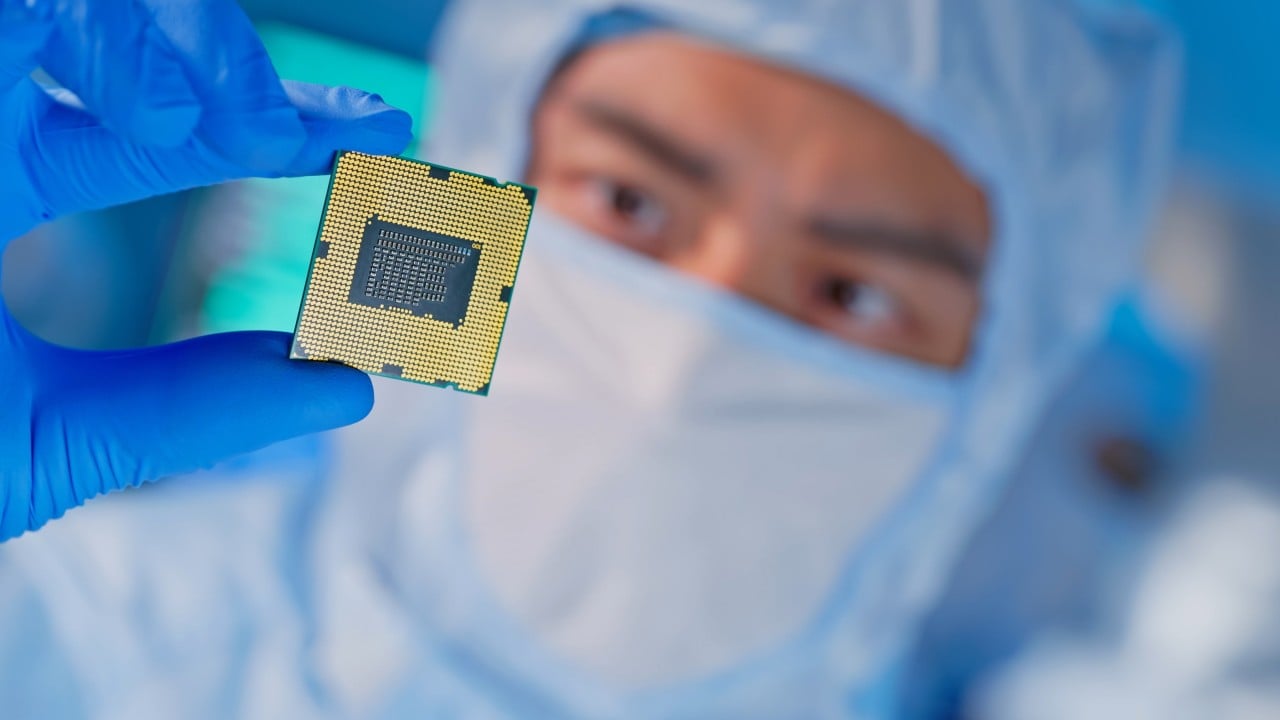
The stakes go far beyond standard trade statistics. New Delhi is actively trying to rewrite its position in global supply networks. By sending a massive delegation representing advanced manufacturing, clean energy, semiconductors, and digital technologies, India is sending a direct message to a nervous European continent. The message is clear: India is no longer just a back-office outsourcing hub, but the primary democratic alternative to factories in East Asia.
The Race to Legal Scrubbing and the Looming European Wall
For months, negotiators in Brussels and New Delhi have been quietly working through the legal scrubbing of the India-EU trade agreement text. This final stage of diplomacy is notoriously fragile, where broad political promises frequently die at the hands of technical definitions and protectionist legal fine print. Goyal's arrival on European soil is timed to break these specific deadlocks before they ossify into permanent rejections.
European nations are facing severe domestic economic pressures, rising populist sentiments, and intense skepticism regarding free trade. Agriculture remains a massive battleground, as does the movement of skilled professionals. By targeting Spain, Belgium, and Finland simultaneously, New Delhi is deploying a sophisticated regional strategy. Each country represents a distinct pillar of India’s economic ambition, and each holds specific leverage within the broader European Union voting bloc.
Consider the Spanish leg of the tour. Spain is currently celebrating seventy years of diplomatic relations with India, a milestone branded as the Spain-India Dual Year. But strip away the cultural galas and the reality becomes purely industrial. India needs Spanish industrial infrastructure expertise, specifically in rail transport and renewable energy. Major Spanish industrial conglomerates already have extensive footholds in the Indian market. Goyal is not trying to introduce Indian businesses to Spain; he is using established relationships with entities like Talgo and Iberdrola to pressure Madrid into acting as India’s champion inside the European Commission.
Moving Beyond Code to Infrastructure and Components
For decades, India's corporate footprint in Europe looked remarkably uniform. Heavyweights like Tata Consultancy Services, Infosys, and Wipro dominated the narrative by managing data systems and software architecture for European firms. While profitable, this relationship left India vulnerable to shifting corporate IT budgets and automation.
The composition of this new delegation reveals a fundamental shift in strategy. While technology giants remain present, the true focus has shifted toward hard physical manufacturing, semiconductor production, and the processing of raw materials.
The meetings scheduled in Belgium reveal the mechanics of this transition. In Brussels, Goyal will co-chair the third India-EU Trade and Technology Council plenary alongside External Affairs Minister S. Jaishankar. The inclusion of India’s top diplomat proves this is not a simple commerce meeting. It is an economic security summit. The Trade and Technology Council serves as the highest institutional mechanism for alignment on economic security and trusted supply networks.
New Delhi wants European investment to construct semiconductor fabrication plants and advanced manufacturing facilities on Indian soil. To convince European regulators that India can handle this sophisticated workload, Goyal is conducting site visits to the Port of Antwerp. The objective is to study European logistics hubs, multimodal connectivity, and green logistics frameworks firsthand. India cannot become a manufacturing superpower if its ports and railways remain choked by bureaucratic inefficiencies. By embedding European logistics practices into Indian infrastructure projects, New Delhi hopes to assure Western corporations that components produced in Chennai or Gujarat can reach European factories without delay.
The Micro-Level Strategy Behind Corporate Confrontations
High-level diplomatic summits often dissolve into meaningless declarations. To prevent this, the ministry has arranged direct, closed-door discussions with specific European corporate leaders who possess technologies India cannot build on its own.
In Belgium, the focus narrows to targeted corporate discussions. Goyal is meeting directly with the leadership of Thales Group and Silox Group. These choices are highly strategic. Thales is an international titan in aerospace, defense, and cybersecurity. India’s domestic defense manufacturing sector is desperate for technology transfers to reduce its historical dependence on legacy equipment. Securing deep partnerships with Thales allows India to upgrade its defense systems while advancing its domestic manufacturing program.
The meeting with Silox Group highlights an even more critical vulnerability: the green energy supply chain. Silox operates major specialty chemical facilities in Gujarat and specializes in battery recycling and sustainable manufacturing. As India aggressively expands its electric vehicle infrastructure and renewable energy grid, it faces a massive shortage of raw materials and recycling capabilities. India cannot rely on external monopolies for battery materials. A partnership with Silox provides the technical blueprint for sustainable recycling loops inside Indian borders.
Navigating the Nordic Green Tech Trap
The final leg of the tour takes the delegation to Finland, a move that exposes the final hurdle in India's European ambitions. Finland is a global leader in the circular economy, digital infrastructure, and clean energy systems. On paper, the India-Finland Business Roundtable looks like a perfect match. India possesses the sheer scale; Finland possesses the specialized engineering.
Yet, this relationship contains a hidden friction point. Northern European nations maintain some of the strictest environmental and sustainability mandates in the world. The European Union's upcoming carbon border adjustment mechanisms threaten to penalize Indian industrial exports if they are produced using traditional coal-heavy energy grids.
Goyal’s task in Helsinki is defensive. He must convince Finnish clean energy providers to export their technologies directly to Indian factories. If Indian manufacturing plants can adopt Finnish environmental efficiency and circular economy practices early, they can bypass the regulatory walls Europe is constructing against carbon-intensive developing economies. It is a race against time, as these European environmental regulations will soon become active trade barriers.
The High Stakes of the Final Push
This five-day trip is a high-stakes gamble. If Goyal and his delegation return home without a clear timeline for the final scrubbing of the free trade agreement, India risks being left behind as global trade fracturing continues. The domestic political window within the European Union is closing rapidly, and the appetite for expansive trade agreements is diminishing by the month.
India has assembled its top business leaders and aligned its diplomatic corps to make an undeniable offer. New Delhi is betting that Europe’s desire for supply chain security and democratic trade partners will ultimately override its deep-seated protectionist tendencies. The success of this strategy will not be measured by the pleasantries exchanged in Madrid or Helsinki, but by the raw volume of factory investments and machinery that moves toward Indian shores over the next twenty-four months.