The black SUVs have already cleared the tarmac at Nur Khan Air Base, and the high-altitude chatter of Vice President J.D. Vance’s departing flight is the only thing left of the most ambitious diplomatic gamble of the decade. After 21 hours of grueling, oxygen-starved negotiations in Islamabad, the United States and Iran have failed to reach a deal. The collapse was not a slow burn; it was a sudden, freezing stop.
Washington wanted an ironclad, verifiable end to Tehran's nuclear ambitions. Tehran wanted war reparations, the lifting of crushing sanctions, and a permanent exit of American influence from the Middle East. Neither side moved an inch.
While the world watches the fallout of this diplomatic wreck, the failure in Islamabad leaves Donald Trump facing a set of options that range from the economically painful to the militarily catastrophic. The core premise of the Trump "Board of Peace" was built on transactional leverage—the idea that every player has a price. But in the mirrored halls of the Pakistani capital, the administration learned that some ideologies are not for sale, and some geopolitical debts cannot be settled with a handshake and a real estate developer’s instinct.
The Mirage of the Middleman
For months, Islamabad has been positioning itself as the indispensable bridge between a resurgent Trump administration and an increasingly cornered Iranian regime. Pakistan’s logic was sound on paper. With a significant Shia population and a 900-kilometer shared border with Iran, combined with a deep, albeit volatile, security partnership with the United States, they were the only ones who could host this dance.
However, the "indispensable bridge" proved to be made of glass.
The failure stems from a fundamental miscalculation by the White House. The administration believed that the destruction of specific Iranian nuclear facilities—achieved through a mix of cyber warfare and precision strikes earlier this year—had stripped Tehran of its leverage. They expected a surrender disguised as a treaty. Instead, they met a delegation that viewed the ruins of their labs as a reason to double down, not to fold.
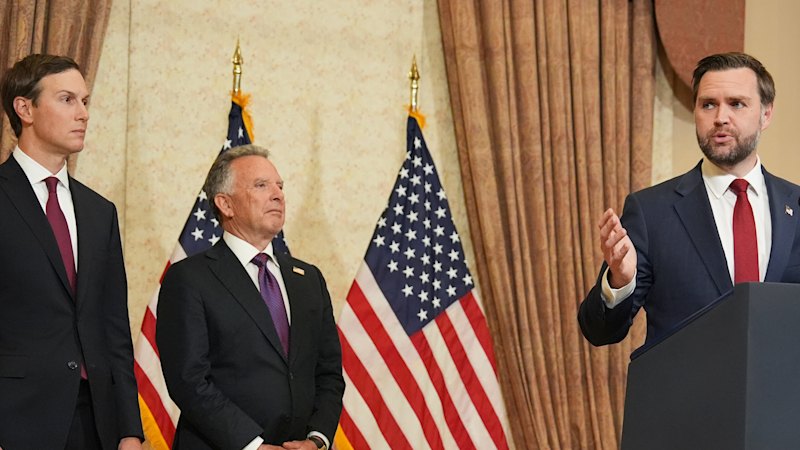
Pakistan, led by Prime Minister Shehbaz Sharif and the shadow influence of Field Marshal Asim Munir, tried to keep the room from exploding. They offered regional security guarantees and economic corridors. They even dangled the prospect of Chinese investment as a stabilizer. But the U.S. delegation, led by Vance, remained fixated on a "maximalist" demand: the total, irrevocable cessation of all enrichment activities.
The Nuclear Deadlock and the Vance Factor
J.D. Vance is not a career diplomat, and in Islamabad, it showed. His style is characterized by a blunt, populist realism that works well in a Rust Belt town hall but hit a wall of ancient Persian pride. Reports from the room suggest the Iranians were insulted by the "final and best offer" framing used by the Americans.
The sticking point was not just the nuclear hardware. It was the verification protocol.
Washington demanded real-time, 24-hour access to any site in Iran—civilian or military—at the discretion of international monitors backed by U.S. intelligence. To the Iranians, this was not a peace treaty; it was a surrender of sovereignty. The American team argued that after years of "strategic patience" failing, only total transparency could prevent a nuclear-armed Tehran.
This impasse highlights a critical flaw in the current U.S. strategy. You cannot negotiate a return to the status quo after you have already escalated to kinetic action. Once the bombs have fallen, the price of peace isn't a signature—it's a massive, multi-billion dollar reconstruction package and a public admission of fault. Trump’s team is willing to provide neither.
The Strait of Hormuz and the Economic Trigger
The failure in Islamabad is not just a diplomatic setback; it is an immediate threat to the global economy. Within minutes of the talks collapsing, the price of Brent crude spiked. The Iranians have already hinted that if diplomacy is dead, the Strait of Hormuz will become a "chokepoint of necessity."
The U.S. Navy's Fifth Fleet is currently at its highest readiness level since the 1980s. But military presence does not equal market stability. The prospect of a prolonged naval conflict in the Persian Gulf is exactly what the Trump administration’s domestic policy cannot afford. High gas prices at home are the quickest way to erode the populist mandate that brought this administration back to power.
The Looming Shadow of the Board of Peace
Trump’s "Board of Peace" (BoP), a controversial entity that essentially privatizes high-level diplomacy, was supposed to be the vehicle for this breakthrough. With figures like Jared Kushner and Steve Witkoff on the board, the intent was to use "transactional globalism" to solve old grudges.
The failure in Islamabad suggests that the BoP is ill-equipped for ideological conflicts. It treats every war like a distressed asset acquisition. But Iran is not a failing hotel chain in need of a restructuring plan; it is a regional power with a thousand-year memory.
The China-Pakistan Pivot
While Washington licks its wounds, Beijing is watching with predatory patience.
China’s role in these failed talks was subtle but significant. Pakistan is heavily indebted to China via the CPEC (China-Pakistan Economic Corridor). During the negotiations, Chinese officials were reportedly in the "outer room," offering the Iranians an alternative to the U.S. dollar-based system if the talks failed.
By failing to secure a deal, the U.S. has inadvertently pushed Iran and Pakistan closer into China's orbit. If the Americans won't provide the "security and prosperity" they promised in exchange for a nuclear-free Iran, the Chinese will offer "security and survival" without the pesky human rights or enrichment demands.
The Unpalatable Options Left on the Table
Trump now finds himself in a corner.
He can escalate. This means more strikes, deeper cyber-intrusions, and perhaps a full naval blockade. This satisfies the hawks but risks a regional war that would involve Israel, Saudi Arabia, and potentially Russia. It also guarantees $150-a-barrel oil.
He can re-calibrate. This would involve a quiet, back-channel return to the negotiating table with a more traditional diplomatic team. However, this contradicts his "strongman" brand and would be framed as a retreat by his political opponents.
He can ignore. He could focus on domestic tariffs and border issues, leaving the Middle East to simmer. But a simmering Middle East has a habit of boiling over at the most inconvenient times, usually in the form of a major terrorist event or a total closure of energy shipping lanes.
The Islamabad summit was supposed to be the "Greatest Deal of All Time." Instead, it was a 21-hour lesson in the limits of transactional power.
The American delegation is now over the Atlantic, heading back to a White House that is increasingly isolated in its approach to the region. The Iranians are back in Tehran, likely accelerating the very enrichment programs the U.S. sought to kill. And Pakistan is left to deal with the fallout of a failed mediation that may have cost them their remaining leverage with both sides.
Peace is rarely a product of a single marathon session. It is the result of thousands of hours of quiet, often boring, compromise. By swinging for the fences in Islamabad, the Trump administration may have just struck out, and the game is getting dangerously late.