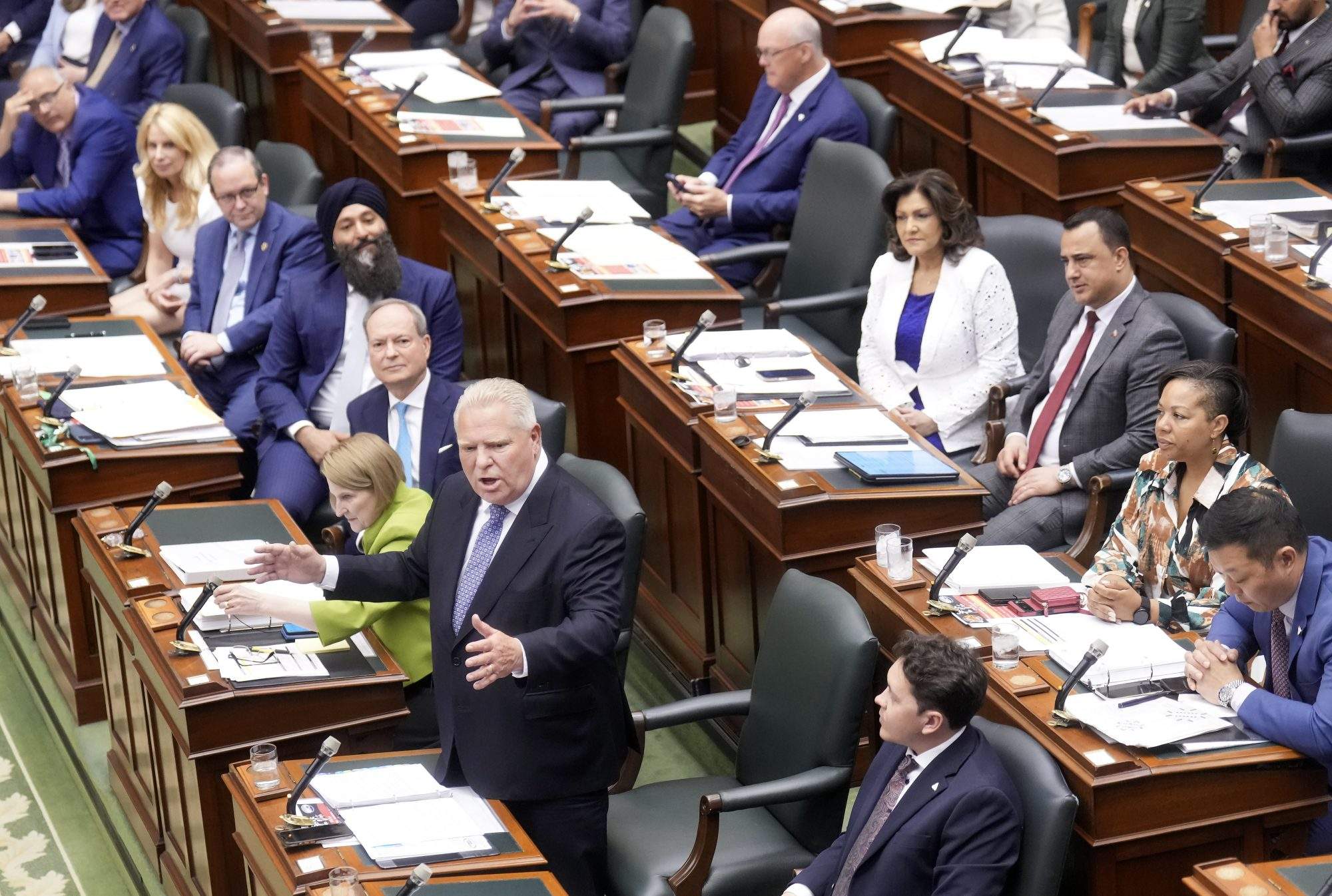
The Ontario legislature has shut down for an extraordinary 21-week summer recess, ensuring that elected provincial representatives will not return to Queen's Park until late October. While the government frames this extended break as a routine constituency period allowing politicians to connect with voters on the ground, the reality reveals a calculated political strategy designed to insulate the governing Progressive Conservatives from parliamentary scrutiny. By silencing the daily Question Period and pausing legislative committees for nearly five months, Premier Doug Ford’s administration effectively clears the decks of public conflict ahead of a potential early election call.
This is not the first time a government has used the legislative calendar as a shield, but the duration of this specific adjournment raises fundamental questions about democratic accountability.
The Anatomy of a Five Month Adjournment
Governments typically clear out of legislative buildings by early June to allow members to work within their ridings. What makes this move distinct is both the timing and the sheer length of the absence. By pushing the resumption of parliament back to late October, the government bypasses the traditional September return.
Parliamentary sessions are the primary mechanism for opposition parties to demand answers on public spending, healthcare wait times, and education funding. When the house is prorogued or adjourned for extended periods, that mechanism breaks down. Ministers no longer have to face daily grilling on the record. Committee investigations into controversial infrastructure projects, such as the Ontario Place redevelopment or the Highway 413 expansion, grind to a halt.
Political strategists know that public anger requires oxygen to survive. Without the daily theater of Question Period to feed the evening news cycle, controversial policies lose momentum in the public consciousness. The government is betting that any lingering frustration over current policy grievances will fade over the summer months, replaced by the distraction of seasonal routines.
Shifting Focus to the Campaign Trail
The opposition benches have loudly decried the move as an attempt to hide from scrutiny, pointing to unresolved questions surrounding provincial housing targets and greenbelt flip-flops. Government house leaders counter that Queen’s Park is not the only place where political work happens. They argue that MPPs spend far too much time cooped up in Toronto offices rather than listening to the immediate concerns of ordinary citizens in suburban and rural ridings.
There is a deeper calculation at play here. Speculation has been mounting for months that the Premier intends to trigger an early election, well ahead of the scheduled fixed date. Cleaning up the legislative agenda and sending MPPs back to their home bases looks less like a standard summer break and more like an extended pre-campaign mobilization.
- Candidate Nomination Drives: Ridings need to finalize their local slates without the distraction of late-night votes in Toronto.
- War Chest Accumulation: Adjournments free up cabinet ministers to attend local party fundraisers across the province without missing legislative duties.
- Localized Message Testing: Backbenchers can gauge public reaction to specific talking points, allowing central campaign teams to fine-tune their platform before the formal writs are dropped.
By the time the legislature resumes in October, the government will have spent five months shaping the narrative on its own terms, free from the counter-narratives generated during legislative debates.
The Cost of Parliamentary Silence
While the political machinery benefits from this operational pause, the broader governance of the province faces a bottleneck. Major pieces of legislation concerning municipal powers, transit infrastructure, and economic development sit frozen on the order paper.
Consider a hypothetical example where a mid-sized municipality requires emergency provincial legislative amendments to approve a critical water infrastructure upgrade before winter. Under a standard summer schedule, those tweaks could be fast-tracked in early September. Under the current timeline, that municipality must wait until late autumn just for the bill to receive a second reading, potentially delaying construction by an entire calendar year.
Government departments continue to function, and orders-in-council can still be signed behind closed doors, but the transparent debate that refines these decisions is entirely absent. Policy made entirely within the bureaucracy, insulated from the friction of parliamentary debate, frequently suffers from blind spots that opposition critics are trained to expose.
Balancing Accountability and Local Representation
Defenders of the extended recess point out that the federal parliament and other provincial jurisdictions frequently utilize long summer breaks to allow representatives to cover massive geographic territories. A representative from a northern riding faces a multi-hour flight just to commute to the capital, making sustained local engagement difficult when the house is sitting four days a week.
The counter-argument rests on the principle of institutional balance. In a Westminster parliamentary system, the executive branch derives its authority from the legislative branch. When the executive chooses to suspend the legislature for nearly half a year, the balance of power shifts heavily toward the Premier's Office.
Public tracking polls suggest that voters are increasingly cynical about political maneuvers that limit transparency. However, history shows that voters rarely punish governments solely based on procedural grievances like the length of a legislative recess. The electorate tends to focus on tangible outcomes: pocketbook issues, local hospital capacity, and the overall state of the economy.
The upcoming autumn session will serve as the true litmus test for this strategy. If the government returns in late October with a polished, campaign-ready message and a commanding lead in internal polling, the five-month shutdown will be viewed by political insiders as a masterclass in narrative management. If, instead, unaddressed provincial crises worsen over the summer without legislative intervention, the empty desks at Queen's Park will stand as a potent symbol of executive retreat. The doors are locked, the halls are quiet, and the political future of the province is currently being contested not on the floor of parliament, but on the doorsteps of suburban riding associations.