The floor-cleaning industry has spent the last decade selling a specific fiction: total domestic autonomy. Every June and July, promotional events fill digital feeds with images of sleek, disc-shaped machines effortlessly gliding over pristine hardwood floors, promising to banish manual labor forever. The standard buying guides focus entirely on immediate metrics like maximum suction or upfront discounts. They tell you which model is forty percent off, but they omit the reality of what happens three months after checkout.
The truth is that the modern domestic robot has not eliminated floor maintenance; it has merely changed your job description from sweeper to mechanic. For a closer look into this area, we recommend: this related article.
When you buy a discounted machine, you are entering into an ongoing relationship defined by clogged intake valves, tangled brush rollers, and corrupted floor maps. The engineering compromises hidden behind massive price drops dictate whether a device genuinely saves you time or simply demands a different kind of labor. True convenience requires understanding exactly how automated cleaning hardware fails when confronted with real-world dirt, hair, and structural layouts.
The Friction Coefficient of Cheap Automation
The entry-level tier of the automated cleaning market relies on a business model borrowed directly from traditional inkjet printers. The hardware is sold at or near cost during major promotional windows, while the real profit margin is recovered later through proprietary replacement bags, specialized cleaning solutions, and structural components designed to wear out. For broader details on this issue, extensive coverage can also be found on Wired.
Consider the baseline mechanisms used in budget models priced under three hundred dollars. Devices like the entry-level Shark units or basic eufy models utilize physical bumpers and standard optical sensors to navigate. In an empty testing lab, this works perfectly. In a furnished living room, it results in a machine that repeatedly strikes chair legs, wedges itself under low-clearance dressers, and strands itself on the threshold between the kitchen tile and the living room rug.
A short sentence illustrates the problem: Cheap robots are blind. Without light detection and ranging sensors, commonly known as LiDAR, a machine cannot see your home; it can only feel it by crashing into things. This constant physical impact accelerates the degradation of internal wiring and wheel motors.
Furthermore, budget tiers skimp heavily on extraction mechanics. A standard bristle brush roller acts like a hook for human and animal hair. Within a week of daily operation in a household with pets, long fibers wrap tightly around the core mechanism, melting into the plastic bearings under the friction of rotation. You do not save time if you spend fifteen minutes every Sunday inversion-cutting matted pet hair out of a machine with a utility knife.
The Engineering Divide in Middle Tier Hardware
Moving up to the mid-range market, where prices fluctuate between four hundred and seven hundred dollars, introduces localized mapping and basic self-emptying docks. This is the segment where major brands compete most aggressively on paper specifications, often boasting about high suction values measured in Pascals.
Suction metrics are deeply misleading. A manufacturer can claim an impressive rating of ten thousand Pascals by measuring airflow at an isolated, sealed intake point inside a laboratory environment. In your home, that suction power drops significantly the moment the machine encounters a gap between uneven floorboards or transitions from hardwood to medium-pile carpet.
+---------------------------+-----------------------------------+
| Feature Failure Mode      | Operational Reality               |
+---------------------------+-----------------------------------+
| High Pascal Suction Claims| Fails on uneven flooring gaps     |
| Static Passive Mop Pads   | Drags dirty water across carpets   |
| Standard Dustbin Extraction| Frequently clogs on pet hair clumps|
+---------------------------+-----------------------------------+
| Active Roller Mops        | Continuous clean water scrubbing  |
| Mechanical Brush Scrapers | Cuts hair before it binds gears   |
| High Temp Station Wash    | Prevents bacterial mold growth    |
+---------------------------+-----------------------------------+
This mid-tier category highlights a major divide in floor maintenance philosophy: passive wiping versus active scrubbing.
Standard mid-range automated mops utilize a static microfiber pad that the machine drags across the floor while dripping water from an internal reservoir. This mechanism does not clean a floor; it merely wipes a damp cloth over a stain, distributes the dissolved residue across a wider surface area, and lifts the wet pad onto your rugs. If you have sticky kitchen spills or dried mud from muddy boots, a passive pad is useless.
True wet-floor cleaning requires moving mechanics. Devices like the eufy Omni C28 or the Roborock Qrevo S Pro replace the flat cloth with spinning pads or active roller systems that rotate hundreds of times per minute. The eufy system utilizes a continuous freshwater roller with internal extraction ports to strip dirty liquid off the mechanism before it touches the next square foot of flooring. If a machine cannot clean its own cleaning surface during a cycle, it is simply painting your floors with dirty water.
The Hidden Failure Points of Automated Docks
The modern self-emptying base station is a marvel of complex plumbing, but it introduces a whole new set of maintenance challenges. When a machine returns to its dock, a high-decibel vacuum motor inside the base activates, attempting to pull weeks of accumulated dirt out of the robot's tiny internal bin through a narrow plastic channel.
This extraction process works reasonably well for fine dust and dry crumbs. It fails catastrophically when confronted with damp debris or large clumps of pet fur. The hair forms an internal matrix inside the robot's bin that resists the suction of the base station. The result is an incomplete empty cycle. The robot departs for its next run with a half-full dustbin, its internal sensors register a blockage, and the cleaning cycle grinds to a halt until a human clears the obstruction by hand.
Wet-cleaning docks introduce an even more pressing issue: biological decay. When a base station washes a robot's mopping pads, it collects the dirty water into a sealed recovery tank. If that tank sits in a warm room for forty-eight hours without being manually emptied and rinsed, the stagnant mix of organic dust, pet dander, and water becomes a breeding ground for bacteria and black mold. The odor generated by a neglected recovery tank can easily fill an entire household.
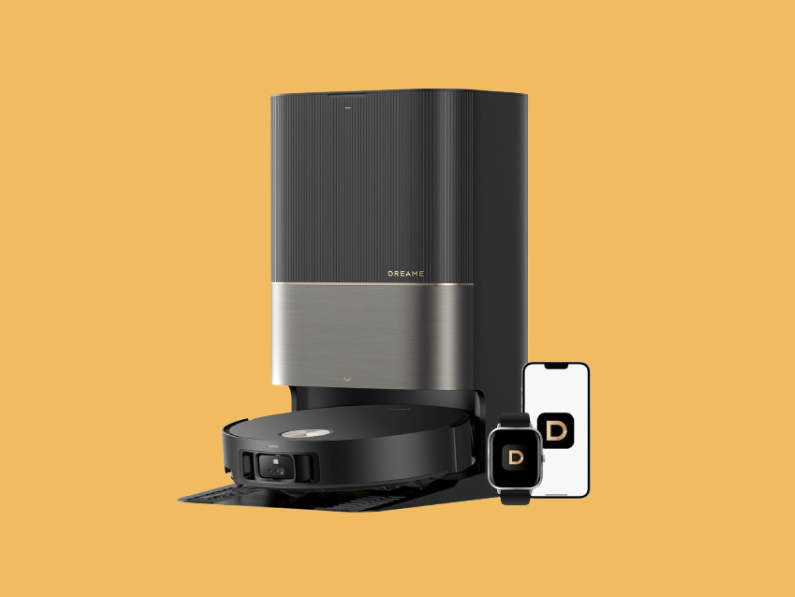
To combat this, premium flagships now integrate high-temperature water washing and active warm-air drying cycles. The Roborock Saros 10R and high-end Dreame models flash-heat water up to one hundred and sixty degrees Fahrenheit to dissolve oils and sanitize the cleaning elements. Without these energy-intensive drying cycles, the damp pads resting against the base station will develop a sour, mildewed smell within days, transferring that odor directly to your living room floors during the next scheduled run.
Software as a Hidden Depreciation Cost
The longevity of a floor-cleaning robot is tied directly to the software ecosystem provided by the manufacturer. A beautifully constructed piece of hardware is rendered useless if the companion mobile application routinely drops its network connection, corrupts saved floor maps, or loses track of defined no-go zones.
Industry data reveals that map drift is the most common reason users abandon their devices entirely. Map drift occurs when minor changes in a home’s environment—such as a shifted armchair, a new holiday tree, or a stray cardboard box—cause the machine's localized positioning software to miscalculate its coordinates. The robot becomes disoriented, mistakes the living room for the kitchen, and begins aggressively scrubbing your expensive living room rugs with a wet mopping pad.
The software user experience varies wildly across the current industry. The interface designs developed by Roborock generally maintain highly stable environments with reliable multi-floor mapping and precise obstacle recognition. Conversely, owners of older Ecovacs hardware frequently report instances of complete map corruption following simple firmware updates, forcing users to repeatedly delete their profiles and re-map their homes from scratch.
When buying a device on sale, you must factor in the manufacturer’s history of software support. Budget brands rarely update their applications once a model lifecycle ends, meaning an operating system update on your smartphone can suddenly render your vacuum's scheduling interface completely incompatible.
Making a Rational Assessment Before Checkout
Before investing in an automated cleaning system, step away from the marketing copy and conduct a cold, objective assessment of your living space. The physical layout of your home should dictate your choice of hardware far more than any promotional price cut.
If your home is predominantly covered in thick, plush carpeting, buying a dual-function vacuum and mop combo is an expensive mistake. You are paying a premium for complex water pumps, fluid tanks, and lifting electronics that will rarely be deployed. For these environments, a dedicated, high-suction vacuum with dual counter-rotating rubber brushes is far more effective. The secondary rubber roller agitates carpet fibers to lift embedded dirt that single-roller systems leave behind.
For homes with mixed flooring, pay very close attention to the pad-lifting clearance metric. When a hybrid robot detects carpet, it mechanically raises its wet mopping pads to prevent dampening the fabric. Most mid-tier models only offer five to eight millimeters of vertical lift. While this is sufficient for flat, low-pile commercial rugs, it is entirely inadequate for deep shag or thick wool rugs. The wet pads will drag along the edges of the carpet anyway, leaving damp, dirty streaks along the borders of your rooms.
Ultimately, total autonomy remains an illusion. A robot vacuum is an assistant, not a replacement. It excels at maintaining a baseline level of surface cleanliness by preventing daily dust and pet hair from accumulating. However, it cannot deep-clean corners, it cannot sanitize deep carpet fibers, and it absolutely cannot maintain itself. The purchase price is merely the down payment; the true cost is paid in the minutes you spend every single week clearing its brushes, washing its filters, and purging its tanks.