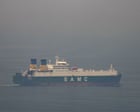
The White House is currently wielding the world’s most sensitive maritime artery as a bargaining chip in a high-stakes trade war. By signaling a potential delay to the upcoming Beijing summit, President Trump has effectively linked the resolution of bilateral trade tariffs to a much darker, more volatile theater—the Strait of Hormuz. The administration’s demand is simple but fraught with peril: China must use its significant influence over Tehran to ensure the free flow of oil, or face a prolonged and increasingly expensive economic cold war with the United States.
This isn’t just about soybeans or intellectual property anymore. We are witnessing the fusion of energy security and trade policy into a single, blunt instrument. While the official narrative suggests a scheduling conflict, the reality is a calculated squeeze. Washington knows that China is the world’s largest importer of crude oil, much of which travels through the narrow 21-mile wide chokepoint between Oman and Iran. By conditioning the summit on "maritime cooperation," the U.S. is forcing Beijing to choose between its strategic partnership with Iran and its desperate need to stabilize its slowing domestic economy.
The Hormuz Chokepoint as Trade Leverage
To understand the gravity of this move, one must look at the math of global energy. Approximately 20% of the world’s total oil consumption passes through the Strait of Hormuz every single day. For China, that percentage is significantly higher. Their industrial machine cannot breathe without the steady pulse of Middle Eastern tankers.
The U.S. Navy has traditionally been the guarantor of this passage. However, the current administration is questioning why American taxpayers should foot the bill for the security of Chinese energy supplies while Beijing continues to engage in what the White House calls predatory trade practices. The logic in the West Wing is clear: if China wants a trade deal, they must help police the neighborhood that fuels their growth. They cannot continue to benefit from a U.S.-led security umbrella while simultaneously undermining American economic interests.
Why the Beijing Summit Delay Matters
Summits are the currency of international diplomacy. They provide the market certainty that corporations crave. By dangling the possibility of a delay, Trump is intentionally injecting volatility back into the global markets. It is a psychological play designed to rattle Chinese leadership, who are already facing internal pressure over a cooling manufacturing sector and a debt-laden property market.
A delay isn’t just a calendar change. It is a signal to every global supply chain manager that the "normalization" of U.S.-China relations is nowhere in sight. This uncertainty drives capital out of China and back into the dollar, further strengthening the U.S. hand at the negotiating table. The administration is betting that the pain of an indefinite delay, coupled with the rising cost of oil insurance in a destabilized Gulf, will force Beijing to make concessions that were previously off the table.
The Iranian Variable
China finds itself in a diplomatic vice. On one side, it has spent years cultivating a deep energy and security relationship with Iran, viewing the Islamic Republic as a key node in its Belt and Road Initiative. On the other, it cannot afford a total collapse of its trade relationship with the United States.
Washington’s insistence that Beijing "help" reopen or secure the Strait is a demand for China to betray its Persian ally. If China pressures Iran to de-escalate, it risks losing its preferred status in Tehran and potentially its access to discounted oil. If it refuses, it faces a wall of U.S. tariffs that could permanently damage its export-led model. It is a classic geopolitical trap.
The Cost of Escort Diplomacy
The U.S. has proposed a "coalition of the willing" to escort tankers through the region. This is a logistical nightmare and a legal minefield. Who fires the first shot if a drone approaches? If a Chinese-flagged tanker is attacked, does the U.S. Navy intervene? By forcing this issue into trade talks, the administration is moving toward a world where trade is no longer governed by rules, but by the ability to project power in the "blue water" of the high seas.
Industry analysts are already seeing the fallout. Shipping rates for Very Large Crude Carriers (VLCCs) have spiked. Insurance premiums for "war risk" in the Gulf have reached levels not seen since the Tanker War of the 1980s. These costs are a hidden tax on the Chinese economy, one that the U.S. is more than happy to see them pay until a deal is signed.
A Fracture in Global Governance
This strategy marks the end of the post-Cold War era of globalization. For decades, the mantra was that trade and security were separate silos. You could trade with a rival while disagreeing on regional security. That era is dead. We are entering a period of "total competition," where a flare-up in the Persian Gulf is directly linked to the price of electronics in a mid-western big-box store.
The risk, of course, is miscalculation. If the U.S. pushes too hard and the summit is canceled entirely, the incentive for Beijing to cooperate on Hormuz vanishes. They might instead decide to double down on their support for Iran, creating a permanent flashpoint that keeps oil prices high and hurts the global economy—including the U.S. consumer.
The Crude Reality
The administration believes it has the upper hand because the U.S. is now a net exporter of energy thanks to the shale revolution. They feel they can weather a Gulf crisis better than China can. It is a gamble of historic proportions. The U.S. is essentially saying that the "Pax Americana" on the high seas is no longer a public good provided for free; it is a premium service that must be purchased with trade concessions.
Whether this pressure tactic works depends entirely on Beijing’s internal pain threshold. They are masters of the long game, but the long game requires a functioning economy in the short term. If the Strait stays closed or even semi-blocked, the "China Dream" starts to look like a nightmare of energy shortages and factory shutdowns.
Tactical Implications for Investors
The market is currently underestimating the duration of this standoff. Most traders are looking for a quick fix at the next G20 or a side-meeting. They are ignoring the fundamental shift in how the U.S. is defining its national interest. This isn't a "glitch" in the negotiations; it is the new blueprint. Expect continued volatility in energy futures and a permanent risk premium attached to any company with deep exposure to the trans-Pacific supply chain.
If you are waiting for a return to the status quo, you aren't paying attention. The link between the Strait of Hormuz and the trade desk is now permanent. The next time a tanker is harassed or a drone is downed, don't just look at the price of Brent crude. Look at the offshore Yuan. That is where the real story is being written.
Move your capital into domestic energy infrastructure and high-ground sectors that don't rely on the "goodwill" of maritime corridors that are now being used as tactical chessboards.