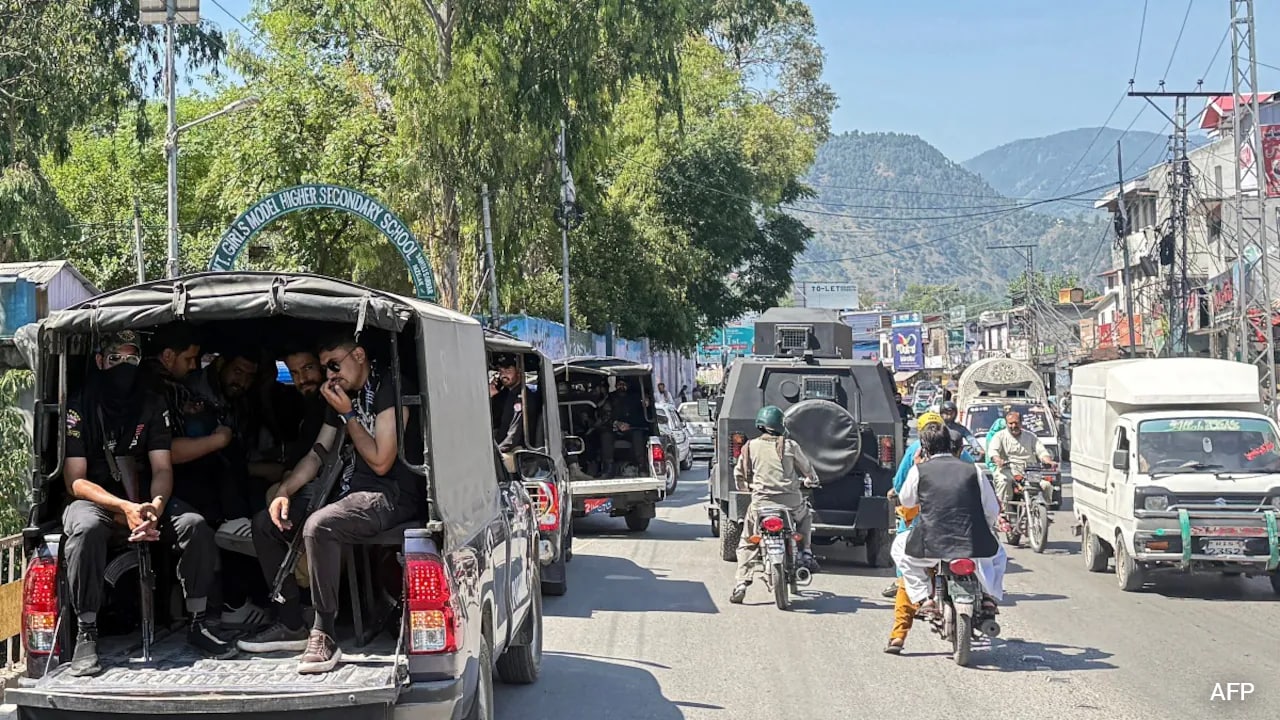
You have probably seen the headlines. Cities in Pakistan-occupied Kashmir are burning. Security forces are opening fire. Curfews are locking down entire districts, and the internet has completely vanished into a dark void.
But if you think this is just another standard geopolitical skirmish between India and Pakistan, you are missing the point.
What is happening right now in Muzaffarabad, Rawalakot, and Mirpur is a massive explosion of public fury that has been building up for decades. People are sick of starving. They are tired of paying exorbitant rates for electricity generated by their own local rivers. They are furious that their political voices are routinely smothered by the deep state in Islamabad.
The immediate catalyst for the current bloodbath is a direct collision between an angry public and a heavy-handed state crackdown. The government recently banned the region's most prominent civil society alliance, the Jammu Kashmir Joint Awami Action Committee. They labeled them a terrorist organization. When you brand local traders, lawyers, and students as terrorists for wanting affordable wheat, you throw gasoline on a roaring fire.
The Myth of Autonomy Meets Economic Nightmare
Let's strip away the official rhetoric. Islamabad likes to call this territory "Azad" (Free) Kashmir, but the reality on the ground feels anything but free for the people living there. For decades, the region has been treated as a strategic military buffer zone and a resource bank rather than a place where actual human beings live and try to raise families.
The irony here is incredibly thick. The region is rich in water resources and generates a massive chunk of hydroelectric power. Yet, the local population faces constant, agonizing power cuts. When the electricity does stay on, the bills are so high that ordinary families have to choose between keeping the lights on or buying groceries.
The economic model is completely broken. Think about these core issues driving people to the streets:
- Subsidized Flour Shortages: Smuggling and systemic administrative neglect have turned basic wheat into a luxury item.
- The Electricity Paradox: Locals pay premium rates for electricity that is harvested directly from their own rivers, while the profits and power flow straight to Punjab and the Pakistani mainland.
- Zero Economic Autonomy: Major infrastructure decisions are made in Islamabad, leaving locals with crumbling roads, terrible healthcare, and almost no private-sector jobs.
This isn't a new argument that just popped up last week. The current wave of unrest is the direct continuation of a movement that kicked off in May 2023. Back then, ordinary folks finally had enough and started refusing to pay their skyrocketing power bills. By May 2024, the movement escalated into a massive long march toward Muzaffarabad. Now, the state has responded by deploying thousands of federal paramilitary troops to crush the dissent.
Rigging the System Through Refugee Seats
If you want to understand why people are risking their lives against live ammunition right now, you have to look at how the local political structure is rigged.
The Joint Awami Action Committee has a list of demands, but one specific issue explains the political rot perfectly. The region is heading toward legislative elections, and out of the available seats in the assembly, 12 are strictly reserved for refugees who live outside the region in mainland Pakistan.
Basically, candidates who don't even live in the territory get to contest these seats. Major political parties in Islamabad use these external seats to manipulate the numbers and force their own handpicked puppet governments into power in Muzaffarabad. It completely dilutes the voting power of the people who actually live in the valleys and suffer through the economic crises.
The locals want these reserved seats completely abolished. They want a government that answers to them, not to political bosses in Islamabad or military generals in Rawalpindi.
A Brutal Crackdown Hidden Behind a Digital Blackout
The state's response to these political and economic demands has been predictable and vicious.
When the government banned the Joint Awami Action Committee under anti-terror laws, it gave security forces a green light to use extreme measures. Reports leaking out of the region despite the communication blackout paint a horrific picture. Live ammunition has been used against unarmed crowds and funeral mourners.
The Human Rights Commission of Pakistan has sounded the alarm, warning that banning popular movements is a direct assault on what little democratic space is left. Meanwhile, the international community is starting to notice. The Kashmiri diaspora has been staging furious protests outside Pakistani consulates in the UK, and dozens of British MPs have pushed for diplomatic pressure to halt the state-sponsored violence.
Islamabad tries to frame the unrest as a security issue caused by "miscreants" using guerrilla-style tactics. But you can't blame external agitators when thousands of ordinary citizens across Mirpur, Dadial, and Tattapani are simultaneously defying curfews to join the strike. It is a genuine grassroots rebellion.
What Needs to Happen Next
The current strategy of using brute force, cutting off mobile internet, and arresting civil society leaders won't solve the structural crisis. It only delays the inevitable next explosion. If there is ever going to be stability in the region, several immediate steps must be taken by the authorities.
First, the terrorism designation against the Joint Awami Action Committee must be dropped entirely. You cannot have a meaningful dialogue when you label the other side of the table as terrorists.
Second, the government needs to implement immediate economic relief on utilities and food staples. The region's hydroelectric output must benefit the people who live near the dams before it gets exported elsewhere.
Finally, structural political reforms are non-negotiable. The external refugee seats that allow mainland political manipulation must be dismantled to ensure that the legislative assembly genuinely reflects the will of the local residents. Until those core issues are solved, the cycle of poverty, protests, and state violence will keep spinning out of control.



:max_bytes(150000):strip_icc():focal(665x0:667x2)/gettyimages-50733149-2000-8b129a2475974982a915418ce92a73d8.jpg)