The plastic bag sits on the counter, unassuming and silent. Inside, the heavy crimson pouch is shifting slightly, cold to the touch. It looks ordinary. It looks industrial. But inside that flexible plastic is an expiration date counting down in hours, a tiny handwritten label, and a single, fierce truth: someone’s life is tethered to it.
We rarely think about the blood inside our veins until it is missing. We take it for granted, assuming it will always be there, pumping steadily through our wrists, warm and reliable. We treat our national blood supply like an inexhaustible municipal utility, akin to water flowing from a tap or electricity humming through drywall.
It is not a utility. It is a biological borrowing system. And right now, the well is running dry.
The American Red Cross has officially declared a national blood crisis. Not a seasonal slump. Not a routine shortage that can be patched over with a quick weekend drive. This is only the second time in history that the organization has had to sound this alarm on a national scale. The math is brutal. Over the past twenty years, the number of people rolling up their sleeves to donate blood has plummeted by more than forty percent.
Consider what happens next in any given hospital emergency room across the country.
A car crash victim arrives at midnight. The monitors shriek. Internal bleeding is rapid and catastrophic. The human body holds roughly ten pints of blood. When you lose half of that in minutes, your organs begin to shut down one by one. Your brain starves for oxygen. In that sterile room, under the white glare of surgical lights, the standard medical playbook is simple: transfuse. Give them units of red blood cells, plasma, platelets.
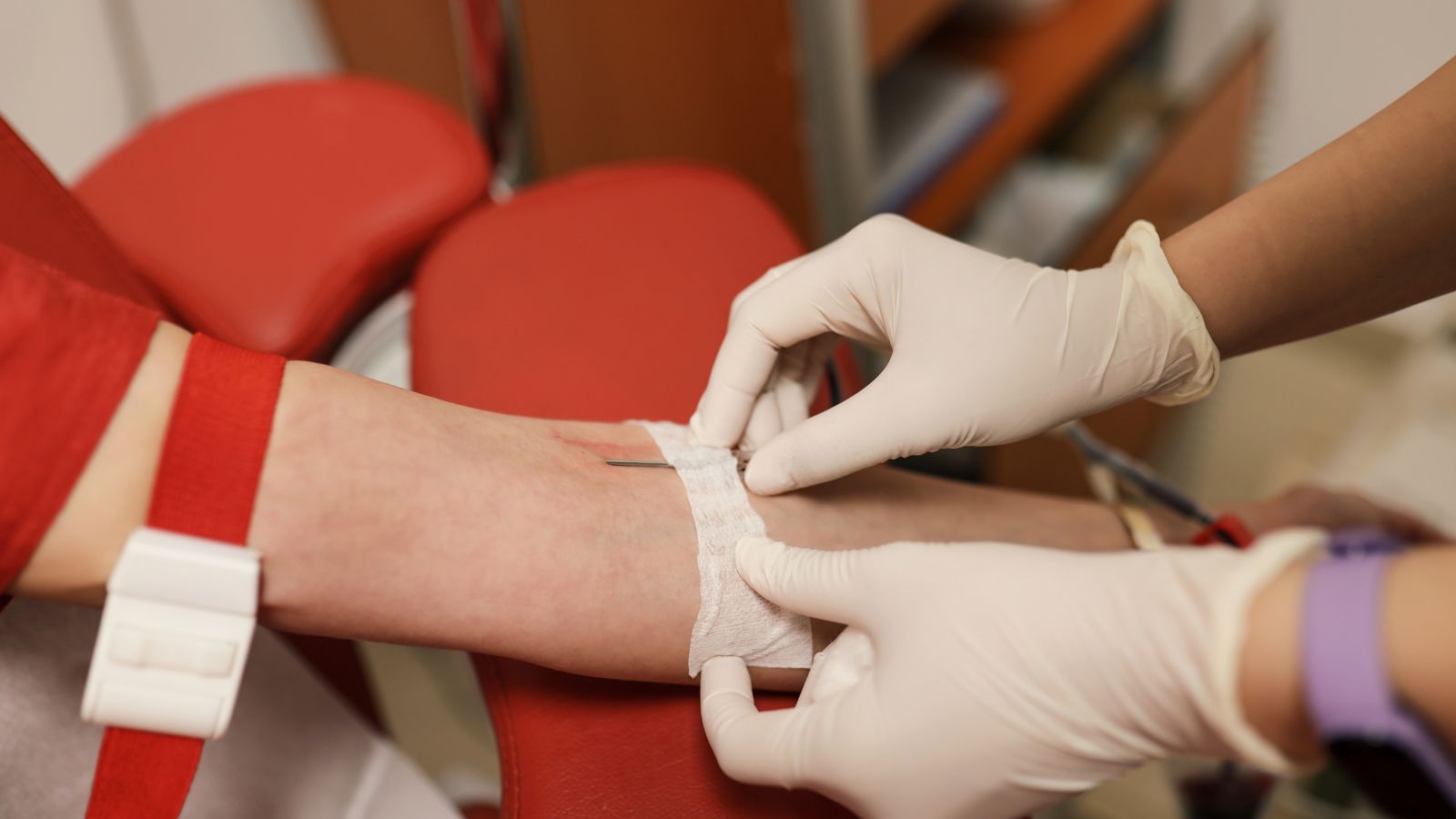
Except the shelf life of platelets is just five days. Red blood cells last forty-two. They cannot be manufactured in a laboratory, synthesized from chemicals, or ordered overnight from a warehouse. They can only come from another human being who sat in a vinyl chair, squeezed a rubber ball, and walked out with a small bandage on their arm.
When the supply drops to historic lows, doctors are forced into unimaginable math. They have to ration. They have to look at two critical patients and decide whose survival takes precedence based on inventory constraints. That is not medicine. That is triage on a societal scale.
To understand how we arrived at this precarious precipice, we have to look past the sterile statistics and examine the seismic shifts in how we live.
For generations, the architecture of blood donation was built on community infrastructure. High schools hosted annual gymnasium drives where teenagers experienced their first act of civic adulthood. Corporate offices regularly cleared out conference rooms for mobile bloodmobiles, turning a civic duty into a shared workplace ritual. Churches, community centers, and military bases formed an intricate, reliable web of regular donors who rolled up their sleeves every eight weeks like clockwork.
Then came the modern era of isolation.
Remote work dissolved the corporate campus drive. Virtual learning disrupted the school systems that once supplied a quarter of all incoming blood products. At the same time, lifestyle shifts and post-pandemic procedural backlogs drove the demand for surgical care and cancer treatments skyward. The gap between what we need and what we have widened into a chasm.
We became spectators in our own society. We watch crises unfold on glowing screens, feeling a vague, detached anxiety, but the physical pathways to action have eroded.
It is easy to believe that someone else will do it. That the hospital down the street has a vault stocked with red, white, and yellow life-savers. But walk into a blood processing center on a Tuesday afternoon and look at the storage racks. They are not vaults. They are refrigerators, and lately, they are unsettlingly empty.
Blood is remarkably fragile. It is living tissue, composed of platelets that clot, plasma that carries proteins, and red blood cells that ferry oxygen through the narrowest capillaries of the brain. Every single unit donated must be typed, tested for infectious diseases, separated into its component parts, and rushed to where it is needed within days.
Imagine the logistical symphony required to keep a single level-one trauma center stocked on a stormy Tuesday night. It requires a continuous, unbroken chain of strangers caring for other strangers. When one link in that chain snaps—when a donor pool ages out, when a winter storm cancels a scheduled drive, when apathy settles in—the entire system shudders.
There is a profound vulnerability in realizing that our survival as a modern civilization depends not on our technology, but on our willingness to share the literal fluid of our bodies with people we will never meet.
You do not need a medical degree to fix this. You do not need to rewrite policy or launch a tech startup. You simply need an hour of your afternoon, a comfortable chair, and a willingness to feel a tiny pinch.
The crimson pouch on the counter waits. Somewhere out there, an accident is waiting to happen, a leukemia diagnosis is waiting to be delivered, a complicated birth is hours away. The red thread connects us all, if only we have the courage to pull it.