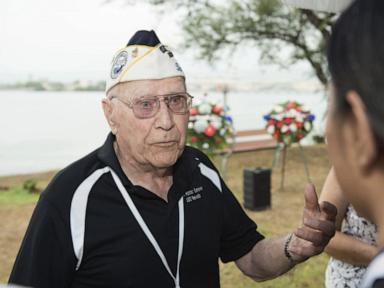
Most obituaries reduce a 105-year life to a single thirty-minute window of chaos.
When Gebhard Galle died at 105, the headlines immediately locked onto the easiest, most cinematic hook available. They called him a Pearl Harbor survivor and celebrated him for pulling four shipmates out of burning oil and water on December 7, 1941. That summary is factually accurate, emotionally satisfying, and completely misses the point of his life.
By turning a centenarian into a static monument to one morning in Hawaii, modern media practices a subtle form of historical laziness. It treats survival as the climax of a biography rather than the starting gun for eighty years of quiet, unglamorous endurance.
The Obituary Trap
Standard journalism relies on a predictable template when covering the passing of the Greatest Generation. Find the war record. Highlight the single most dramatic act of physical courage. Wrap it in nostalgic reverence. Move on to the next news cycle.
I have spent two decades editing historical features and reviewing military archives, and I have watched this exact formula flatten thousands of complex human beings into cardboard cutouts. When editors frame a man like Galle exclusively around the USS California or the rescue of four sailors, they give readers permission to admire a myth without confronting the reality of what follows trauma.
Heroism in an emergency is mostly reflex, training, and adrenaline. In the freezing, oil-slicked chaos of Battleship Row, trained sailors reacted because their nervous systems had been drilled to execute damage control under pressure. Galle pulled four men to safety because he was a competent sailor doing his duty while his ship took torpedo and bomb hits.
Calling that the sum of his legacy insults the next eight decades of his existence.
Survival Is Not a Victory Lap
The mainstream narrative treats surviving Pearl Harbor as a neat, cinematic conclusion to a brush with death. In reality, December 7, 1941, was the opening salvo of a brutal four-year Pacific campaign, followed by an entirely unscripted civilian life without the psychological support systems we take for granted today.
Consider the mechanics of twentieth-century post-war reintegration. Men who watched friends burn to death on sinking battleships returned to a society that expected absolute silence. There were no trauma-informed therapists waiting at the docks in San Diego or Norfolk. There were no public awareness campaigns about hypervigilance, survivor guilt, or moral injury.
You came home, took off the uniform, got a job, and raised a family.
If you want to understand true grit, stop looking at the thirty minutes Galle spent pulling men from the harbor. Look at the thirty thousand days he spent afterward building a life, maintaining his sanity, and refusing to let a single morning of industrial slaughter define his capacity for joy or productivity.
What the Headlines Ignore About Longevity
People search for the secrets of centenarians like Galle, hoping to find a magic diet, a specific brand of whiskey, or a morning stretching routine. That search is fundamentally flawed.
Clinical research into extreme longevity, including work from the New England Centenarian Study at Boston University, consistently shows that genetics and resilience to psychological stress outweigh almost every trendy lifestyle hack. Surviving to 105 after experiencing acute combat trauma requires a nervous system capable of down-regulating chronic cortisol spikes over decades.
- Acute Courage: Lasts minutes. Driven by sympathetic nervous system activation, adrenaline, and muscle memory.
- Chronic Resilience: Lasts decades. Requires emotional regulation, community integration, and an absence of self-pity.
- Public Memory: Obsesses over the acute event because it fits neatly into a three-hundred-word news brief.
The Dangerous Myth of the "Last Survivor"
Every time a Pearl Harbor veteran passes away, newsrooms dust off the "end of an era" cliché. They treat the shrinking pool of living witnesses as a tragic countdown to total historical amnesia.
This anxiety exposes a deep failure in how we teach and consume history. If our collective memory of December 7, 1941, depends on keeping 105-year-old men alive to repeat their stories at annual ceremonies, our historical literacy is already dead.
Primary sources do not disappear when the witness dies. The deck logs of the USS California, the naval board of inquiry transcripts, the oral histories recorded by the Library of Congress Veterans History Project, and the physical scars on Oahu remain completely intact. Relying on the biological lifespan of centenarians to carry the moral weight of World War II is an abdication of responsibility by the living.
We use their longevity as a crutch so we do not have to do the hard work of reading primary documents or understanding the geopolitical failures that left the Pacific Fleet vulnerable in the first place.
Why Rescuing Four Men Was Just the Baseline
Let us examine the actual mechanics of what happened on Battleship Row without the Hollywood gloss.
When Japanese torpedo bombers struck the USS California, the ship did not explode instantaneously like the USS Arizona. It suffered progressive flooding, electrical failure, and massive oil fires drifting across the water from neighboring vessels. In those conditions, survival depended entirely on small-unit cohesion. Sailors survived because other sailors refused to abandon the wounded in dark, flooding compartments or thick, burning bunker fuel.
Galle saving four shipmates was extraordinary to modern eyes, yet on that morning, it represented the standard expected of United States Navy personnel under fire. Scores of unnamed sailors performed identical rescues in engine rooms, gun turrets, and oil-covered water, many dying minutes later from smoke inhalation or shrapnel.
Elevating Galle's rescue as a solitary miracle obscures the collective discipline of the enlisted ranks. He was not a lone action hero; he was a functioning gear in a disciplined machine that held together even while its hulls were being ripped open.
The Cost of Deifying Veterans
Turning veterans into marble statues creates an unintended barrier between military service and the civilian public.
When you frame a man solely as a flawless war hero, you strip away his humanity. You erase his bad days, his mundane struggles, his political disagreements, and his ordinary flaws. Worse, you send a subtle message to younger generations of service members: unless you pull four men out of burning oil, your service is secondary, and your post-service struggles are invisible.
I have worked alongside combat veterans from Iraq and Afghanistan who actively resent the "hero" label used by lazy journalists. They recognize it for what it often is—a polite way to pat someone on the head, thank them for their service, and avoid engaging with the messy, ongoing reality of war and aging.
How to Actually Honor a 105-Year Life
If you want to respect Gebhard Galle, stop treating his obituary like a movie trailer for 1941.
- Read the unedited transcripts. Go to the Library of Congress Veterans History Project or the National WWII Museum archives. Read what sailors actually said about the boredom, the terror, the confusion, and the smell of burning fuel, rather than relying on sanitized wire-service summaries.
- Separate reflex from character. Acknowledge that saving four men in a crisis proves competence and bravery under pressure, while living a decent, productive life for eighty-four years afterward proves actual character.
- Reject nostalgic escapism. Do not use the passing of the Greatest Generation as an excuse to whine about modern society. Galle's generation survived the Great Depression and a global war because they had no other choice, not because they possessed some mythical moral superiority unavailable to people alive today.
- Study the systemic failures. Honor the men on Battleship Row by studying the intelligence silos, command arrogance, and logistical bottlenecks that allowed an enemy carrier strike force to cross the Pacific undetected. Sentimentality never prevented a military disaster; rigorous accountability does.
Admittedly, taking this clear-eyed approach strips away the warm, tear-jerking comfort that most readers want from a morning news feed. People prefer simple stories where heroes are forged in fire and live happily ever after until age 105.
Reality is harder and far more impressive.
Gebhard Galle did not just survive December 7, 1941. He survived the rest of the Pacific War, the transition back to civilian obscurity, the loss of every peer who understood what that morning sounded like, and the slow, relentless grind of aging past a full century.
The four men he pulled from the water owed him their lives. We owe him the dignity of remembering the whole man, not just the thirty minutes that fit neatly into a headline.