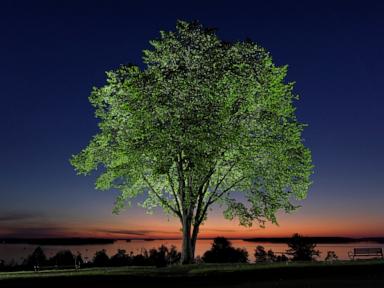
The decimation of European and American elm populations by Dutch elm disease over the past century represents a structural failure in arboricultural management and ecological asset protection. The pathogen, vectored primarily by bark beetles, exploits a simple systemic vulnerability: the tree's hydraulic transport system reacts to fungal colonization by plugging its own vessels, effectively dying of thirst to contain the infection. Past mitigation efforts relied almost exclusively on chemical suppression of vectors and sanitation felling of infected specimens. These measures operated as high-cost, low-efficacy holding actions rather than permanent structural solutions.
A viable population recovery requires moving away from reactive containment toward genetic resilience engineering. Current propagation pipelines focus on breeding multi-parent crosses that combine the high tolerance traits of Asian elm species with the architectural and aesthetic phenotypes of native European and American variants.
The Mechanics of Pathogen Transmission and Host Response
Dutch elm disease is driven by ascomycete fungi, primarily Ophiostoma ulmi and the more aggressive Ophiostoma novo-ulmi. The infection cycle relies on a biological vector-host feedback loop. Female bark beetles burrow into the bark of weakened or freshly dead elms to breed. Emerging adults, carrying fungal spores on their exoskeletons, feed on the twig crotches of healthy trees during maturation feeding, introducing the pathogen directly into the xylem vessels.
Once inside the vascular network, the fungus triggers a rapid defensive cascade within the host tree.
- Tyloses Formation: The tree produces balloon-like outgrowths called tyloses inside the xylem vessels to block the upward movement of fungal spores.
- Gummosis: The plant secretes complex polysaccharides and gums to seal off infected pathways.
- Vascular Collapse: While these defense mechanisms restrict the pathogen, they simultaneously cut off water and nutrient transport to the canopy, causing progressive wilt, branch dieback, and eventual tree death.
Standard management models attempted to interrupt this loop through physical intervention. Trenching severed root grafts to prevent underground fungal spread between adjacent trees. Systemic fungicides injected directly into the trunk offered temporary protection for high-value urban specimens but required recurring capital expenditure every one to three years. These interventions failed to address the root vulnerability: the genetic susceptibility of the host population. Scale economics rendered widespread chemical treatment impossible for peri-urban and rural forests, leaving urban parks as the primary beneficiaries of managed survival.
Genetic Selection and Breeding Hierarchies
Breeding resistant elm stock requires navigating a complex trade-off matrix between pathogen resistance and phenotypic fidelity. Early attempts in the twentieth century crossed susceptible native species with Asian species such as Ulmus pumila (Siberian elm) or Ulmus parvifolia (Chinese elm). While these Asian species exhibited high baseline resistance, the resulting first-generation hybrids often lacked the distinctive vase-shaped canopy, growth rate, and wood density of the native Ulmus americana or Ulmus glabra.
Breeding programs structure selection through multi-generational backcrossing to recover native traits while preserving fungal tolerance genes.
- Phenotypic Screening: Candidate trees undergo artificial inoculation trials where standardized spore loads are introduced directly into the cambium. Tolerance is measured by quantifying the percentage of crown dieback twelve weeks post-inoculation.
- Marker-Assisted Selection: Modern nurseries utilize genetic markers associated with quantitative trait loci linked to structural compartmentalization and defensive chemical production, accelerating the breeding cycle from decades to years.
- Clonal Diversity Maintenance: To prevent monoculture vulnerabilities—where a single secondary pathogen or environmental shift could wipe out an entire replanted stock—breeding lines maintain a broad genetic base across distinct geographic provenances.
Deploying these advanced selections into municipal and forestry environments shifts the operational expenditure curve. Instead of indefinite containment budgets, land managers transition to a one-time capital investment in resistant stock that appreciates in ecological value over decades.
The Economic and Ecological Cost Function of Canopy Loss
The loss of mature elm canopies imposes severe negative externalities on municipal and rural infrastructure. Urban elms historically provided high canopy volume per square meter of root space, offering optimal shade indices, stormwater interception, and particulate matter filtration.
When an urban canopy collapses, the municipal financial burden multiplies across several vectors.
- Removal and Disposal Costs: Dead and dying trees standing near public infrastructure require expensive rigging, crane deployment, and disposal to eliminate liability hazards.
- Microclimatic Degradation: Loss of mature shade accelerates asphalt degradation through thermal expansion and increases urban heat island intensity, raising residential cooling energy demands.
- Hydrological Stress: Mature elms intercept millions of liters of stormwater annually. Their removal overloads municipal drainage infrastructure, increasing flood frequencies and storm-water management capital costs.
The transition to disease-resistant generations alters this economic equation. By selecting for structural longevity and rapid early-stage root development, modern forestry protocols reduce the establishment mortality rate of newly planted saplings. This minimizes the multi-year replacement cycles that drain municipal maintenance budgets.
Operational Constraints in Large-Scale Regeneration
Translating genetic breakthroughs into field-level survival requires disciplined execution across the nursery-to-forest pipeline. Production scaling faces structural bottlenecks that limit the speed of ecological restoration.
- Propagation Bottlenecks: Many resistant cultivars do not propagate reliably via standard seed collection due to open pollination risks with susceptible wild types. Operations must rely on vegetative propagation, such as softwood cuttings or micropropagation tissue culture, which increases unit production costs.
- Site-Specific Environmental Mismatches: Cultivars optimized for controlled nursery environments often experience high failure rates when deployed into compacted urban soils or variable rural moisture regimes. Hardening protocols must simulate target site stressors prior to final outplanting.
- Secondary Pest Vulnerabilities: While resistant lines survive Dutch elm disease, populations remain exposed to secondary pressures like the elm leaf beetle and the Asian longhorned beetle. Resistance to one pathogen does not confer systemic immunity across unrelated phloem-feeding insects.
Addressing these constraints requires site-specific genetic matching rather than blanket deployments of single cultivars. Foresters must audit local soil chemistry, water tables, and pest pressures to select the specific clonal lineage optimized for those local variables.
Strategic Deployment Blueprint for Land Managers
Achieving long-term stability in elm populations depends on structured replacement strategies rather than opportunistic planting.
- Inventory and Risk Stratification: Complete a spatial audit of existing surviving native elms. Isolate mature, apparently resistant veteran trees for genetic sample collection and local seed banking.
- Diversified Stock Sourcing: Procure multi-strain resistant saplings from certified nurseries, ensuring no single clone exceeds fifteen percent of a localized planting block to mitigate future biological shocks.
- Establishment Phase Irrigation: Allocate capital for automated drip irrigation during the first three growing years to ensure root system establishment before introducing mature environmental stressors.
- Phased Canopy Integration: Remove dead or high-risk susceptible trees incrementally while interplanting resistant stock in adjacent footprint zones to maintain baseline canopy cover and prevent microclimatic shocks.
Long-term population security relies entirely on continuous genetic surveillance. As fungal strains mutate and adapt to host defense mechanisms, breeding programs must maintain active selection pressure, incorporating newly discovered wild tolerant genotypes into existing commercial propagation loops before regional pathogen drift outpaces the available stock.


