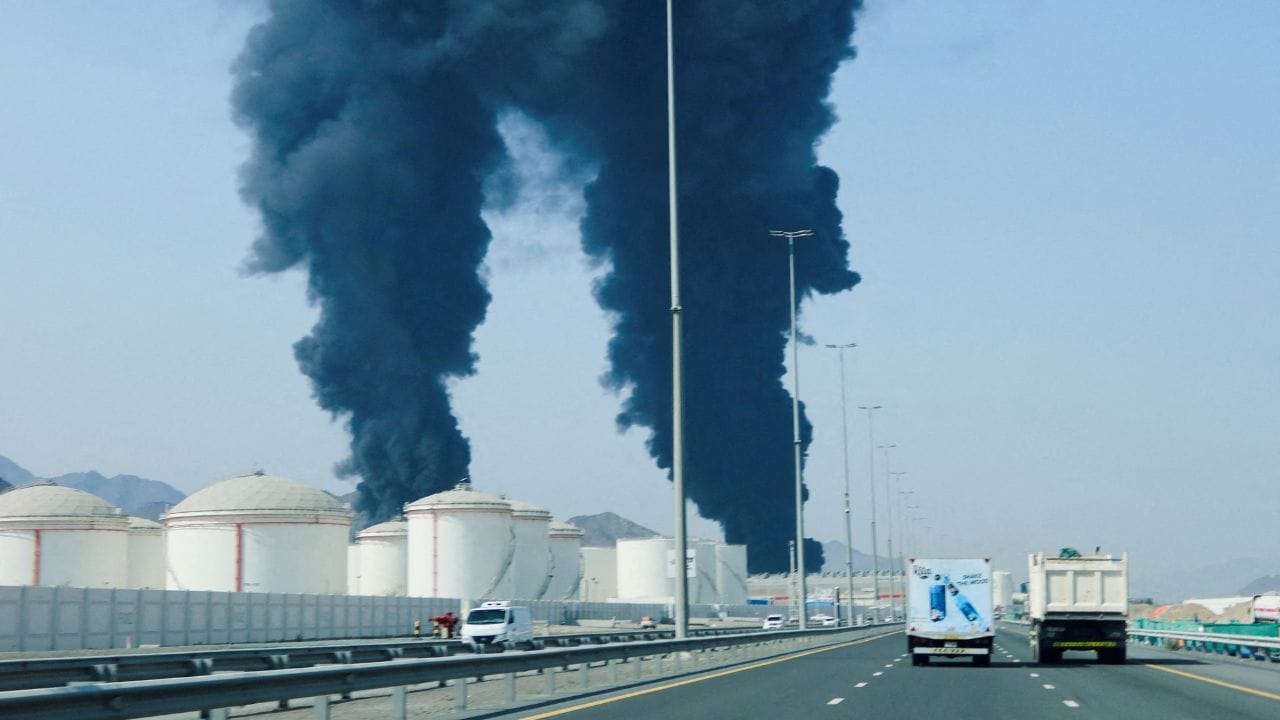
The assumption that targeted kinetic strikes can permanently dismantle a decentralized nuclear program ignores the fundamental shift from centralized industrial hubs to distributed technical networks. Iranian nuclear infrastructure is currently defined by three defensive layers: extreme geographical hardening, intellectual redundancy, and a modular supply chain. Kinetic interventions targeting physical sites—even those involving high-tonnage munitions—often fail to address the underlying knowledge base and the rapid reconstitution capabilities inherent in modern centrifuge manufacturing.
The Triad of Iranian Strategic Depth
To understand why recent kinetic actions have not yielded a total cessation of nuclear activity, one must analyze the program through a framework of strategic depth. This depth is not merely geographical; it is functional and systemic.
Subterranean Hardening and Geological Shielding
The facility at Fordow represents the apex of geological hardening. Built into a mountain of solid rock, the enrichment halls are protected by an overburden that exceeds the penetration capabilities of most conventional ordnance. When an adversary strikes such a facility, the primary goal is often the collapse of access tunnels or the disruption of external cooling and power systems rather than the destruction of the centrifuge cascades themselves.
The physical resilience of these sites creates a "repair and resume" cycle. If the internal rock structure remains intact, the cost of clearing debris and restoring power is significantly lower than the cost of rebuilding a destroyed surface facility. The Iranian strategy utilizes the Earth's crust as a passive defense system that requires an exponential increase in strike energy for every linear meter of increased depth.
Intellectual Redundancy and Technical Institutionalization
A nuclear program is essentially an accumulation of specialized human capital. The "Network Effect" in this context refers to the diffusion of technical blueprints, operational procedures, and enrichment physics across a wide array of state-of-the-art research institutions and clandestine workshops.
- Knowledge Distribution: Blueprints for IR-2m, IR-4, and IR-6 centrifuges are not stored in a single digital or physical vault. They exist within a decentralized cadre of engineers.
- Pedagogical Continuity: The integration of nuclear science into the national university curriculum ensures a steady pipeline of domestic talent, making the program resistant to the assassination of high-value individuals.
- Implicit Memory: Once a nation masters the enrichment cycle to 60%, the process of returning to that level after a strike is a logistical challenge, not a scientific one.
Modular Manufacturing and the Ghost Supply Chain
The transition from large, observable factories to small, nondescript workshops has fundamentally altered the target acquisition landscape. Centrifuge components—rotors, bellows, and endcaps—are produced in modular units. These workshops are often indistinguishable from civilian light-industrial sites. This modularity ensures that even if a major assembly hub is destroyed, the sub-components can be diverted to alternative assembly points.
The Attrition Paradox in Precision Strikes
A strike on a nuclear facility creates a temporary "Enrichment Gap," but it also triggers a compensatory acceleration. This phenomenon, known as the Attrition Paradox, suggests that kinetic damage provides the political and security justification for a state to relocate assets even deeper underground or to adopt more advanced, higher-output technology.
The Displacement of Centrifuge Technology
Older IR-1 centrifuges are inefficient and occupy significant floor space. When these are destroyed, they are almost invariably replaced by advanced IR-6 or IR-8 models. These newer machines possess a significantly higher Separative Work Unit (SWU) capacity per unit of volume.
The result is a more compact enrichment footprint. A smaller footprint is easier to hide and easier to harden. By destroying the legacy infrastructure, an attacker inadvertently forces the defender to modernize, ultimately resulting in a program that is harder to detect and more difficult to neutralize in subsequent operations.
Disruption of Safeguards and Monitoring
Kinetic strikes often lead to the expulsion of international monitors or the "blinding" of surveillance equipment. This creates an intelligence vacuum. While the physical damage is quantifiable via satellite imagery, the subsequent rate of material diversion or the commencement of clandestine enrichment becomes a matter of conjecture. The loss of transparency is a strategic cost that often outweighs the tactical gain of a collapsed tunnel or a burnt-out laboratory.
Quantifying the Cost of Reconstitution
The speed at which a nuclear network recovers is governed by the Reconstitution Cost Function. This function balances the availability of pre-fabricated components against the time required to recalibrate the cascade dynamics.
- Stockpiled Components: Iran maintains a strategic reserve of carbon fiber and high-strength aluminum. The assembly of a new cascade from existing parts can occur in weeks, not years.
- Decentralized Power Supplies: The reliance on dedicated power grids for nuclear sites was once a vulnerability. Modern Iranian sites utilize redundant, localized power generation, reducing the impact of strikes on the national electrical infrastructure.
- Cascade Geometry: The configuration of cascades can be altered to prioritize either volume or enrichment level. Following a strike, the network often shifts toward higher enrichment levels (e.g., 60%) in a smaller number of machines to maintain strategic leverage despite a reduced total machine count.
The Failure of Signal-to-Noise in Target Identification
Intelligence agencies operate on the principle of "Signature Analysis." They look for specific heat signatures, chemical traces, or logistical patterns that indicate nuclear activity. The Iranian response has been to increase the "noise" in the system.
By co-locating sensitive activities with legitimate civilian industrial sectors, the Iranian network forces its adversaries into a state of perpetual uncertainty. A strike on a dual-use facility carries high political risk and potential collateral damage, often deterring action until the intelligence is 100% verified—a threshold that is rarely met in a clandestine environment.
This blurring of the lines between the "Nuclear Network" and the "National Industrial Base" means that a total dismantling of the former would require the destruction of the latter. Such an escalation moves beyond the scope of "targeted strikes" and into the realm of total regional warfare, a threshold that most external actors are unwilling to cross.
Strategic Divergence in Adversarial Objectives
The US and Israel, while aligned in the goal of preventing a nuclear-armed Iran, often operate with different tactical thresholds. This divergence creates gaps in the "Strike Logic."
- The Containment Strategy: Focuses on delaying the "Breakout Time"—the time required to produce enough weapons-grade uranium for a single device.
- The Degradation Strategy: Focuses on destroying the physical capability to enrich altogether.
The Iranian network exploits this divergence. By maintaining a capability that is "damaged but functional," it stays below the threshold of total war while continuing to advance the technical baseline of its program. The network is designed to survive a 70% degradation of its physical assets while retaining 100% of its core technical knowledge.
The Bottleneck of Specialization
Despite the resilience described, the Iranian nuclear network is not invulnerable. Its primary bottleneck is the acquisition of highly specialized raw materials that cannot be produced domestically at scale. Maraging steel and specific grades of carbon fiber remain the "choke points" of the system.
The resilience of the network is therefore dependent on its ability to bypass international sanctions. The procurement network is as critical as the centrifuge cascade. This "External Lung" of the program provides the oxygen necessary for reconstitution. If the kinetic strikes are not synchronized with a total collapse of the clandestine procurement chain, the physical damage remains a temporary setback.
Future Projections of Network Evolution
The trajectory of the Iranian nuclear program suggests a move toward "Fortress Enrichment." This involves the integration of Air Defense Systems (such as the S-300 and S-400 derivatives) directly into the geography of the enrichment sites, creating an Integrated Air Defense System (IADS) that must be suppressed before any strike on the nuclear infrastructure can occur.
The technical evolution will likely focus on:
- Shortened Cascade Links: Reducing the physical footprint of enrichment to allow for even smaller, more mobile facilities.
- Laser Enrichment Research: A shift away from large centrifuge halls toward laser-based methods that require significantly less space and power, making them nearly impossible to detect via traditional means.
- Cyber-Kinetic Integration: Using cyber warfare to spoof the sensor data of adversaries, making a functional facility appear dormant or destroyed.
The strategic play is no longer the pursuit of a single, massive strike. Success in degrading a decentralized, hardened network requires a continuous, multi-domain campaign that addresses the intellectual, logistical, and physical components simultaneously. Isolated kinetic actions produce a "pruning effect"—removing the visible branches while the root system remains healthy and adapts to the new environment. Future strategies must prioritize the disruption of the "Knowledge-Supply Chain" over the mere destruction of concrete and steel if any long-term shift in the nuclear status quo is to be achieved.