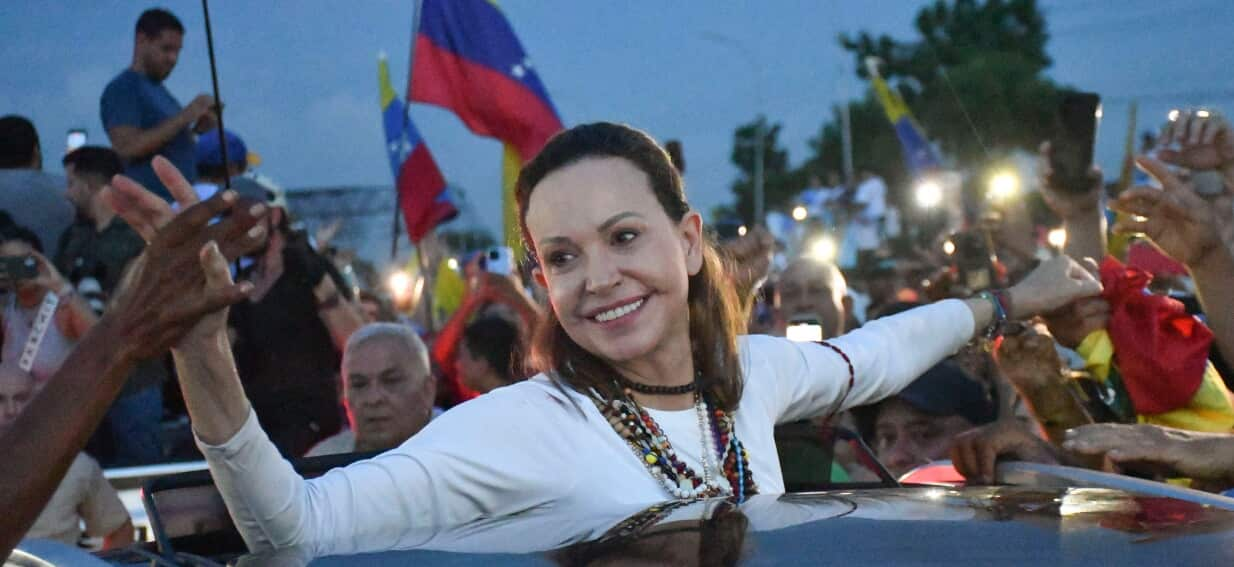
The return of a prominent Venezuelan opposition leader from exile is routinely framed by international observers as a decisive turning point, yet decades of political history in Caracas suggest that physical presence alone rarely alters the balance of power.
The Illusion of the Dramatic Homecoming
International coverage often treats the airport arrival of an exiled politician as the opening act of democratic restoration. According to analyses from the Washington Office on Latin America (WOLA) and the International Crisis Group, media narratives frequently conflate symbolic momentum with structural leverage. When opposition figures return to Venezuela, crowds gather, cameras roll, and foreign ministries issue statements of support.
Yet structural power in Venezuela does not reside in street demonstrations or airport tarmac speeches. Political scientists who study competitive authoritarianism—such as Steven Levitsky and Lucan Way, whose research on hybrid regimes defines how entrenched governments survive—point out that opposition visibility is meaningless if the ruling coalition retains unified control over the military, the judiciary, and state revenue streams.
In Venezuela, the administration of Nicolás Maduro has demonstrated repeated resilience against high-profile returns. In 2019, when Juan Guaidó re-entered the country through Maiquetía International Airport despite a travel ban, Western diplomats and commentators predicted imminent regime collapse. As documented by Reuters and the Associated Press at the time, Guaidó led massive rallies, secured recognition from dozens of governments, and still failed to dislodge the state apparatus. The machinery of governance—specifically the National Electoral Council (CNE), the Supreme Tribunal of Justice (TSJ), and the Bolivarian National Armed Forces (FANB)—remained intact.
What Exiled Leaders Actually Lose Abroad
To understand why a homecoming carries less weight than assumed, one must examine what happens during exile itself. Analysts at the Wilson Center’s Latin America Program have noted that prolonged absence from Venezuela creates a severe disconnect between exiled leadership and domestic grassroots networks.
- Erosion of Local Operational Networks: Political organizing inside Venezuela requires navigating daily economic scarcity, localized security crackdowns, and shifting municipal alliances. Leaders operating from Madrid, Miami, or Bogotá rely on intermediaries, which slows decision-making and breeds factional distrust.
- Divergence of Priorities: According to reporting by Efecto Cocuyo and El País, diaspora-backed strategies often prioritize international sanctions and diplomatic isolation, whereas citizens inside Venezuela frequently focus on immediate economic stabilization, service delivery, and negotiating local civic space.
- Institutional Adaptation by the State: While opposition figures are abroad, the ruling United Socialist Party of Venezuela (PSUV) does not remain static. As tracked by the Center for Strategic and International Studies (CSIS), Caracas has systematically reconfigured its economic partnerships, bypassed financial restrictions, and co-opted fractured segments of the domestic opposition.
When an opposition figure steps back onto Venezuelan soil, they are not returning to the same political terrain they left. They are entering an environment where the rules of engagement have already been rewritten by those who never left the seat of power.
The Strategic Calculus Behind Allowing a Return
A common misconception in mainstream reporting is that an exiled leader simply "forces" their way back into the country through sheer political will. In reality, border entry in a tightly controlled state is rarely an oversight; it is usually a calculated decision by the incumbent authorities.
Political risk analysts at Eurasia Group and Chatham House have long observed that authoritarian and hybrid governments weigh the costs of arrest against the benefits of controlled tolerance. Arresting a high-profile returnee at the airport risks triggering unified international condemnation, complicating ongoing oil licensing negotiations with the United States, or energizing a fractured electorate.
Conversely, allowing the leader to enter—while restricting their media access, disqualifying them from holding public office through administrative rulings by the Comptroller General, and subjecting their inner circle to selective judicial pressure—achieves several objectives for the state:
- Fragmenting the Opposition: A returning figure inevitably competes for leadership with opposition politicians who remained in the country and built local machinery during their absence. As documented by the Venezuelan polling firm Datanálisis, internal competition among opposition factions has historically depressed voter turnout and diluted unified strategy.
- Projecting Normalcy: Permitting a prominent critic to walk the streets allows the government to argue to international interlocutors, such as Brazil, Colombia, and the European Union, that political plurality exists and that punitive sanctions are unwarranted.
- Containing Influence: Without access to broadcast television, state resources, or formal ballot eligibility, a returned leader’s reach is largely confined to social media and localized rallies, which state security forces have proven adept at containing.
Answering the Wrong Question About Venezuelan Politics
Public discourse surrounding Venezuela often centers on a single question: Who will lead the opposition to victory? According to scholars at the Universidad Católica Andrés Bello (UCAB) in Caracas, focusing on individual personalities obscures the institutional realities that govern political outcomes in the country.
Consider the mechanics of electoral participation in Venezuela. Even when an opposition figure commands high approval ratings—as Maria Corina Machado demonstrated during the 2023 opposition primaries, according to data from the National Primary Commission—popular support does not automatically translate into institutional access. The Supreme Tribunal of Justice upheld her political disqualification in early 2024, forcing the opposition coalition to pivot to alternative candidates like Edmundo González Urrutia.
The lesson from that cycle, highlighted in post-election assessments by the Carter Center, is clear: individual charisma cannot substitute for institutional guarantees. Whether a leader is in Caracas, Madrid, or Washington, the decisive variables remain the independence of electoral auditors, the neutrality of security forces, and the terms of negotiated transitions.
The Risks of the Counter-Argument
Focusing strictly on institutional mechanics rather than symbolic leadership carries its own analytical blind spots. Critics of this structural view, including human rights advocates at Provea and Foro Penal, argue that dismissing the moral and psychological impact of a leader's physical presence underestimates the importance of civic morale. In environments characterized by widespread migration—where over 7.7 million Venezuelans have left the country, according to the UN Refugee Agency (UNHCR)—a visible domestic leader can serve as a vital focal point that prevents total civic resignation.
Furthermore, history shows that political miscalculations by entrenched governments do occur. A regime that permits a leader to return under the assumption that they can be easily contained may misjudge public discontent, turning a routine rally into a broader mobilization that fractures elite cohesion.
What Actually Shifts the Balance
If a dramatic return from exile is not the catalyst for political transformation, what actually moves the needle in Venezuela? Researchers at the Atlantic Council’s Adrienne Arsht Latin America Center and the International Crisis Group point to three concrete factors rather than individual homecomings:
- Elite Cohesion vs. Defection: Political transitions in hybrid regimes rarely occur through street pressure alone; they require splits within the ruling coalition, particularly among military commanders and economic stakeholders who conclude that the status quo no longer protects their interests.
- Credible Guarantees for Exit: As noted in comparative transition studies by political scientists Guillermo O'Donnell and Philippe Schmitter, entrenched elites resist democratization most fiercely when they believe losing power means imprisonment or total asset forfeiture. Negotiated frameworks that offer verifiable legal and personal security guarantees are far more consequential than election-day rallies.
- Unified Domestic Coalition Building: When opposition factions subordinate individual ambitions to a single, disciplined institutional strategy—maintaining unified poll-watching networks and coherent messaging across rural and urban sectors—they create leverage that external diplomacy alone cannot generate.
A plane landing in Caracas makes for compelling headlines, but political power in Venezuela is decided in the quiet negotiations between institutional gatekeepers, not on the airport tarmac.


