The glowing red numbers on the trading terminal changed at 2:14 PM, and three thousand miles away, a truck driver named Marcus let out a breath he didn’t know he was holding.
To the analysts in London and New York, the flash on the screen was a cold mathematical notation: Brent Crude oil had just broken beneath the psychological floor of $72 per barrel, tumbling more than five percent in a single, breathless trading session. It was a line on a chart, a data point in a morning briefing, a triumph for short-sellers who had spent weeks betting on a glutted market.
But commodities do not exist in a vacuum. Every decimal point shaved off the price of a barrel of crude triggers a chain reaction that snakes through the global economy, altering lives in ways that the people steering the markets rarely see. For Marcus, staring at the diesel pump at a truck stop outside of Ohio, that five percent drop meant his next cross-country haul might actually turn a profit. For a government budget planner in Riyadh, it meant red ink. For a family sitting around a kitchen table trying to balance a heating bill against a grocery list, it meant a sudden, unexpected reprieve.
We tend to view the global energy market as a monolith, an abstract entity governed by geopolitics and cartel meetings. It feels distant. It feels sterile.
It is neither.
The Ghost in the Machine
To understand why oil just took a dive, you have to look at China.
For decades, the world operated on a simple, dependable premise: China’s appetite for energy was insatiable. The country was a furnace that required constant stoking, devouring millions of barrels of oil a day to fuel its factories, pave its highways, and power its burgeoning cities. If global supply ever wavered, Chinese demand would be there to catch the falling knife.
That premise just shattered.
Imagine a massive factory where the assembly lines are slowing down, not because the machines are broken, but because the orders have simply stopped coming in. China’s post-pandemic recovery hasn’t just stalled; it has mutated into something entirely different. The property sector is wobbling, consumer confidence is scraping the bottom of the barrel, and the transition to electric vehicles is happening at a pace that has left traditional energy analysts dizzy.
Consider this: more than half of the new cars sold in China are now electric or hybrid. Every single one of those vehicles represents a drop of gasoline that will never be bought, refined, or burned.
When the world’s largest importer of crude starts signaling that it doesn’t need what you’re selling, the market notices. The realization didn't hit the trading floor like a thunderclap; it arrived like a slow, freezing fog. Suddenly, the supply that OPEC+ had painstakingly managed to restrict looked less like a precious commodity and more like an expensive burden.
The Chessboard and the Panic Button
The slide below $72 was driven by a collective failure of nerve.
For months, the Organization of the Petroleum Exporting Countries and its allies—collectively known as OPEC+—have been playing a high-stakes game of chicken with the market. They kept millions of barrels of oil locked underground, intentionally starving the market to keep prices artificially inflated near the $80 mark. It was a strategy built on the assumption that demand would eventually roar back.
But the market called their bluff.
Behind the closed doors of energy ministries, the tension is palpable. Countries like Saudi Arabia require oil to stay closer to $85 a barrel to fund their massive, futuristic infrastructure projects. Russia needs every dollar it can squeeze from its Siberian oil fields to finance its ongoing military expenditures. When the price dips toward $70, the math stops working.
The panic started when rumors began circulating that OPEC+ might abandon its production cuts altogether. If you are a trader holding a contract for a thousand barrels of oil, that rumor is poison. It means a tidal wave of supply could be unleashed onto a world that is already turning its back on fossil fuels.
What followed was a cascade of automated sell orders. Algorithms, programmed to dump assets the moment a technical support level is breached, took over from human traders. The price didn’t just drift down; it cratered. Five percent of the value of the world's most vital commodity vanished in a matter of hours.
The Human Cost of a Cheap Barrel
It is easy to celebrate low oil prices. For the average consumer, a drop in crude prices feels like a victory against inflation. It feels like money back in your pocket.
But the reality is far more complicated, and far more fragile.
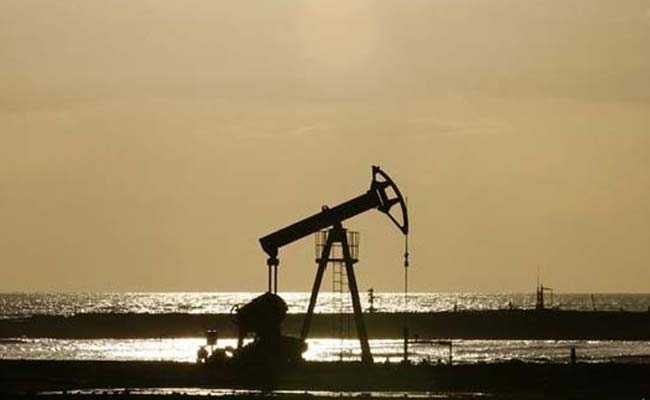
In the oil patches of West Texas and the North Sea, a sub-$72 price tag changes the calculus of survival. Oil drilling is an incredibly capital-intensive business. The rigs that dot the plains of New Mexico or float in the gray waters of the Atlantic aren't just pieces of machinery; they are financial engines fueled by debt and expectation.
When prices stay low for too long, those engines seize up.
Think of a small, independent drilling company in the Permian Basin. They might need oil to stay above $60 just to break even on a new well once you factor in the cost of labor, steel, and transportation. At $80, they are hiring, buying new equipment, and pouring money into local diners, hardware stores, and schools. At $71, they are looking at their spreadsheets with a sinking feeling in their chests. They stop drilling. They delay maintenance. Eventually, they start laying off the roughnecks who pull the pipe.
The irony of the oil market is that cheap fuel today often paves the way for a massive shortage tomorrow. When companies stop investing in new wells because the price is too low, production inevitably drops a few years down the line. And when demand eventually ticks back up, there isn't enough oil to go around, sending prices skyrocketing back into the triple digits.
It is a pendulum that swings ruthlessly, crushing anyone caught in its path.
The Invisible Stakes
We are watching the beginning of a profound structural shift, wrapped inside a temporary market correction.
The drop below $72 isn't just about a bad economic data release from Beijing or a nervous trader in London. It is a symptom of a world caught between two eras. We are living through the messy, chaotic twilight of total fossil fuel dominance and the stuttering, uncertain dawn of something new.
The transition will not be smooth. It will not be engineered by policy papers or international climate summits. It will happen exactly like this: through erratic market spikes, sudden gluts, political panics, and the quiet financial ruin of people who bet on a future that never arrived.
Marcus turned the key in his ignition, the diesel engine rumbling to life beneath him. He didn't know about the OPEC production quotas, and he didn't care about the Chinese manufacturing indices. He only knew that for the first time in six months, filling his tank didn't feel like a robbery.
He pulled out onto the highway, unaware that his moment of relief was paid for by a tremor that had just shaken the foundations of global finance.
The red numbers on the trading screen stopped flashing, holding steady at $71.80 as the closing bell rang. The day’s work was done, but the ripples from that five percent drop were already traveling outward, silently rewriting the economic fortunes of the world.


